Virgen de los claveles
Rafael Sanzio · 1500s
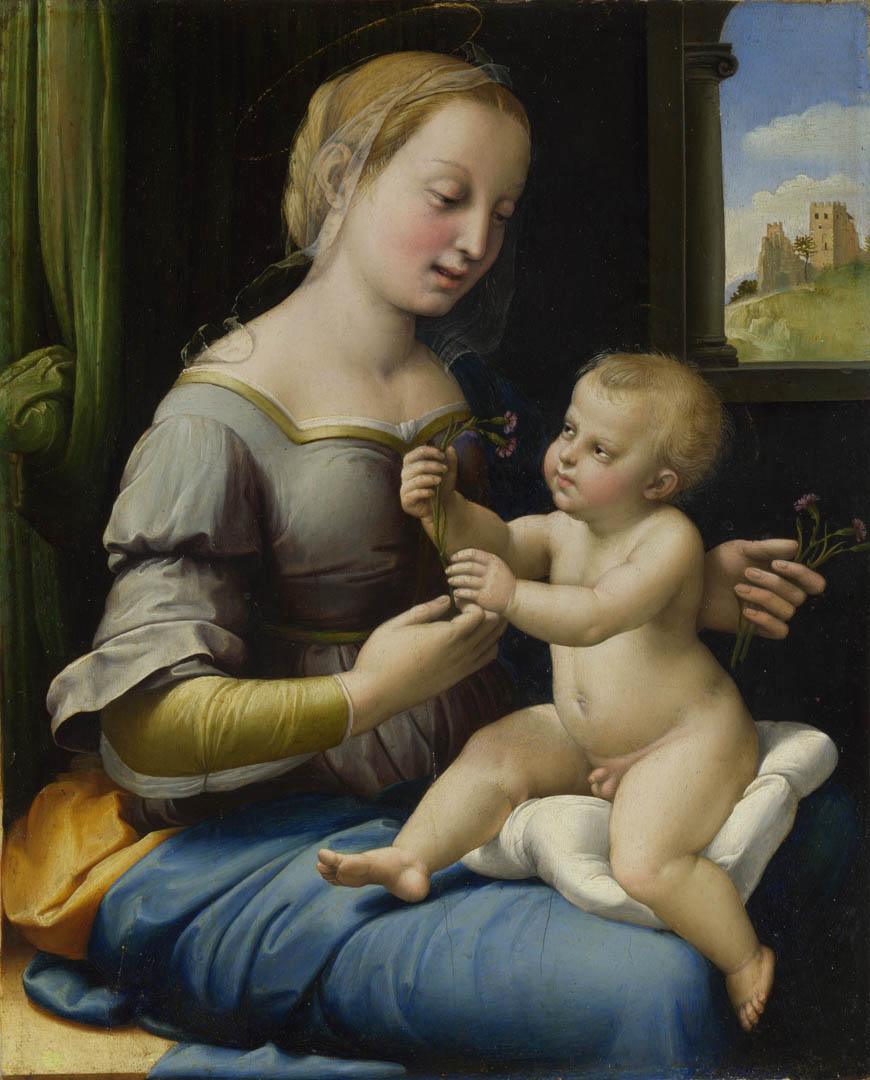
A young mother hands her baby a few carnations, small enough to hold like a prayer book. For a long time it was taken for a copy, and some still doubt it today.
The story behind the painting
La Madonna dei garofani, Madonna of the Carnation in Italian, is dated around 1505 to 1506 and usually attributed to Raphael. It is painted in oil on yew wood, a first for Raphael or any known Italian Renaissance painting. At only about 28 by 22 cm, little larger than a Book of Hours, it may have been a portable aid to prayer. The original patron is unknown. An inventory from the 1850s naming a nun called Maddalena degli Oddi is probably forged.
What to look for
A youthful Virgin hands the child carnations. The room is grand, perhaps in a castle, opening to an alcove with a column and the tower of a small fort. The setting borrows from Leonardo's Benois Madonna, but here much of the grandeur is lost in darkness. The blue and green scheme linking the Virgin and the landscape is Raphael's own. Through the arched window is a mountaintop with a ruin, possibly the Fortezza Albornoz near Urbino.
Meaning and intent
The carnation, dianthus or flower of God, foretells the Passion: legend says it first appeared when the Virgin wept at the Crucifixion. The palette is limited: ultramarine and azurite for the sky and drapery, with lead tin yellow, malachite and verdigris. The attribution remains contested. James Beck argued it was by the Roman painter Vincenzo Camuccini, and Brian Sewell called it low quality, possibly forged, noting the Virgin's disconnected right leg.
Legacy
In the nineteenth century it belonged to Vincenzo Camuccini. From 1853 it hung in Alnwick Castle, where scholars thought it merely the best of several copies of a lost original. In 1991 Nicholas Penny identified it as a genuine Raphael. In 2004 the National Gallery in London acquired it from the Duke of Northumberland after a major public appeal, and it then toured Manchester, Cardiff, Edinburgh and Barnard Castle. The debate about its author continues.
¿Sabías que…?
- Oil on yew wood, around 1505 to 1506.
- Identified as Raphael by Nicholas Penny in 1991.
- Acquired by the National Gallery, London, in 2004.
- Its attribution is still disputed.
Sobre el artista
Rafael Sanzio (1483-1520)
arte religioso · mujer · Virgen María · Niño Jesús · Alto Renacimiento · National Gallery de Londres · niño · madre
Más obras de Rafael Sanzio
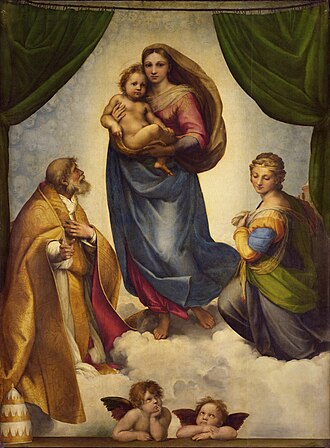 Madonna Sixtina - Raphael (1510s)
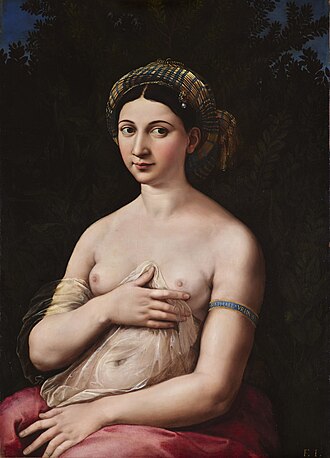 La Fornarina - Raphael
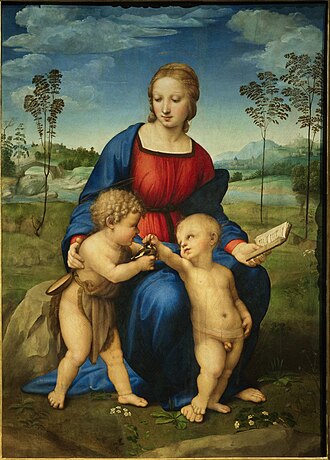 Virgen del jilguero - Raphael (1500s)
 Los desposorios de la Virgen - Raphael (1504)
 La velada - Raphael (1510s)
 Las Gracias - Raphael (1504)
 Virgen de la Casa de Alba - Raphael (1510)
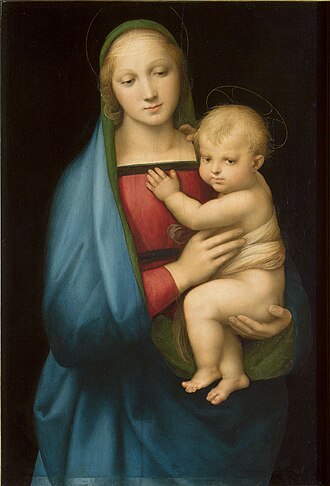 Madona del gran duque - Raphael (1500s)
Obras de artistas relacionados
 Venus de Urbino - Titian (1538)
 La Asunción de la Virgen - Titian (1510s)
 Tondo Doni - Michelangelo (1500s)
 Los tormentos de San Antonio - Michelangelo (1487)
 La Gioconda - Leonardo da Vinci (1503-1519)
 La dama del armiño - Leonardo da Vinci (1490)
 Autorretrato de Durero - Albrecht Dürer (1500)
 Adoración de los Magos - Albrecht Dürer (1504)
 El nacimiento de Venus - Sandro Botticelli (c. 1485)
 La primavera - Sandro Botticelli (1480s)
 El jardín de las delicias - Hieronymus Bosch
 La nave de los locos - Hieronymus Bosch (1500s)