Madonna del Passeggio
Rafael Sanzio · 1516
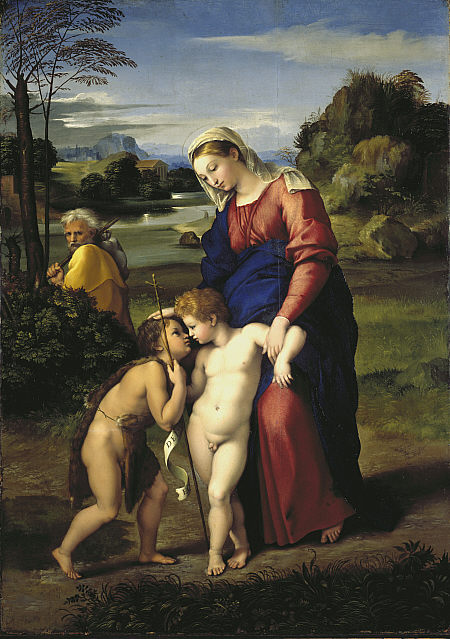
A young mother pauses on a country path, her hand resting on a small boy's head while two children look each other in the eye. Raphael's design turns a family walk into a quiet farewell, and art historians still ask whose brush finished it.
The story behind the painting
The Madonna del Passeggio, the Madonna of the Walk, is a religious painting dated to around 1516 and linked to Raphael. Its later life reads like a roll call of great collections. It belonged to Queen Christina of Sweden and to Giovan Antonio Orsini, Duke of Bracciano, then entered the collection of the Duke of Orleans. From 1792 to 1945 it was in the Ellesmere collection in London, and it then passed into the Bridgewater bequest with other works by Raphael, including the Holy Family with a Palm Tree and the Bridgewater Madonna. Today it is at the National Galleries of Scotland in Edinburgh. The panel measures about 90 by 63.3 cm.
What to look for
The setting is open countryside. At the centre Mary stands in contrapposto, her weight shifted to one leg, and holds the naked Christ Child in front of her, he too in a twisting pose. Her right hand rests on the head of the young John the Baptist, who bends slightly and looks closely into his cousin's eyes. John leans on his reed staff topped with a cross, and a scroll unrolls between the two boys. Joseph keeps his distance on the left, dressed in yellow, a bundle on a stick over his shoulder, half hidden behind a bush and turning his head to watch. Behind them run a stream, trees with a temple, a mountain and a towered town in blue distance under a cloudy sky.
Meaning and intent
The picture joins two traditions: the Holy Family with the infant Saint John, and the Flight into Egypt, a scene that usually shows only Mary, Joseph and the Child. The French Wikipedia article cites the Meditations attributed to Saint Bonaventure, which tell of the Holy Family meeting John in the wilderness: he offers wild fruit to the travellers, the two children speak gravely of the trials to come, and Mary kisses John before they part. John's animal skin and the cross on his staff foretell his shared future with Jesus, and the stream may point to the Jordan and the baptism of Christ, while his bowed pose shows deference.
Legacy
The question of authorship is part of this painting's story. The drawing, or design, is generally attributed to Raphael. The painting itself, however, which shows a careful study of Raphael's figure types, is given by some critics to his pupil Giovan Francesco Penni. The sources do not settle the debate, so the work is best seen as coming from Raphael's circle at the height of his Roman career, with his invention at its heart. Its passage through royal and ducal hands, and its long stay in the Bridgewater collection, explain why it now hangs in Edinburgh beside other works tied to the master.
¿Sabías que…?
- Dated around 1516 and linked to Raphael.
- Combines the Holy Family with the Flight into Egypt.
- Some critics give the painting to his pupil Giovan Francesco Penni.
- Now at the National Galleries of Scotland, Edinburgh.
Sobre el artista
Rafael Sanzio (1483-1520)
arte religioso · Virgen María · Niño Jesús · Alto Renacimiento · José de Nazaret · Galerías nacionales de Escocia · San Juan niño
Más obras de Rafael Sanzio
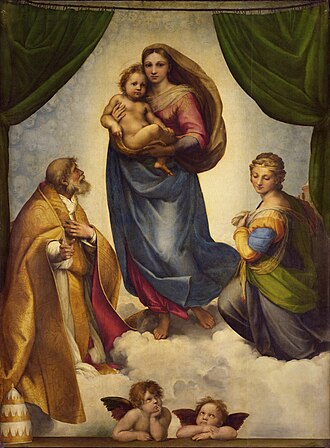 Madonna Sixtina - Raphael (1510s)
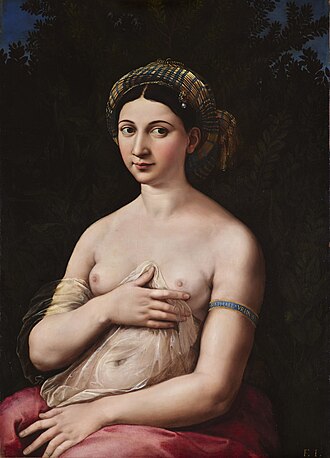 La Fornarina - Raphael
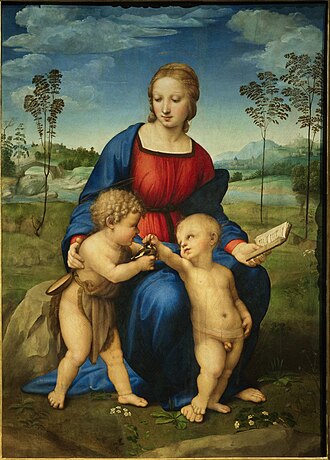 Virgen del jilguero - Raphael (1500s)
 Los desposorios de la Virgen - Raphael (1504)
 La velada - Raphael (1510s)
 Las Gracias - Raphael (1504)
 Virgen de la Casa de Alba - Raphael (1510)
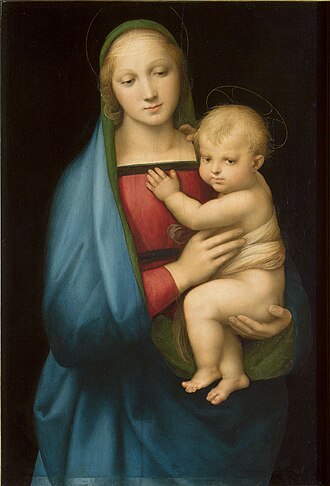 Madona del gran duque - Raphael (1500s)
Obras de artistas relacionados
 Venus de Urbino - Titian (1538)
 La Asunción de la Virgen - Titian (1510s)
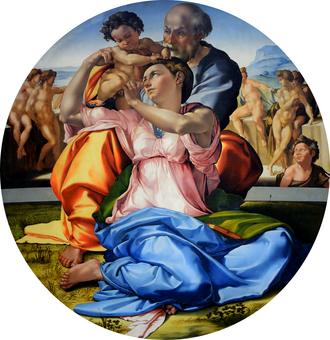 Tondo Doni - Michelangelo (1500s)
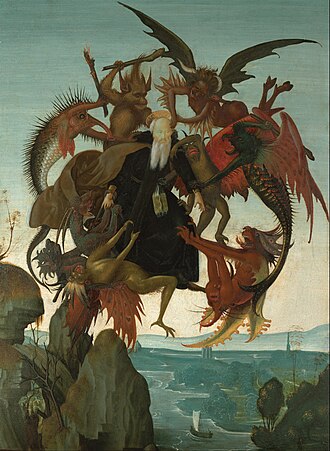 Los tormentos de San Antonio - Michelangelo (1487)
 La Gioconda - Leonardo da Vinci (1503-1519)
 La dama del armiño - Leonardo da Vinci (1490)
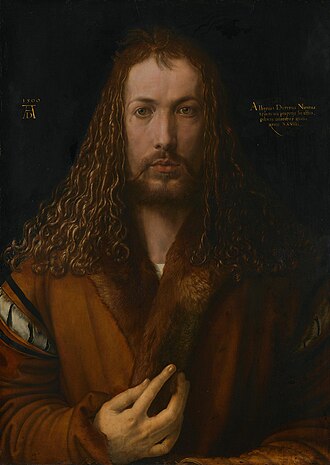 Autorretrato de Durero - Albrecht Dürer (1500)
 Adoración de los Magos - Albrecht Dürer (1504)
 El nacimiento de Venus - Sandro Botticelli (c. 1485)
 La primavera - Sandro Botticelli (1480s)
 El jardín de las delicias - Hieronymus Bosch
 La nave de los locos - Hieronymus Bosch (1500s)