The Fifth Plague of Egypt
J. M. W. Turner · 1800
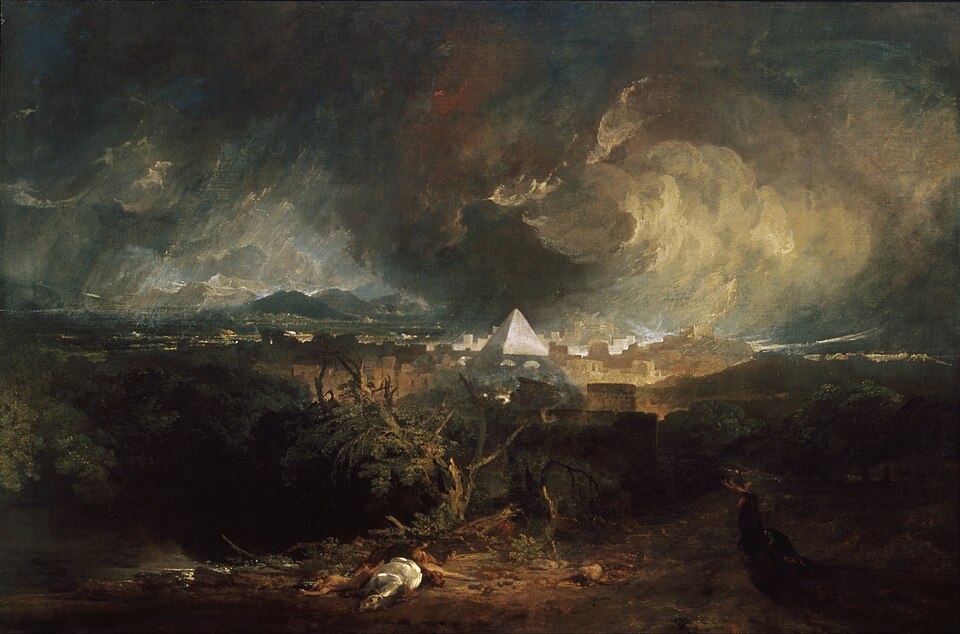
Hail and fire tear through a black sky over a gleaming pyramid, and Moses is almost lost in the storm. The twenty-four-year-old Turner sent this huge canvas to the Royal Academy in 1800 to prove what he could do, and even got the plague's number wrong.
The story behind the painting
In 1799 Turner had just been accepted as an Associate Member of the Royal Academy, and he was eager to show his place. For the annual exhibition of 1800 in London he submitted this large painting, about 121.9 by 182.9 cm, the largest canvas sent in by a young artist, hoping to impress the critics and prove himself as a history painter. The subject comes from the Book of Exodus, chapter 9: God's punishment of the Egyptians for refusing to free the Israelites. Despite the title, the scene shows the plague of hail and fire, which is the seventh plague. Turner possibly mislabelled it when he submitted it, but the title was never changed.
What to look for
Start at the bottom. In the foreground two dead horses and a dead man lie piled together, victims of the earlier plague on livestock. To the right, Moses stands with his arms outstretched, calling down hail and fire, far away from the city. In the background, tumultuous clouds swirl above the city, marked by a gleaming white pyramid at the centre of the canvas. Look for the thin horizontal lines falling from the clouds: these are streaks of hail. The whole picture is dominated by dark, neutral tones, which create a feeling of gloom. Notice how small the human figures are against the sky.
Meaning and intent
Although a biblical scene makes it a history painting, the picture reads as a landscape and clearly shows Turner's training in landscape. The sky and the land take precedence over Moses and his actions, turning him into just one part of the scenery. The force of nature matters more than the force of man, which seems minuscule. That is why the painting is counted among the first works in which Turner used an extreme vision of landscape and nature to explore the sublime, the awe and fear that vast natural power can arouse. Even his attempt at grand history ended up as a portrait of the weather.
Legacy
The painting was bought from Turner by William Beckford in April 1800. It passed through several owners, including Henry Jeffrey from 1807, George Young by 1853 and Earl Grosvenor from 1866, before Sir Francis Cook acquired it in 1876. It stayed in the Cook Collection until 1951, then belonged briefly to Sir Alexander Korda and to John Mitchell. In 1955 the Indianapolis Museum of Art acquired it with funds from the Lilly family, and it remains in the permanent collection there, where the wrong plague number still sits on the label.
Did you know?
- Exhibited at the Royal Academy in London in 1800.
- Despite the title, it shows the seventh plague, hail and fire.
- One of Turner's first works exploring the sublime.
- In the Indianapolis Museum of Art since 1955.
About the artist
J. M. W. Turner (1775-1851)
religious art · Romanticism · Cook collection · Museo de Arte de Indianápolis
More by J. M. W. Turner
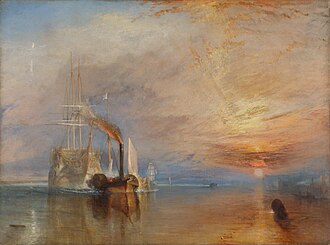 The Fighting Temeraire - J. M. W. Turner (1839)
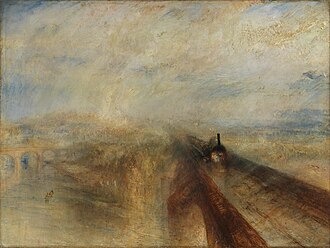 Rain, Steam and Speed - The Great Western Railway - J. M. W. Turner (1844)
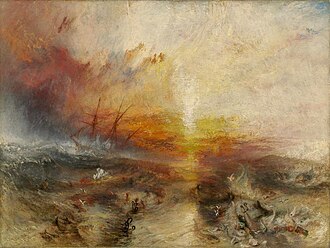 The Slave Ship - J. M. W. Turner (1840)
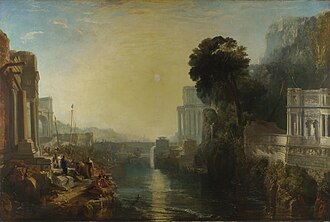 Dido building Carthage - J. M. W. Turner (1815)
.jpg) The Battle of Trafalgar - J. M. W. Turner (1820s)
The Battle of Trafalgar - J. M. W. Turner (1820s)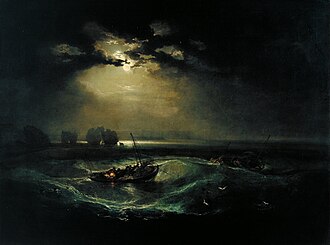 Fishermen at Sea - J. M. W. Turner (1796)
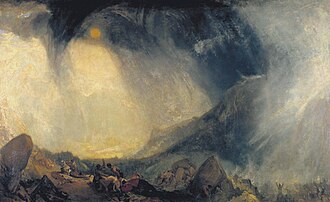 Snow Storm: Hannibal and his Army Crossing the Alps - J. M. W. Turner (1812)
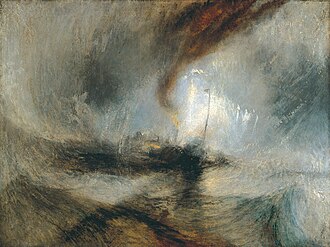 Snow Storm: Steam-Boat off a Harbour's Mouth - J. M. W. Turner (1842)
Paintings by related artists
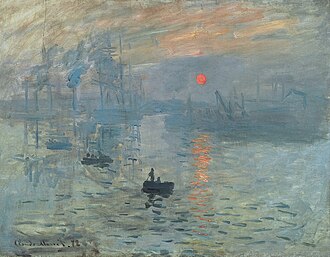 Impression, Sunrise - Claude Monet (1872)
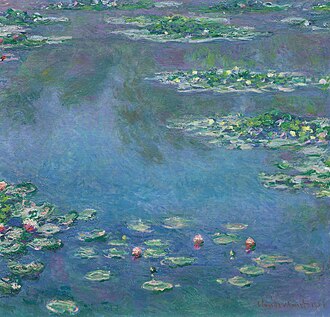 Water Lilies - Claude Monet (1906)
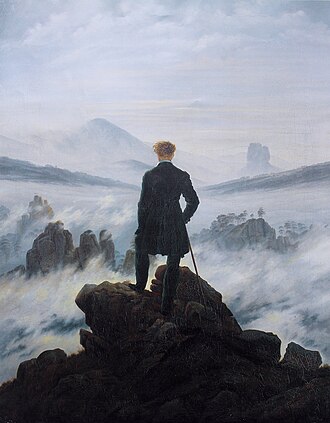 Wanderer above the Sea of Fog - Caspar David Friedrich (c. 1818)
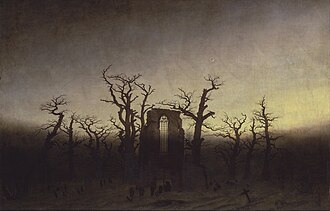 The Abbey in the Oakwood - Caspar David Friedrich (1800s)
 The Third of May 1808 - Francisco Goya (1814)
.jpg) La Maja nue - Francisco Goya (1800)
La Maja nue - Francisco Goya (1800)