Wanderer above the Sea of Fog
Caspar David Friedrich · c. 1818
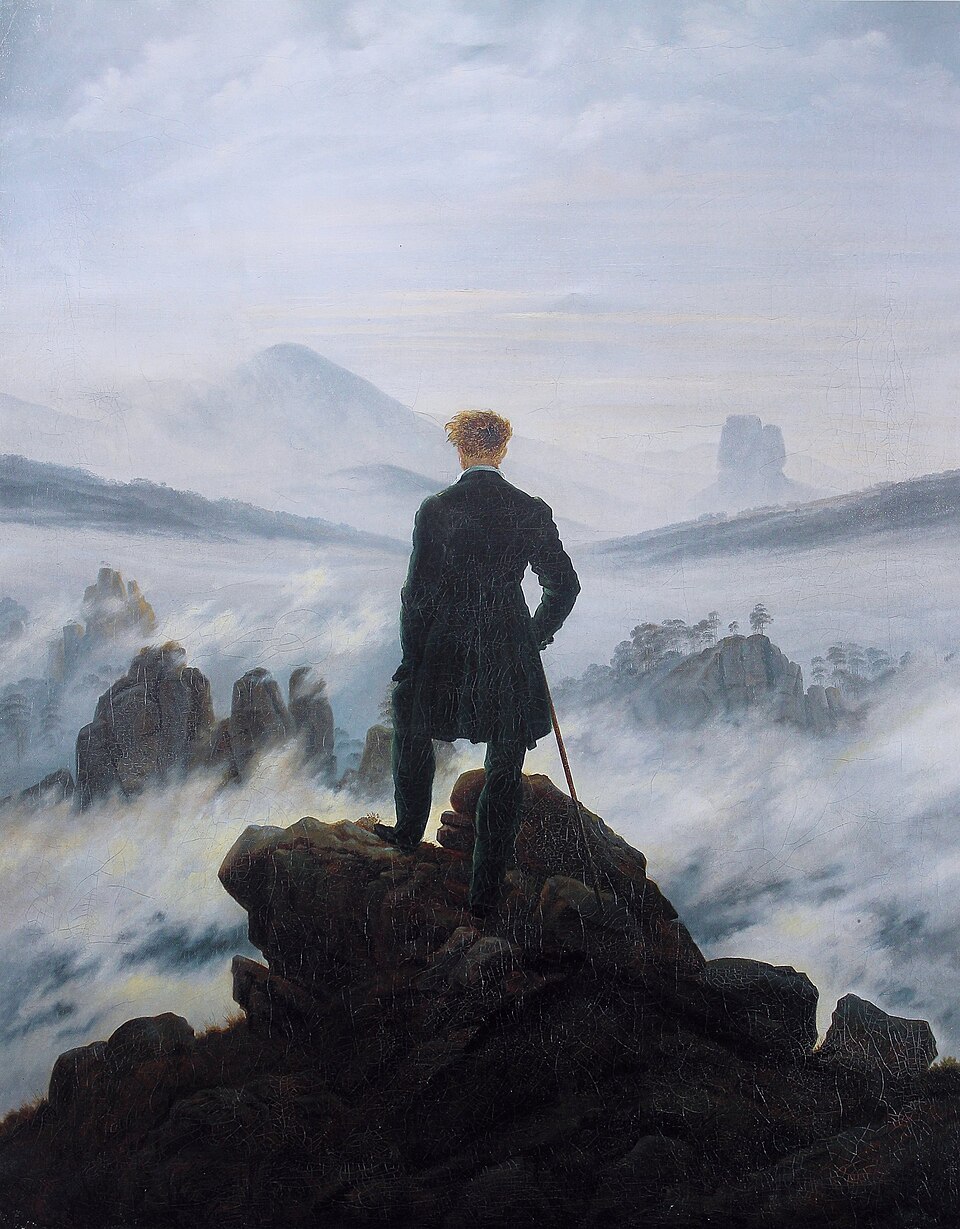
A majestic figure stands at the edge of the unknown, gazing out into the vast expanse of a sea of fog.
The story behind the painting
Caspar David Friedrich's 'Wanderer above the Sea of Fog' was created around 1818, a time of great change and upheaval in Europe. The artist, a prominent figure in the German Romantic movement, was known for his landscapes that conveyed a sense of spirituality and connection to nature. Friedrich was influenced by his surroundings, having grown up in the Baltic coastal town of Greifswald, and his work often featured the natural world as a reflection of the divine. The painting is believed to have been inspired by Friedrich's travels to the Elbe Sandstone Mountains in Saxony and Bohemia, where he sketched the scenery that would later become the backdrop for this iconic work.
What to look for
In 'Wanderer above the Sea of Fog,' a lone figure stands atop a rocky outcropping, gazing out into the distance. The man's back is turned to the viewer, and he is dressed in a dark green overcoat, holding a walking stick in his right hand. His hair is blown back by the wind, and the landscape before him is shrouded in a thick layer of fog, with distant mountains and trees barely visible. The painting's use of light and color creates a sense of depth and atmosphere, drawing the viewer's eye into the scene. The rocky terrain and the figure's stance evoke a sense of contemplation and wonder.
Meaning and intent
Friedrich's 'Wanderer above the Sea of Fog' is often interpreted as a symbol of self-reflection and contemplation. The figure's back is turned to the viewer, inviting us to consider the perspective of this mysterious person whose face we cannot see. The painting's use of the 'Rückenfigur,' or rear-facing figure, was a common motif in Friedrich's work, encouraging the viewer to engage with the scene on a deeper level. The landscape itself is considered to evoke the sublime, a sense of awe and wonder at the natural world. Friedrich's own writings suggest that the artist sought to convey a sense of the infinite and the mysterious, stating that 'the artist should paint not only what he has in front of him but also what he sees inside himself.'
Legacy
'Wanderer above the Sea of Fog' has become an iconic work of German Romanticism, widely regarded as one of the greatest paintings of the movement. The painting's influence can be seen in the work of later artists, including the Surrealists and Existentialists. Today, the painting is housed at the Hamburger Kunsthalle in Hamburg, Germany, where it remains a popular and thought-provoking work, continuing to inspire and captivate audiences with its haunting beauty and sense of mystery.
Did you know?
- The painting is considered one of the masterpieces of the Romantic movement and one of its most representative works.
- Friedrich used a technique called 'Rückenfigur,' or rear-facing figure, in many of his paintings, including 'Wanderer above the Sea of Fog.'
- The painting's provenance after its creation is unknown, but it was acquired by the Hamburger Kunsthalle in 1970.
- The figure in the painting is dressed in an 'Altdeutsches' outfit, a style associated with German liberal and nationalist sentiment of the time.
Wikipedia · Wikipedia - Caspar David Friedrich · Wikidata
man · landscape painting · figure painting · mountain · strolling
More by Caspar David Friedrich
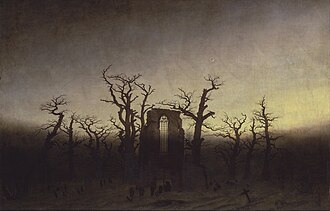 The Abbey in the Oakwood - Caspar David Friedrich (1800s)
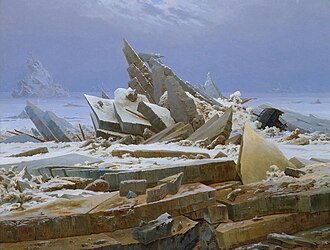 The Sea of Ice - Caspar David Friedrich (1820s)
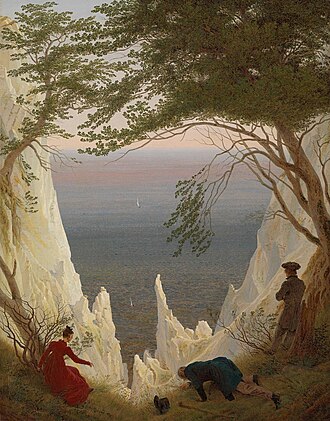 Chalk Cliffs at Ruegen - Caspar David Friedrich (1818)
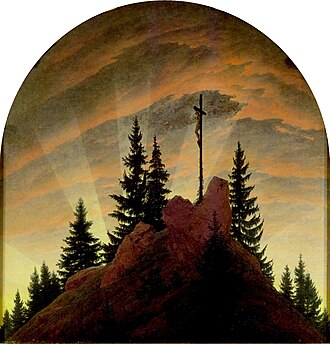 Altarpiece Tetschen - Caspar David Friedrich (1807)
Paintings by related artists
 The Third of May 1808 - Francisco Goya (1814)
.jpg) La Maja nue - Francisco Goya (1800)
La Maja nue - Francisco Goya (1800)