The Slave Ship
J. M. W. Turner · 1840
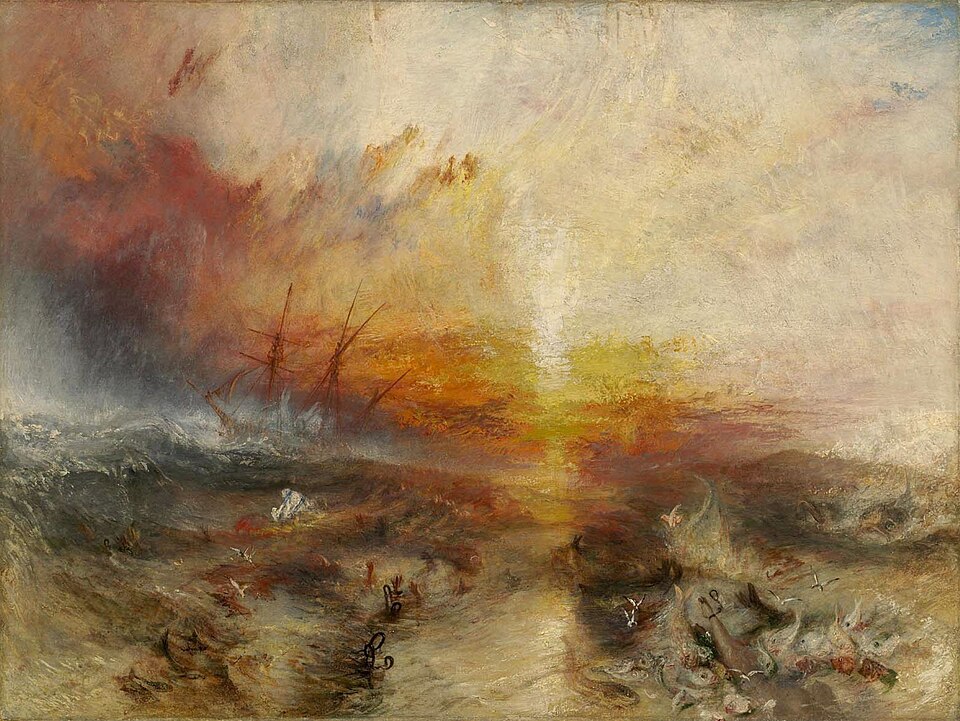
A blood-red sunset burns over a heaving sea, and only slowly do you see the chained leg rising from the waves. Turner turned a real atrocity into a storm of colour that still divides those who look at it.
The story behind the painting
In 1781 the captain of the slave ship Zong, bound for Jamaica, ordered 132 enslaved people thrown overboard when drinking water ran low, so that insurance could be claimed; deaths from natural causes were not covered. The court case drew wide attention and became a catalyst for British abolition. Turner, a man of liberal views, possibly read about it in the 1839 edition of Thomas Clarkson's history of the slave trade, and the Amistad case was also international news. He exhibited the picture at the Royal Academy in 1840 as Slavers Throwing overboard the Dead and Dying, Typhon coming on, paired with lines from his unfinished poem Fallacies of Hope.
What to look for
The first impression is an enormous red sunset over a stormy sea, with a storm cloud creeping in from the left. Look closer and a ship appears in the distance, a fast, lean vessel of the kind slavers used to escape navy patrols, its sails furled for the typhoon and its masts red like the sky. In the right foreground a single dark leg rises from the water, an iron chain around the ankle, while fish and gulls swarm around it. On the left, smaller limbs and loose chains break the surface. Few lines are drawn; forms exist only through contrasts of colour.
Meaning and intent
The real Zong killings happened in calm waters, not in a storm. Turner added the typhoon and the sunset to comment on the cruelty of the trade, and he set the bodies at the margins, small, with the ship half lost in haze. Many read this as Edmund Burke's sublime: human powerlessness and terror before nature. Shown in 1840, the year two international anti-slavery conventions met in London, it would likely have been seen as a call to action against a trade still continuing elsewhere. Yet viewers have long disagreed about whether its dazzling style serves or overwhelms its terrible subject.
Legacy
The painting changed hands several times, and with each owner came new and conflicting interpretations. It is generally admired for its spectacular atmospheric effects and stands as a classic example of Romantic marine painting, showing Turner at the height of a career in which he increasingly dissolved landscape into colour and light. Turner, born in London in 1775 and trained at the Royal Academy from the age of fourteen, had already dedicated an engraving of The Deluge to an abolitionist in 1828. Today the canvas, about 91 by 123 cm, is on display at the Museum of Fine Arts in Boston.
Did you know?
- First exhibited at the Royal Academy, London, in 1840.
- Possibly inspired by the 1781 Zong massacre of 132 enslaved people.
- Original title: Slavers Throwing overboard the Dead and Dying, Typhon coming on.
- Now in the Museum of Fine Arts, Boston.
About the artist
J. M. W. Turner (1775-1851)
Romanticism · marine art · Museum of Fine Arts Boston
More by J. M. W. Turner
 The Fighting Temeraire - J. M. W. Turner (1839)
 Rain, Steam and Speed - The Great Western Railway - J. M. W. Turner (1844)
 Dido building Carthage - J. M. W. Turner (1815)
.jpg) The Battle of Trafalgar - J. M. W. Turner (1820s)
The Battle of Trafalgar - J. M. W. Turner (1820s)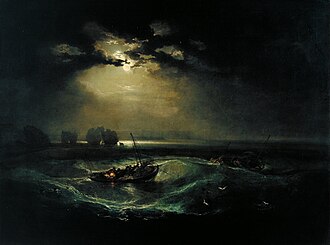 Fishermen at Sea - J. M. W. Turner (1796)
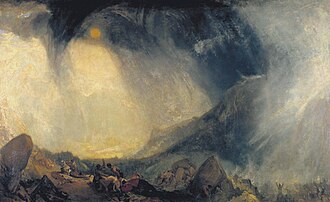 Snow Storm: Hannibal and his Army Crossing the Alps - J. M. W. Turner (1812)
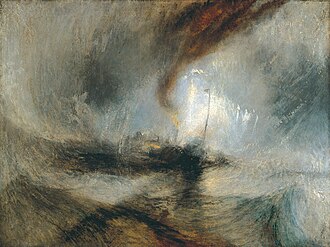 Snow Storm: Steam-Boat off a Harbour's Mouth - J. M. W. Turner (1842)
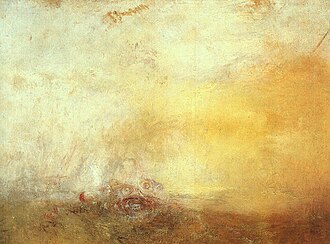 Sunrise with Sea Monsters - J. M. W. Turner (1845)
Paintings by related artists
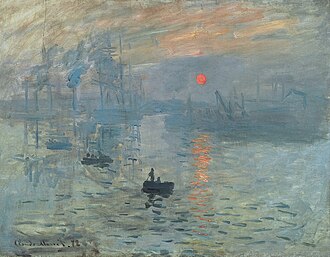 Impression, Sunrise - Claude Monet (1872)
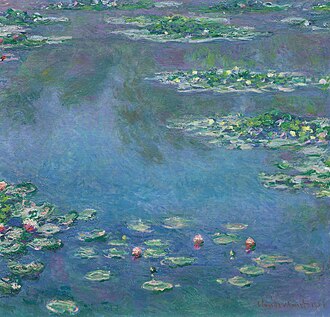 Water Lilies - Claude Monet (1906)
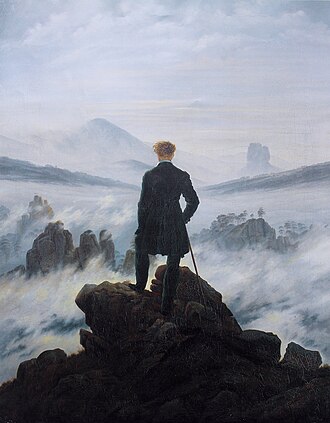 Wanderer above the Sea of Fog - Caspar David Friedrich (c. 1818)
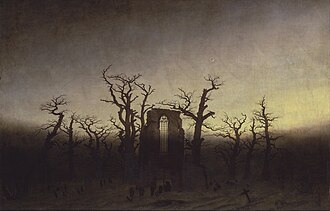 The Abbey in the Oakwood - Caspar David Friedrich (1800s)
 The Third of May 1808 - Francisco Goya (1814)
.jpg) La Maja nue - Francisco Goya (1800)
La Maja nue - Francisco Goya (1800)