Seascape: Folkestone
J. M. W. Turner · 1845
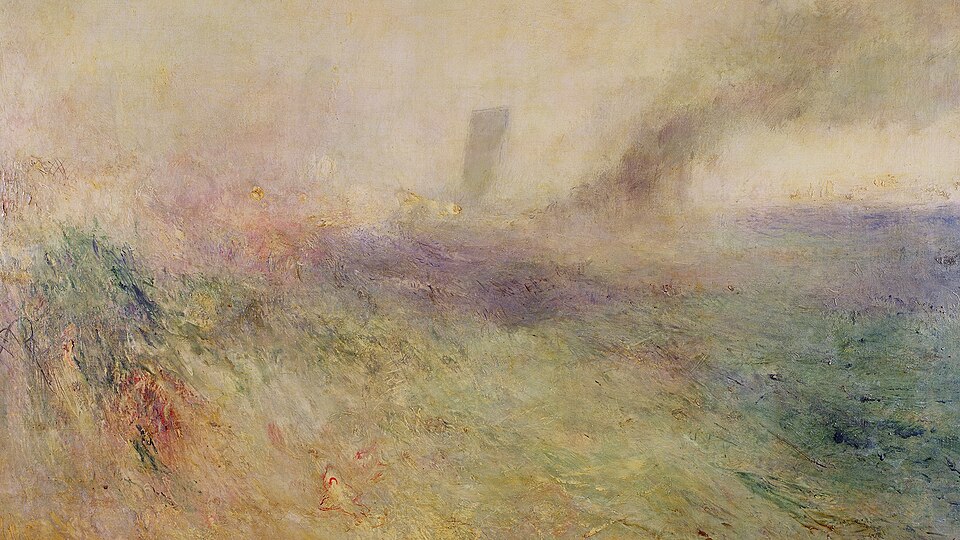
Green water swirls around the cliffs of Folkestone as a sailboat and a steamer head out to sea. Turner kept this late canvas to himself, judging it too experimental, and a later owner called it the finest painting in the world.
The story behind the painting
Turner painted the picture around 1845, when he made a return visit to Folkestone on the Kent coast. He chose not to exhibit it. According to the source, he considered it too experimental, after similar works of his had been criticised. The canvas therefore stayed out of public view in his lifetime. It later entered the significant Turner collection assembled by Sir Donald Currie, and in 1950 the art historian Kenneth Clark bought it from Currie's grandson, D. J. Molteno. It then hung in the Clark family home, Saltwood Castle, a building that, according to Sotheby's, also appears in the painting itself.
What to look for
The picture shows a swirling seascape with the shoreline and cliffs of Folkestone. Two boats are heading out to sea: one is a sailboat, the other has a funnel, a steam vessel beside the old way of sailing. The whole canvas is composed mostly of green hues, with touches of other pigments. According to Sotheby's, you can make out the parish church in Hythe, and on the left side Saltwood Castle. The canvas measures 86.4 by 116.8 cm. Look at how the forms dissolve into movement and colour, so that land, sea and sky are held together by the swirl of the brush.
Meaning and intent
Turner's own decision to keep the canvas back tells us how far he felt he had pushed it. Later viewers saw that same quality as its strength. Florence Elisabeth Coman, interim curator of modern paintings at the National Gallery of Art in Washington, called its swirling colours lovely and almost abstract. Robert Wark, curator at the Huntington Library in San Marino, described it as an important late Turner painting. Kenneth Clark, according to his son Alan, considered it the finest painting in the world, a remarkable judgement from one of the best-known art historians of his time.
Legacy
After Kenneth Clark's death, his son Alan Clark sold the painting at Sotheby's in London on 5 July 1984, with about 200 other works from the estate, to pay estate taxes. Alan Clark said his father would never have sold it. It went to an anonymous private collector, and at the time it was the highest sum paid for a Turner; Guinness World Records listed it as the most expensive seascape. After the sale, Sotheby's reported that the buyer had offered to lend it to the National Gallery in London for four months, but the offer was declined because of refurbishment. The source does not say where the painting is shown today.
Did you know?
- Painted around 1845 on a return visit to Folkestone.
- Turner chose not to exhibit it, finding it too experimental.
- Owned by art historian Kenneth Clark from 1950.
- Sold at Sotheby's in London in 1984 to a private collector.
About the artist
J. M. W. Turner (1775-1851)
More by J. M. W. Turner
 The Fighting Temeraire - J. M. W. Turner (1839)
 Rain, Steam and Speed - The Great Western Railway - J. M. W. Turner (1844)
 The Slave Ship - J. M. W. Turner (1840)
 Dido building Carthage - J. M. W. Turner (1815)
 The Battle of Trafalgar - J. M. W. Turner (1820s)
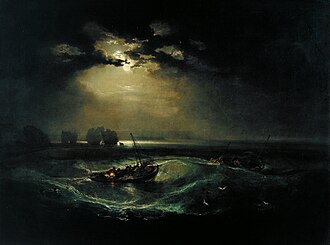 Fishermen at Sea - J. M. W. Turner (1796)
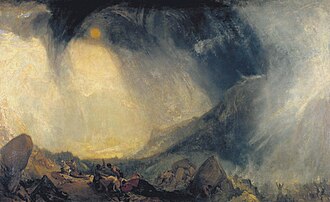 Snow Storm: Hannibal and his Army Crossing the Alps - J. M. W. Turner (1812)
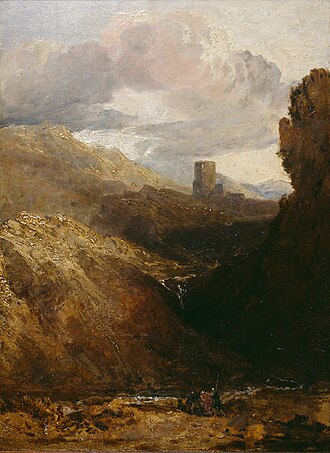 Dolbadarn Castle - J. M. W. Turner (1800)
Paintings by related artists
 The Ladies Waldegrave - Joshua Reynolds (1780)
 Captain George K. H. Coussmaker - Joshua Reynolds (1782)
 Impression, Sunrise - Claude Monet (1872)
 Water Lilies - Claude Monet (1906)
 The Third of May 1808 - Francisco Goya (1814)
 La Maja nue - Francisco Goya (1800)
 Wanderer above the Sea of Fog - Caspar David Friedrich (c. 1818)
 The Abbey in the Oakwood - Caspar David Friedrich (1800s)
 Liberty Leading the People - Eugène Delacroix (1830)
 Death of Sardanapalus - Eugène Delacroix (1827)
 The Blue Boy - Thomas Gainsborough (1770)
 Mr and Mrs Andrews - Thomas Gainsborough (1748)