Morning in the Riesengebirge
Caspar David Friedrich · 1810s
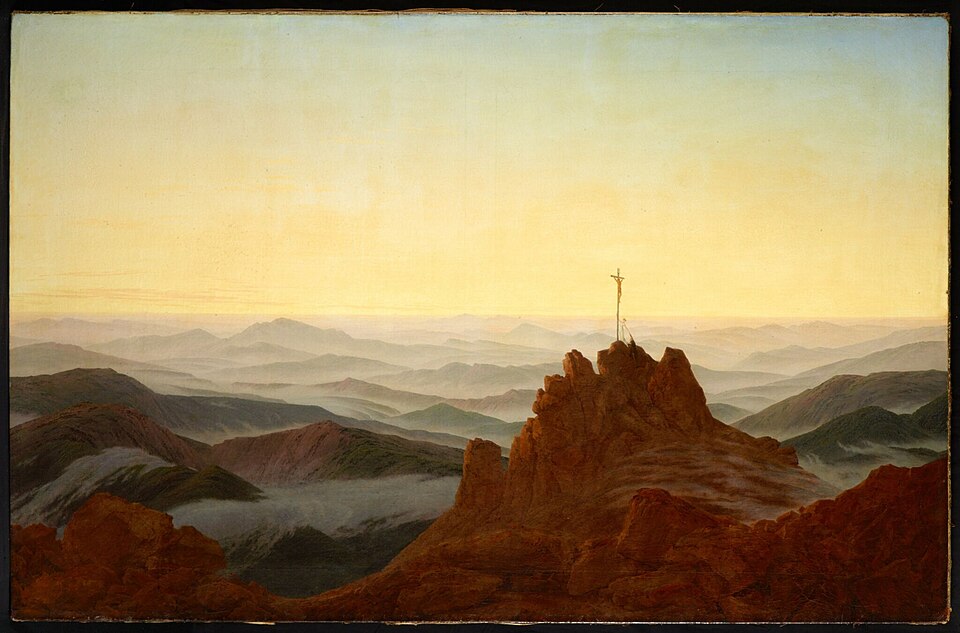
Dawn breaks over endless blue ridges, and on a rocky summit a woman reaches down to help a man climb toward a lonely cross. Friedrich turned a mountain sunrise into a quiet journey of faith.
The story behind the painting
Friedrich was captivated by mountains, and in 1810 he travelled to the Riesengebirge, the Giant Mountains, where he sketched the range and studied its rock formations. The painting that came out of that journey is dated 1810 to 1811 by Wikipedia, while Wikidata gives only the 1810s. It was shown at the Dresden Academy, where it drew wide public attention, and in 1811 King Frederick William III of Prussia bought it for his palace on Unter den Linden in Berlin.
What to look for
The canvas is wide, 108 by 170 cm. The sun rises over layer after layer of mountains, and mist fills the valleys between them; Werner Hofmann notes how the light sky and mist balance the heavy mountains in front. On the summit at the right, a woman helps a man up toward a crucifix. Friedrich keeps the cross small against the huge landscape. The man has his back to us, a Rückenfigur, a device Friedrich used often so that viewers could imagine standing in his place, and he may even be the painter himself.
Meaning and intent
Charles Sala reads the mist as a classical image of our clouded earthly life and the search for a spiritual light about to break through, and sees a tension between the realism of the couple and the idealized landscape. Rather than a plain Christian statement, he argues, the work explores the path of the self. Werner Hofmann reads the woman's higher position as her role to lead her partner onwards and upwards. Johannes Grave saw the painting as Friedrich's reply to Ramdohr's criticism of his Tetschen Altarpiece.
Legacy
Some critics praised Friedrich's faithful picture of nature; others disliked the couple, one writing that the modern and personal become insignificant amid nature's great simplicity. The painting stayed in Berlin until 1837, then moved to the New Palace in Potsdam, to Schloss Bellevue from 1844 to 1865, and later to Wiesbaden. After 1930 it returned to the Berlin Stadtschloss, and since 1957 it has been at Schloss Charlottenburg in Berlin.
Did you know?
- Based on Friedrich's 1810 trip to the Riesengebirge.
- Bought in 1811 by King Frederick William III of Prussia.
- Features a Rückenfigur, a figure seen from behind.
- At Schloss Charlottenburg, Berlin, since 1957.
Wikipedia · Wikidata · Wikipedia
About the artist
Caspar David Friedrich (1774-1840)
landscape painting · Romanticism · Prussian Palaces and Gardens Foundation Berlin-Brandenburg
More by Caspar David Friedrich
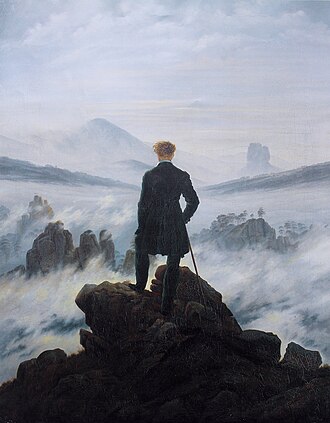 Wanderer above the Sea of Fog - Caspar David Friedrich (c. 1818)
 The Abbey in the Oakwood - Caspar David Friedrich (1800s)
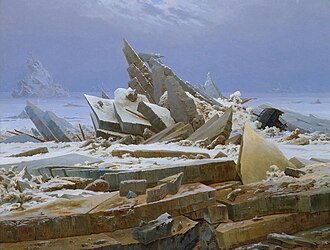 The Sea of Ice - Caspar David Friedrich (1820s)
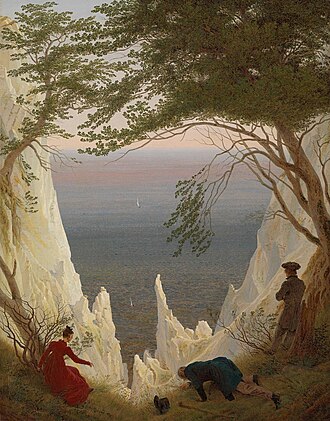 Chalk Cliffs at Ruegen - Caspar David Friedrich (1818)
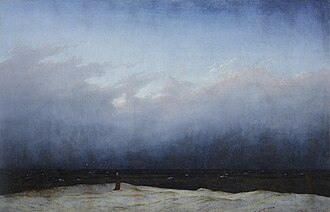 The Monk by the Sea - Caspar David Friedrich (1808)
.jpg) Life stages - Caspar David Friedrich (1834)
Life stages - Caspar David Friedrich (1834)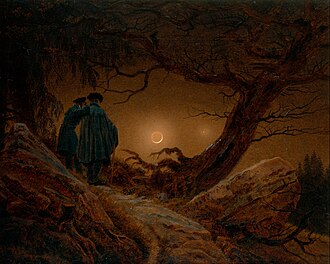 Two men contemplating the Moon - Caspar David Friedrich (1810s)
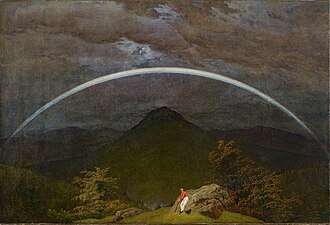 Mountain Landscape with Rainbow - Caspar David Friedrich (1809)
Paintings by related artists
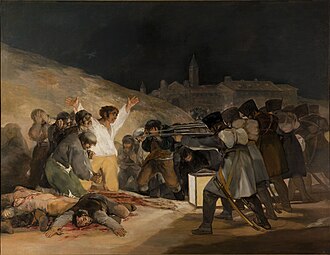 The Third of May 1808 - Francisco Goya (1814)
.jpg) La Maja nue - Francisco Goya (1800)
La Maja nue - Francisco Goya (1800)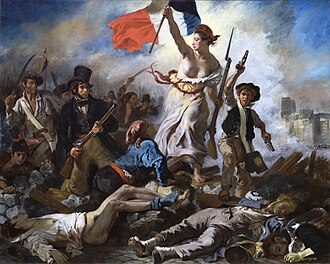 Liberty Leading the People - Eugène Delacroix (1830)
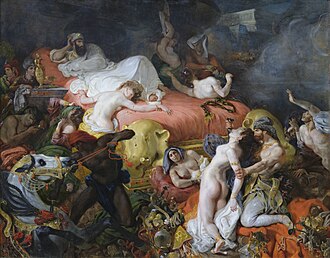 Death of Sardanapalus - Eugène Delacroix (1827)
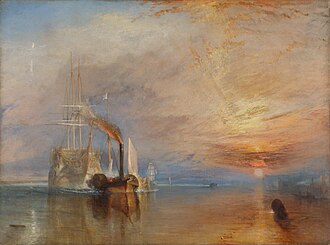 The Fighting Temeraire - J. M. W. Turner (1839)
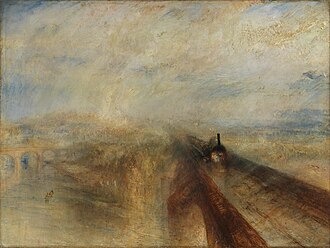 Rain, Steam and Speed - The Great Western Railway - J. M. W. Turner (1844)
.jpg) The Blue Boy - Thomas Gainsborough (1770)
The Blue Boy - Thomas Gainsborough (1770).jpg) Mr and Mrs Andrews - Thomas Gainsborough (1748)
Mr and Mrs Andrews - Thomas Gainsborough (1748)