A Meadow in the Mountains: Le Mas de Saint-Paul
Vincent van Gogh · 1889
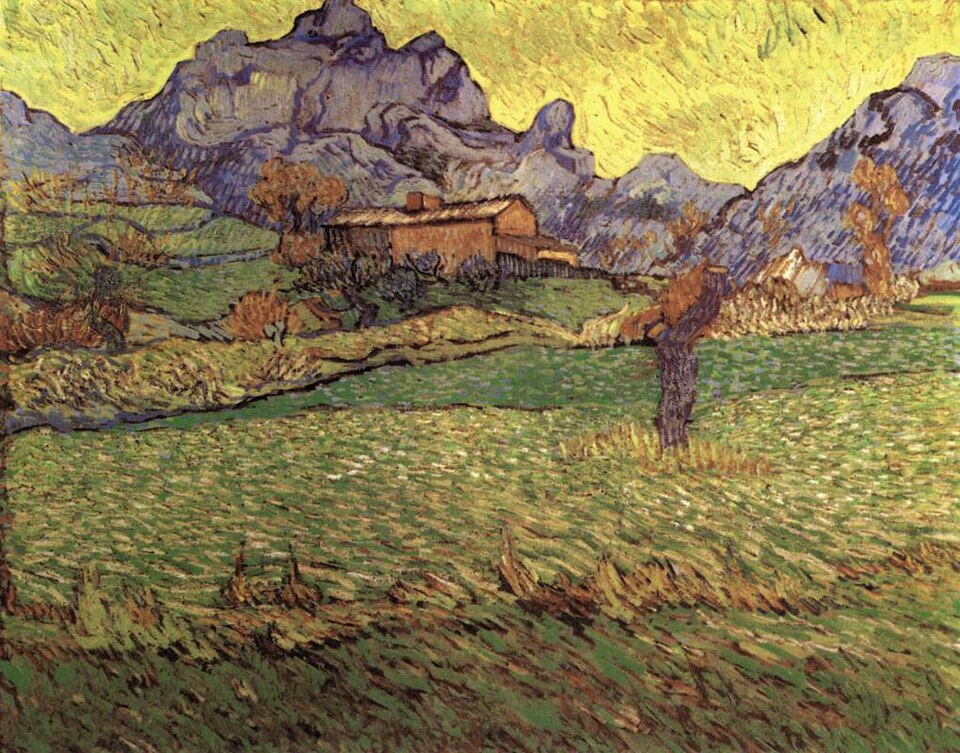
Young wheat, lilac mountains and a yellowish sky: in December 1889, from the asylum at Saint-Rémy, Van Gogh sent this quiet field of hope to his brother.
The story behind the painting
In May 1889 Vincent van Gogh voluntarily entered the asylum of St. Paul near Saint-Rémy in Provence. He was given an adjacent cell to use as a studio, and at first he was confined to the asylum grounds, painting what he could see from his room: ivy-covered trees, lilacs and irises in the garden, and an enclosed wheat field that became the subject of many canvases. Little by little he ventured beyond the walls, into the wheat fields, olive groves and cypress trees of the surrounding countryside, which he saw as characteristic of Provence. It was a year of extraordinary output, about 150 canvases in all. This landscape belongs to its final weeks: he painted it in December 1889, as the long year at Saint-Rémy drew toward its close.
What to look for
Begin at the bottom of the canvas, with the fields of young wheat that fill the meadow. This is not the golden harvest of summer but the fresh growth of winter, low and green, spreading toward the distance. Let your eye travel upward, past the trees and the farmhouse, the mas that gives the painting its name, to the lilac mountains that close the view. Above them hangs a yellowish sky. The canvas is generous in size, 73 by 91.5 centimetres, giving the land room to breathe. Notice how the colours are arranged in bands, from the green earth to the violet hills to the pale yellow light, so that the scene rises like a series of layers from the meadow to the sky.
Meaning and intent
Van Gogh himself gave the work a simple name. When he sent it to his brother Theo, his accompanying letter referred to it as The Fields. That plainness is telling. The painting does not stage a drama; it records a piece of the countryside he had learned to know from inside the asylum walls and then from walks beyond them. The wheat field had been a constant companion during his months at Saint-Rémy, first seen enclosed beneath his window, then found in open land. Here it appears young and still growing, set against mountains and sky. Other languages have given the picture different titles, the French calling it wheat fields in a mountainous landscape and the German naming a meadow and tree with a view of Mont Gaussier, each pointing to a different part of the same view.
Legacy
On 3 January 1890 Van Gogh sent the painting to Theo in Paris, together with the letter in which he called it The Fields. It thus travelled from Provence as one of the many canvases that carried the record of his year at Saint-Rémy to the brother who supported him. Today the painting is held in the Kröller-Müller Museum in the Netherlands. There, it can be seen as one chapter in a larger story: the roughly 150 canvases of 1889, in which gardens, olive groves, cypresses and wheat fields became a way for Van Gogh to keep looking at the world, and to keep working, during one of the most difficult periods of his life.
Did you know?
- Painted in December 1889 near the asylum at Saint-Rémy-de-Provence.
- Van Gogh sent it to his brother Theo on 3 January 1890, calling it The Fields.
- 73 × 91.5 cm; held in the Kröller-Müller Museum, the Netherlands.
- Van Gogh painted about 150 canvases during his year at Saint-Rémy.
About the artist
Vincent van Gogh (1853-1890)
landscape painting · tree · Kröller-Müller Museum · mountain
More by Vincent van Gogh
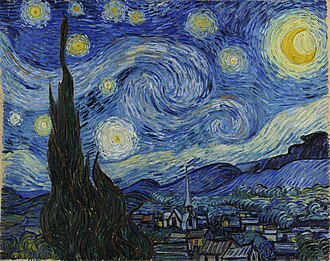 The Starry Night - Vincent van Gogh (1889)
.jpg) Café Terrace at Night - Vincent van Gogh (1888)
Café Terrace at Night - Vincent van Gogh (1888)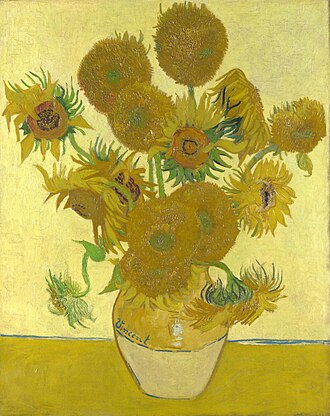 Sunflowers - Vincent van Gogh (1888)
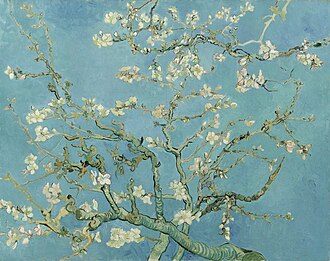 Almond Blossoms - Vincent van Gogh (1890)
 Wheatfield with Crows - Vincent van Gogh (1890)
 The Bedroom - Vincent van Gogh (1888)
 The Potato Eaters - Vincent van Gogh (1885)
 Irises - Vincent van Gogh (1889)
Paintings by related artists
 Where Do We Come From? What Are We? Where Are We Going? - Paul Gauguin (1897-1898)
%201889.jpg) The Yellow Christ - Paul Gauguin (1889)
The Yellow Christ - Paul Gauguin (1889) Luncheon on the Grass - Édouard Manet (1863)
 Olympia - Édouard Manet (1863)