A Dream of the Past: Sir Isumbras at the Ford
John Everett Millais · 1857
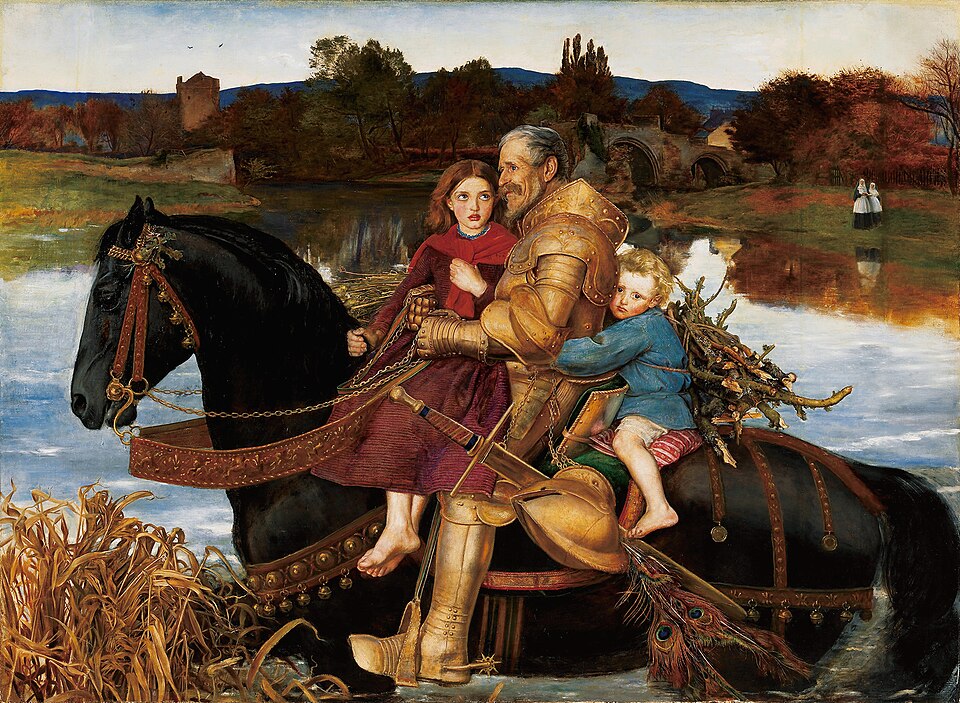
An old knight in golden armour carries two woodcutter's children across a swollen river at sunset. Millais froze in Scottish winters to paint it, critics mocked the horse, and the picture still went on to inspire a generation of chivalric images.
The story behind the painting
Millais began the painting in August 1856 while his family stayed in Scotland, and finished it in 1857. His wife Effie Gray remembered how hard it was. The background took him barely a fortnight: every day in late October and early November 1856 he painted the old bridge at Bridge of Earn and the Ochil hills, adding an imaginary medieval tower. The horse was the torment. He painted it in the stableyard at Annat Lodge, working outdoors in frost and snow, sometimes on a ladder, his canvas tied with ropes against the wind, while Effie sent down warm soup and wine.
What to look for
An elderly knight in golden armour rides a great war horse through a ford. Two peasant children ride with him, carrying heavy bundles of wood for winter fuel. Behind them stands a ruined medieval bridge, based on one at Bridge of Earn in Perthshire that has since been demolished, along with some village houses of Back Street; the tower on the left is invented. The river flags were brought in by the gardener and painted in the studio. The painting is large, about 125.5 by 171.5 cm. Look also at the reins and bridle, which Millais decorated when he altered the picture in the 1880s.
Meaning and intent
The title refers to the medieval poem Sir Isumbras, about a proud knight humbled by misfortune, but the scene is not from the poem. It imagines the old, now humble knight afterwards, and Tom Taylor wrote pastiche verses for the 1857 Royal Academy catalogue. Frederic George Stephens saw the setting sun as a symbol of the warrior's nearly spent life. Christian chivalry was a topical theme, seen by some writers as a way to overcome class division, and it compares with the hymn Good King Wenceslas from the same decade. Millais was probably influenced by Dürer's print The Knight, Death and the Devil.
Legacy
Critics were largely hostile, calling the horse oversized and ugly. John Ruskin, whose wife Effie had left him for Millais, called it not just a fall but a catastrophe, and Frederic Sandys satirised it in a print, A Nightmare, with Rossetti and Holman Hunt as the children. Millais removed and repainted the horse with benzole, and a gust once drove a chair corner through the knight's head, mended invisibly by London canvas makers. Reworked, it narrowly lost a Liverpool prize to his The Blind Girl by one vote, according to Effie, though Wikipedia also says the repainted version won a prize there. It hangs today in the Lady Lever Art Gallery.
Did you know?
- Begun in August 1856 in Scotland and finished in 1857.
- The background is the old bridge at Bridge of Earn, Perthshire.
- Ruskin called it a catastrophe; Sandys parodied it as A Nightmare.
- Now in the Lady Lever Art Gallery.
About the artist
John Everett Millais (1829-1896)
landscape painting · boy · Pre-Raphaelite Brotherhood · horse · girl · child · body armor · Lady Lever Art Gallery
More by John Everett Millais
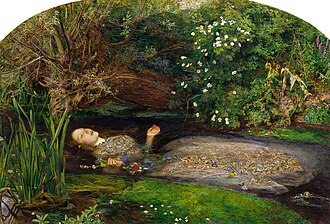 Ophelia - John Everett Millais (1851)
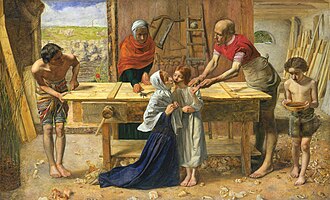 Christ in the House of His Parents - John Everett Millais (1849)
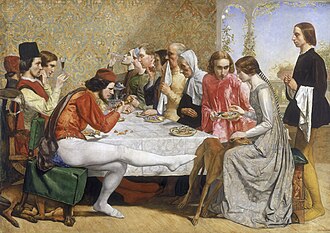 Isabella - John Everett Millais (1849)
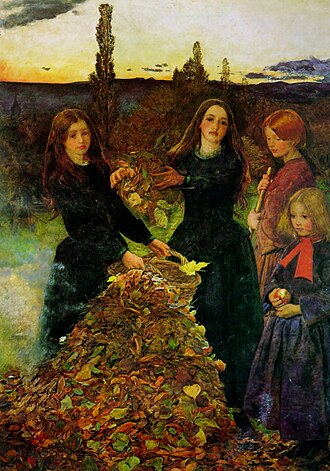 Autumn Leaves - John Everett Millais (1856)
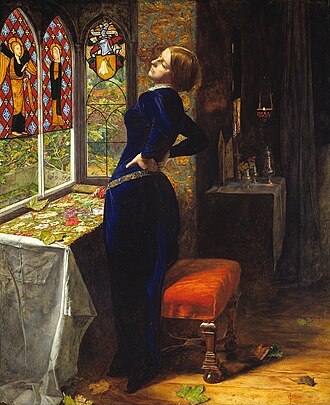 Mariana - John Everett Millais (1851)
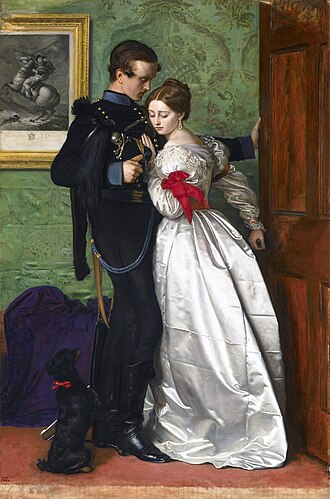 The Black Brunswicker - John Everett Millais (1860)
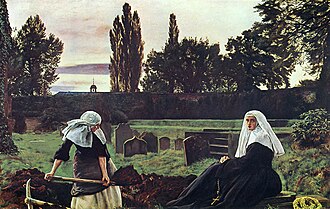 The Vale of Rest - John Everett Millais (1850s)
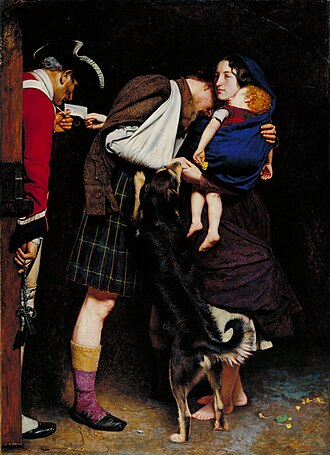 The Order of Release - John Everett Millais (1850s)
Paintings by related artists
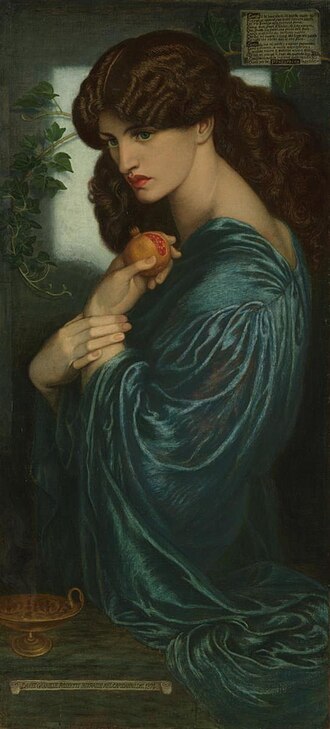 Proserpine - Dante Gabriel Rossetti (1874)
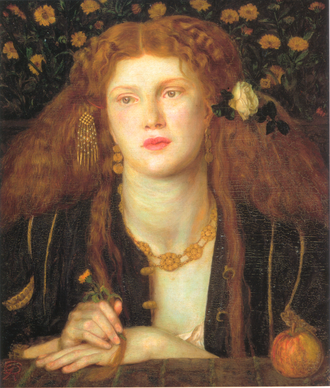 Bocca Baciata - Dante Gabriel Rossetti (1859)
 Hylas and the Nymphs - John William Waterhouse (1896)
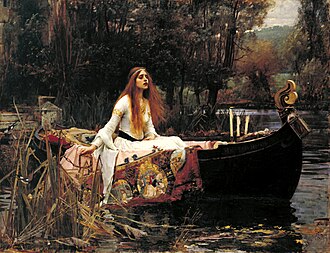 The Lady of Shalott - John William Waterhouse (1888)