Ophelia
John Everett Millais · 1851
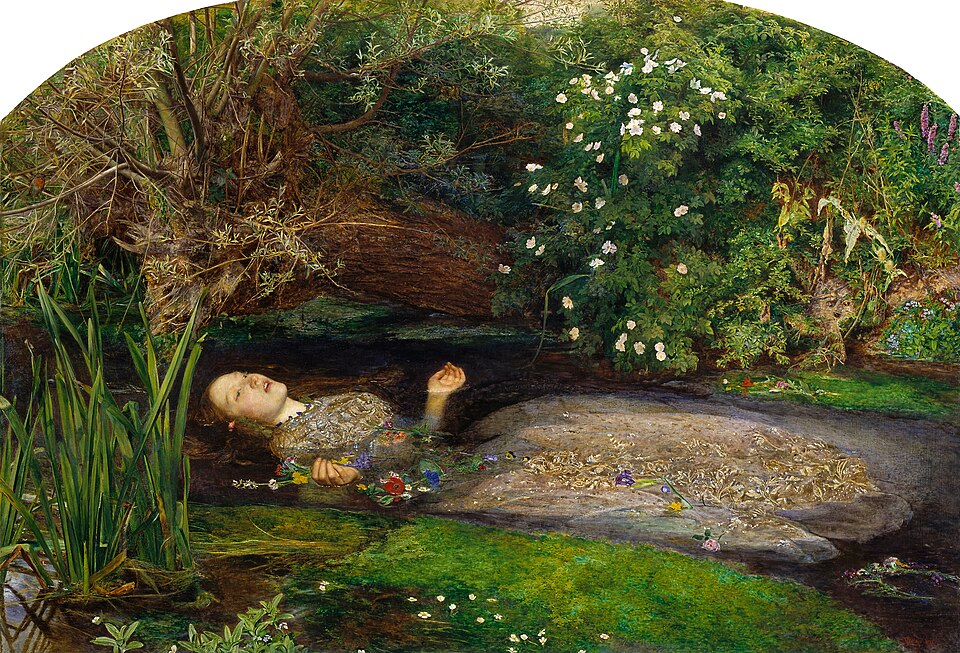
A young woman floats in a stream, hands open, lips parted in song, flowers drifting around her, moments before she drowns. Millais spent five months on an English riverbank to paint the water and weeds behind Shakespeare's Ophelia.
The story behind the painting
In Hamlet, Ophelia's death is never seen on stage; Queen Gertrude only describes it. Out of her mind with grief, Ophelia climbs a willow to hang garlands of wildflowers, a branch breaks, and she lies in the brook singing, buoyed for a while by her clothes until they grow heavy and pull her down. Millais painted the landscape first, on the banks of the Hogsmill River in Surrey, up to 11 hours a day, six days a week, for five months in 1851. He complained of muscular Surrey flies and the threat of a trespass summons, and when winter came he worked inside a straw-covered hut. The figure came second, in his London studio.
What to look for
Every plant along the bank is painted with Pre-Raphaelite precision, and the bright greens make the pale figure stand out. The floating flowers match Shakespeare's garland and the Victorian language of flowers; the red poppy, not in Shakespeare, stands for sleep and death. Ophelia's open arms and upward gaze recall saints and martyrs. The model was Elizabeth Siddal, aged 22, who lay clothed in a full bathtub; Millais let the lamps warming the water go out and she caught a severe cold. A water vole he first painted beside her was removed after visitors guessed it was a hare or a rabbit.
Meaning and intent
Ophelia embodies a favourite Pre-Raphaelite subject, the vulnerable woman meeting her fate on the edge of death. Her clothes spread wide, her song continues, and she seems unaware of her danger, which is exactly what Shakespeare's lines describe. The painting also shows patterns of growth and decay in a living riverbank. Though the play is set in Denmark, the landscape has come to be seen as quintessentially English: the researcher Barbara Webb located the spot at Six Acre Meadow, Old Malden, near where William Holman Hunt was painting at the same time.
Legacy
When it was shown at the Royal Academy in 1852, reactions were mixed. The Times mocked an Ophelia soused in a weedy ditch, like a dairymaid in a frolic, and even John Ruskin, who found the technique exquisite, questioned the Surrey setting. In 1936 Salvador Dalí praised the flagrant surrealism of the Pre-Raphaelites and later made his own Ophelia's Death in 1973. The image has echoed through Olivier's Hamlet of 1948, Lars von Trier's Melancholia, Nick Cave's video with Kylie Minogue and Taylor Swift's 2025 album cover. It now hangs in Tate Britain.
Did you know?
- Painted 1851-1852; landscape done outdoors in Surrey.
- Modelled by Elizabeth Siddal in a bathtub.
- Mixed reviews at the Royal Academy in 1852.
- Now in Tate Britain, London.
About the artist
John Everett Millais (1829-1896)
National Gallery · waist-length hair · history painting · dress · Pre-Raphaelite Brotherhood · Tate · red hair · watercourse · windthrow
More by John Everett Millais
%20-%20Google%20Art%20Project.jpg) Christ in the House of His Parents - John Everett Millais (1849)
Christ in the House of His Parents - John Everett Millais (1849)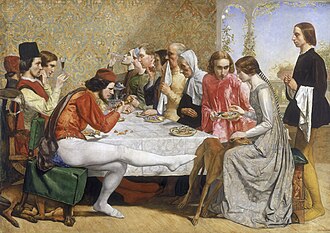 Isabella - John Everett Millais (1849)
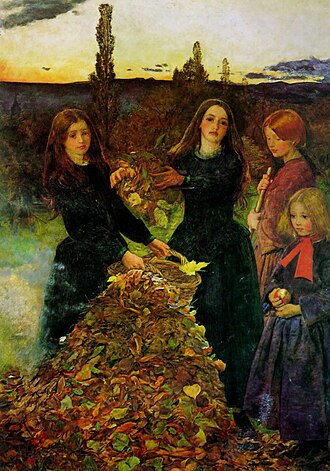 Autumn Leaves - John Everett Millais (1856)
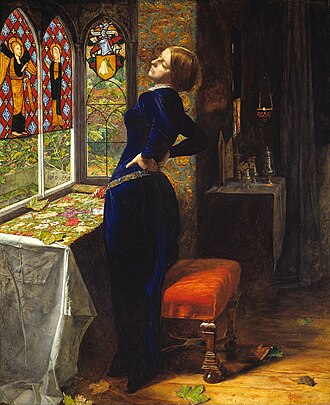 Mariana - John Everett Millais (1851)
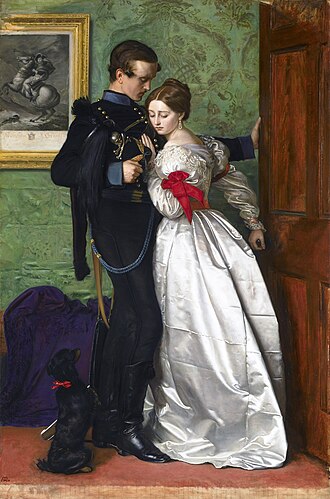 The Black Brunswicker - John Everett Millais (1860)
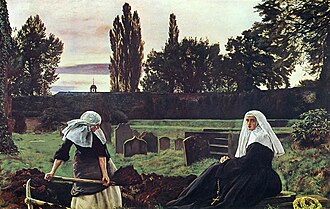 The Vale of Rest - John Everett Millais (1850s)
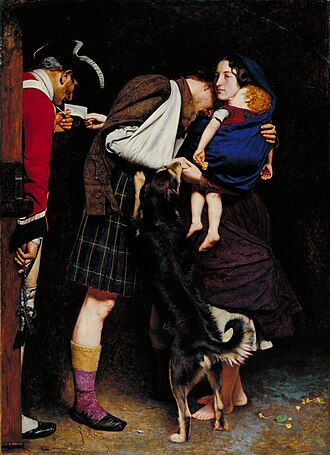 The Order of Release - John Everett Millais (1850s)
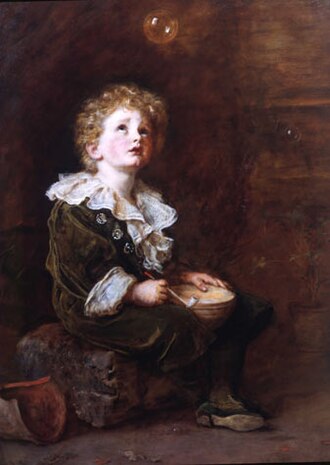 Bubbles - John Everett Millais (1886)
Paintings by related artists
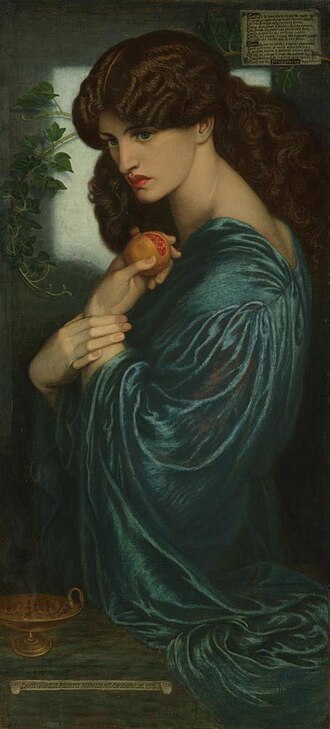 Proserpine - Dante Gabriel Rossetti (1874)
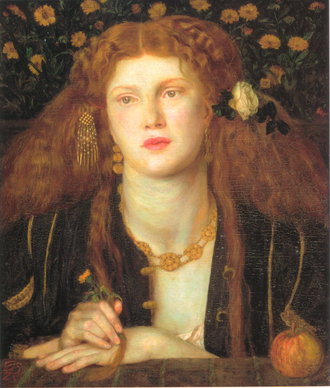 Bocca Baciata - Dante Gabriel Rossetti (1859)
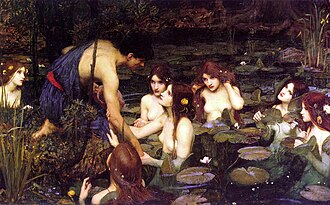 Hylas and the Nymphs - John William Waterhouse (1896)
.jpg) The Lady of Shalott - John William Waterhouse (1888)
The Lady of Shalott - John William Waterhouse (1888)