Christ in the House of His Parents
John Everett Millais · 1849
%20-%20Google%20Art%20Project.jpg)
A boy has cut his hand on a nail in a carpenter's shop, and his mother bends to kiss him. Charles Dickens called the picture hideous, and the outrage made the young Pre-Raphaelites famous overnight.
The story behind the painting
Millais painted this scene of the Holy Family in Joseph's carpentry workshop in 1849 to 1850, when the Pre-Raphaelite Brotherhood was still obscure. It was shown at the Royal Academy alongside a companion piece by his colleague William Holman Hunt, A Converted British Family Sheltering a Christian Missionary from the Persecution of the Druids, which also shows a family helping a wounded person. Millais may have been influenced by John Rogers Herbert's Our Saviour Subject to His Parents at Nazareth, and by a painting of Jesus helping Joseph that was then attributed to Annibale Carracci.
What to look for
Joseph is making a door on his work-table. The young Jesus has cut his hand on a nail, and a drop of blood has fallen on his foot. His grandmother Anne pulls the nail out with pincers, Joseph examines the wound, and Mary offers her cheek for a kiss. The young John the Baptist carries in a bowl of water, and an assistant watches. Behind them, a dove rests on a ladder against the wall, and through the door you can see sheep in a fold. Notice the shavings and dirt on the floor, painted with the same care as the faces.
Meaning and intent
Every detail carries a meaning. The wound in the hand foreshadows the crucifixion, and the water John brings prefigures the baptism. The ladder recalls Jacob's Ladder, the dove is the Holy Spirit, other tools refer to the Trinity, the assistant stands for the future Apostles and the sheep for the Christian flock. Millais probably drew on Dürer's print Melancholia I and on Quattrocento painting. The shock was that this symbolism was placed in a real, ordinary workshop with working people, not in an idealised holy setting.
Legacy
Critics were outraged by the realism. One found it painful to see the young Saviour as a red-headed Jewish boy; others saw signs of rickets and slum disease. Dickens described Jesus as a wry-necked, blubbering boy and Mary as so ugly she would stand out as a monster in the lowest gin-shop in England. Queen Victoria asked to see it privately at Buckingham Palace. The uproar made the Pre-Raphaelites famous and opened a debate on modernity, realism and medievalism. John Ruskin defended Millais in the press, though he disliked the painting. It now hangs in Tate Britain.
Did you know?
- Painted in 1849 to 1850 by John Everett Millais.
- Charles Dickens attacked it in a famous review.
- Queen Victoria asked to view it privately.
- Now in Tate Britain, London.
About the artist
John Everett Millais (1829-1896)
religious art · Mary · National Gallery · Jesus Christ · Pre-Raphaelite Brotherhood · Tate · John the Baptist · Saint Joseph · Saint Anne
More by John Everett Millais
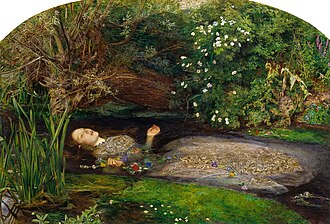 Ophelia - John Everett Millais (1851)
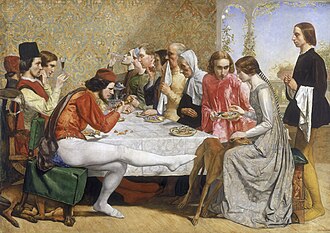 Isabella - John Everett Millais (1849)
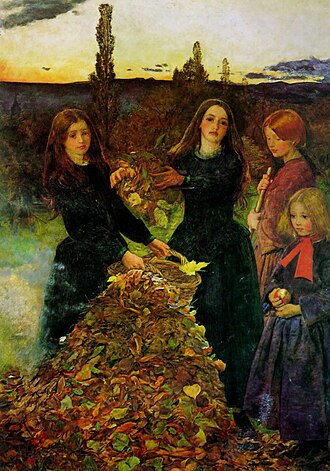 Autumn Leaves - John Everett Millais (1856)
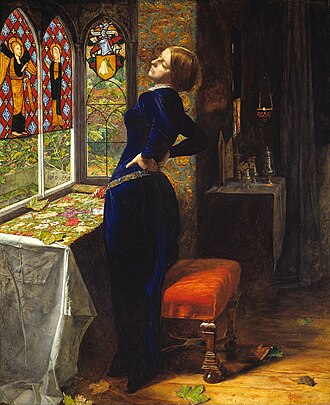 Mariana - John Everett Millais (1851)
 The Black Brunswicker - John Everett Millais (1860)
 The Vale of Rest - John Everett Millais (1850s)
 The Order of Release - John Everett Millais (1850s)
 Bubbles - John Everett Millais (1886)
Paintings by related artists
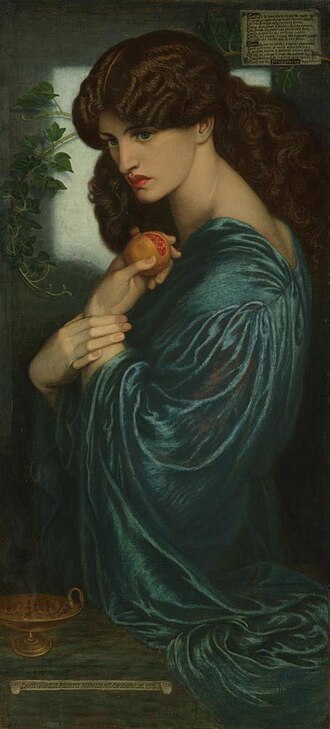 Proserpine - Dante Gabriel Rossetti (1874)
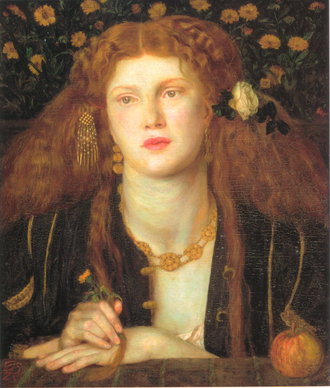 Bocca Baciata - Dante Gabriel Rossetti (1859)
 Hylas and the Nymphs - John William Waterhouse (1896)
.jpg) The Lady of Shalott - John William Waterhouse (1888)
The Lady of Shalott - John William Waterhouse (1888)