Proserpine
Dante Gabriel Rossetti · 1874
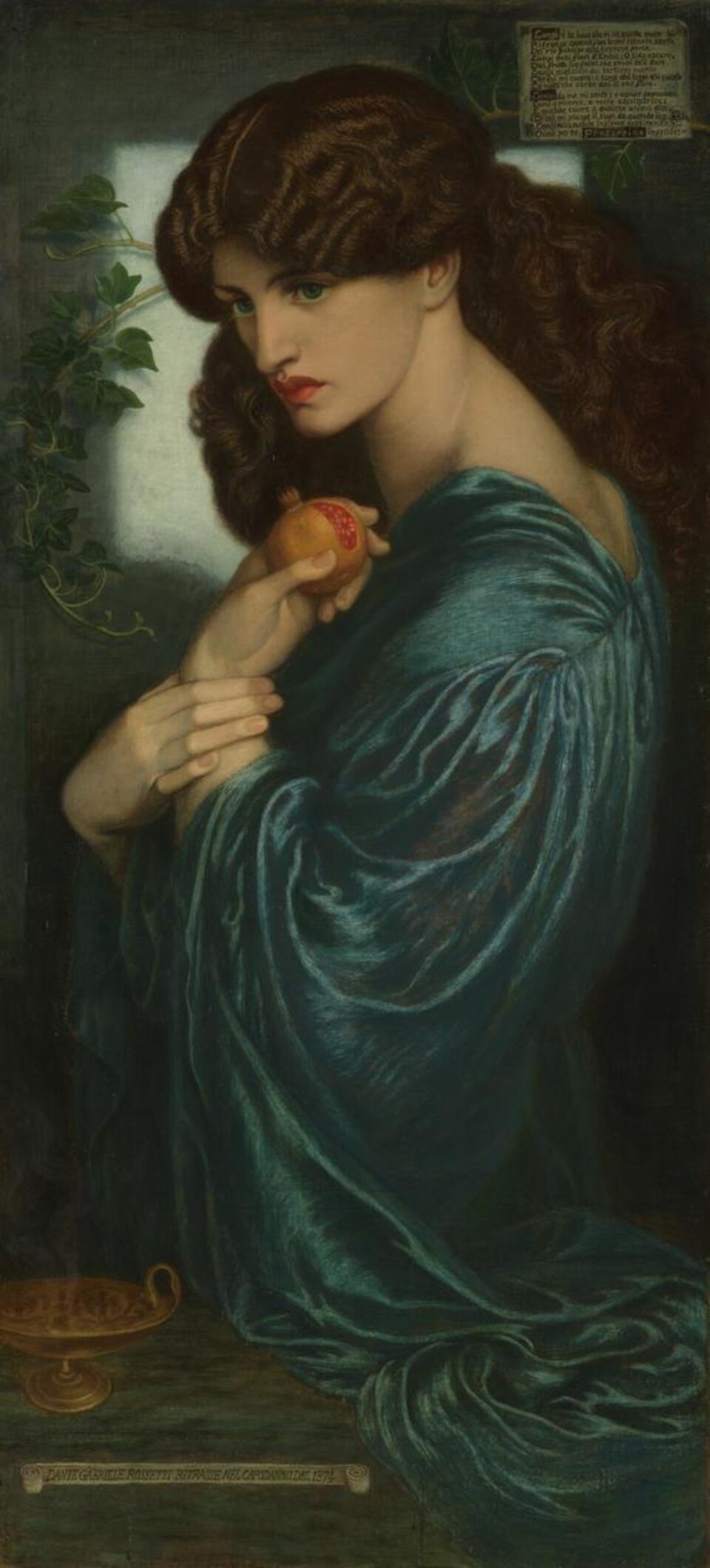
A pale goddess holds a bitten pomegranate in a dark corridor, glancing toward a brief gleam of the world above. Rossetti painted this subject at least eight times, and gave her the face of Jane Morris.
The story behind the painting
In Roman myth, Proserpina was carried off to the underworld by Pluto. Jupiter agreed to return her to her mother Ceres only if she had eaten nothing there, but she had eaten six pomegranate seeds, so she must spend six months of each year below. Rossetti painted at least eight versions between 1871 and 1882, the year he died. This one, the seventh, was commissioned by Frederick Richards Leyland and is in Tate Britain; a very similar version is in Birmingham. The model was Jane Morris, wife of his colleague William Morris, painted at a time when his love for her was obsessive and his mental health fragile.
What to look for
Rossetti described the scene himself: Proserpine walks a gloomy corridor of her palace with the fatal fruit in her hand, and a gleam from some opening strikes the wall behind her, letting in the upper world for a moment. She glances toward it, lost in thought. The incense burner marks her as a goddess, and the ivy stands for clinging memory. The red of the pomegranate's flesh matches her full lips, her dress falls like spilling water, and her sad eyes share the cold blue that fills most of the canvas. A scroll at lower left dates it to the beginning of 1874.
Meaning and intent
The shadow on the wall is her time in Hades and the patch of sunlight her glimpse of earth. Wikipedia reads a second story in the myth: Rossetti stayed with Jane at Kelmscott Manor each summer, while in winter she returned to William Morris, echoing Proserpine's half year of freedom. Like the goddess who tasted forbidden fruit, Jane was trapped by convention, torn between her husband, the father of her two daughters, and her lover. Rossetti, long torn between painting and poetry, wrote a sonnet on longing for the work, which may hint at his wish to draw her away from an unhappy marriage.
Legacy
Rossetti inscribed the sonnet in Italian at the top right of the canvas, and in English on the frame, which he designed himself with roundels like slices of pomegranate, echoing the fruit in her hand. Leyland commissioned 18 paintings from Rossetti. After his first purchase, the two men explored the idea of a triptych, finally formed by Mnemosyne, The Blessed Damozel and Proserpine. Three more of Rossetti's paintings hung in Leyland's drawing room, all of which Leyland called stunners.
Did you know?
- The seventh of at least eight versions, painted 1871-1882.
- Model: Jane Morris.
- Rossetti wrote a sonnet for it, inscribed on canvas and frame.
- Commissioned by Frederick Richards Leyland; now in Tate Britain.
About the artist
Dante Gabriel Rossetti (1828-1882)
mythological painting · Pre-Raphaelite Brotherhood
More by Dante Gabriel Rossetti
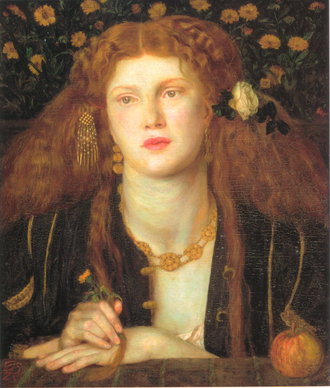 Bocca Baciata - Dante Gabriel Rossetti (1859)
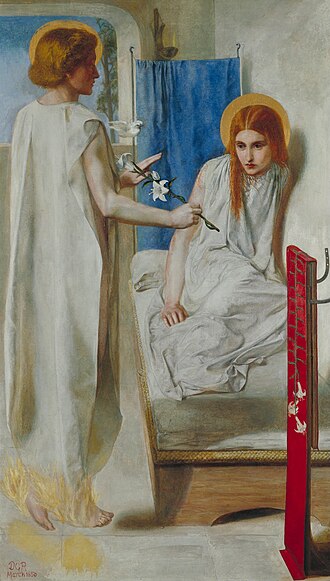 Ecce Ancilla Domini - Dante Gabriel Rossetti (1850)
.jpg) Dante's Dream - Dante Gabriel Rossetti (1871)
Dante's Dream - Dante Gabriel Rossetti (1871)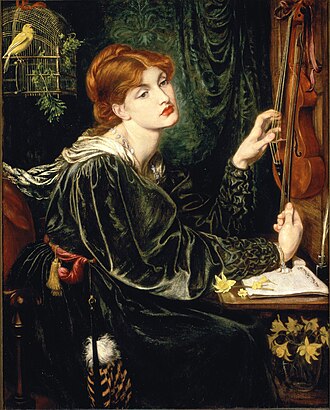 Veronica Veronese - Dante Gabriel Rossetti (1872)
.jpg) Monna Rosa - Dante Gabriel Rossetti (1867)
Monna Rosa - Dante Gabriel Rossetti (1867)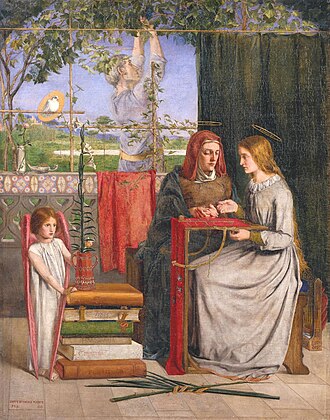 The Girlhood of Mary Virgin - Dante Gabriel Rossetti (1840s)
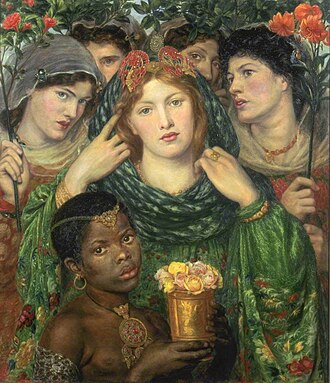 The Beloved - Dante Gabriel Rossetti (1865)
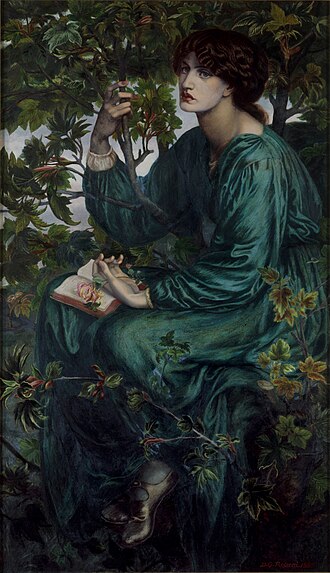 The Day Dream - Dante Gabriel Rossetti (1880)
Paintings by related artists
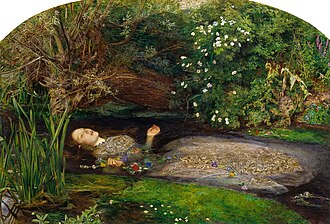 Ophelia - John Everett Millais (1851)
%20-%20Google%20Art%20Project.jpg) Christ in the House of His Parents - John Everett Millais (1849)
Christ in the House of His Parents - John Everett Millais (1849)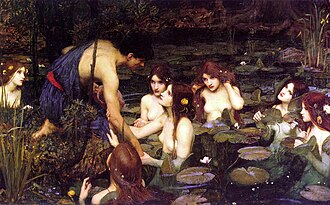 Hylas and the Nymphs - John William Waterhouse (1896)
.jpg) The Lady of Shalott - John William Waterhouse (1888)
The Lady of Shalott - John William Waterhouse (1888)