The Gypsy Madonna
Titian · 1510
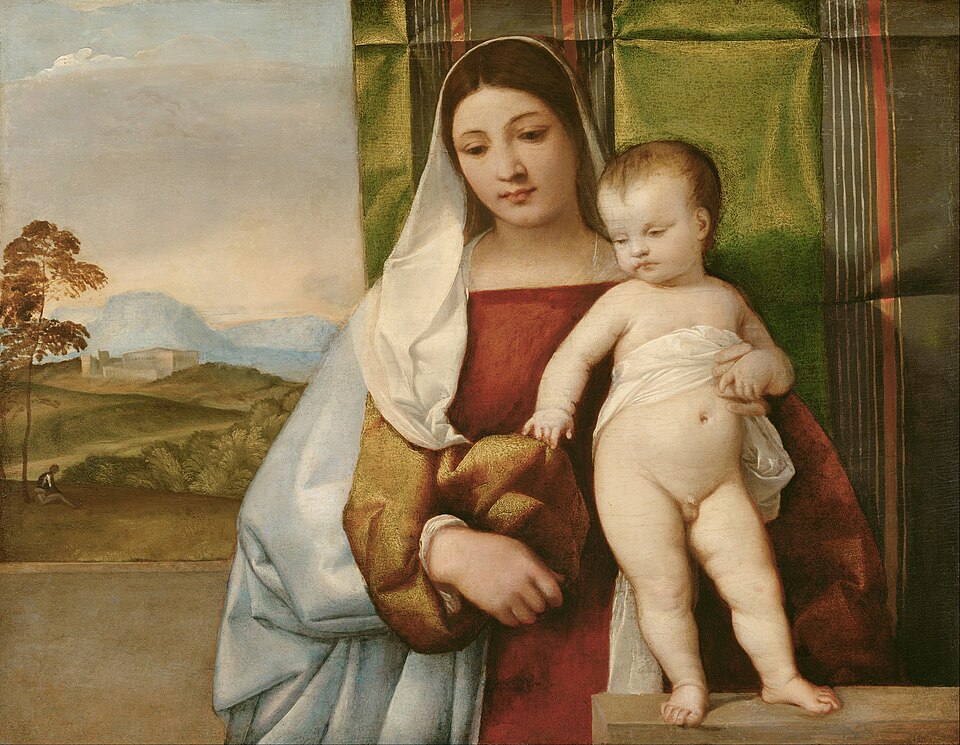
A very young Virgin holds her child, his small hands busy with her fingers and her dress. Titian was about twenty-one, still in the shadow of Bellini and Giorgione, and already painting in his own voice.
The story behind the painting
The Gypsy Madonna is a Madonna and Child in oil on panel by Titian, from about 1510-11, made for display in a home rather than a church. It is close to compositions by his former master Giovanni Bellini, especially, when reversed, one of 1509 now in Detroit, and has been seen as a challenge to the much older painter on his own ground. Technical study shows it was first even closer to that Bellini, with many changes made along the way. Titian used only quick strokes of a wide brush as guidelines, and the Child's head first looked out at the viewer. Wikidata dates it 1510.
What to look for
The Virgin seems young even for a Madonna. The Child's hands are unusually busy, one with his mother's fingers, the other with her dress, unlike in the Bellini. To the right hangs a cloth of honour, its folds carefully painted, which implies an empty throne just out of sight. To the left opens a landscape almost identical to part of the background of the Dresden Venus, whose landscape Titian is thought to have finished after Giorgione's death in 1510. The horizontal format turns the older formal enthroned Madonna into something halfway to an informal one in nature.
Meaning and intent
The name Gypsy Madonna dates from the 19th century, when the Virgin's supposed dusky complexion, dark hair and eyes made viewers see her as a Romani woman. The style owes much to Giorgione, especially the harmonious fullness and slow gravity of the Virgin's figure, a type Titian did not repeat in later Madonnas, and the work was often given to Giorgione in the early 20th century. S. J. Freedberg wrote that no picture before it gave such a sense of presences existing palpably in an atmosphere, absorbing coloured light so that each pore of flesh or cloth becomes texture.
Legacy
Like several important early Venetian paintings now in Vienna, it was very likely in the collection of Bartolomeo della Nave in Venice. In 1636 it was sold to the Duke of Hamilton, who took it to London. In 1659, after Hamilton's execution, Archduke Leopold Wilhelm of Austria acquired it in Brussels, and his collection soon passed to the imperial collection in Vienna. It hangs today in the Kunsthistorisches Museum. Despite its debts to Bellini and Giorgione, it is read as a sign of Titian's independent character and style emerging.
Did you know?
- Oil on panel, about 1510-11.
- Made for a home, not a church.
- Its name dates from the 19th century.
- Now in the Kunsthistorisches Museum, Vienna.
About the artist
Titian (1488-1576)
religious art · Mary · High Renaissance · Christ Child · Venetian school · Kunsthistorisches Museum · landscape · curtain · Madonna and Child · mountain
More by Titian
.jpg) Venus of Urbino - Titian (1538)
Venus of Urbino - Titian (1538)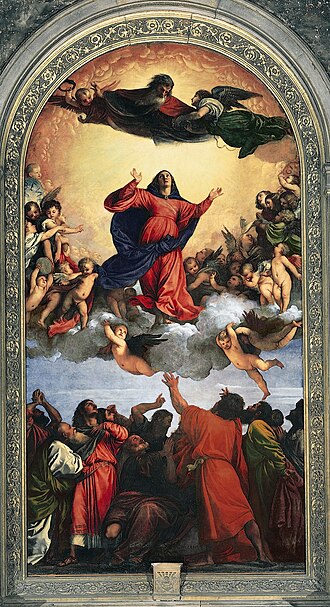 Assumption of the Virgin - Titian (1510s)
FXD.jpg) Sacred and Profane Love - Titian (1510s)
Sacred and Profane Love - Titian (1510s)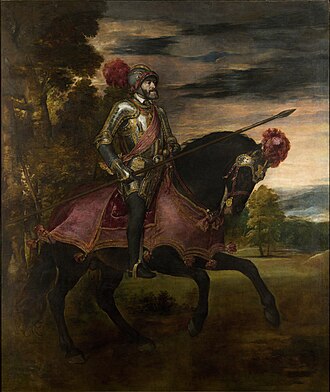 Equestrian Portrait of Charles V - Titian (1548)
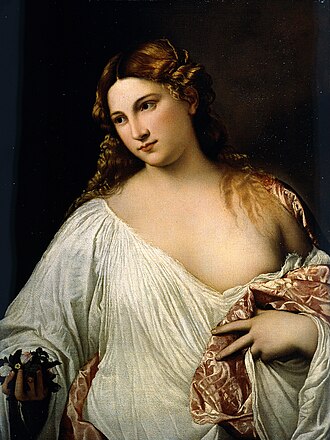 Flora - Titian (1517)
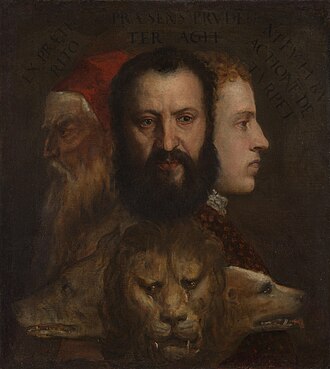 Allegory of Prudence - Titian (1550)
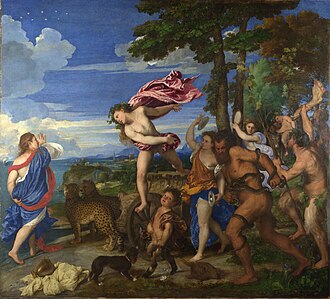 Bacchus and Ariadne - Titian (1520s)
%20nave%20left%20-%20Altar%20of%20Madona%20di%20Ca'Pesaro.jpg) Pesaro Madonna - Titian
Pesaro Madonna - Titian