The Flaying of Marsyas
Titian · 1570s
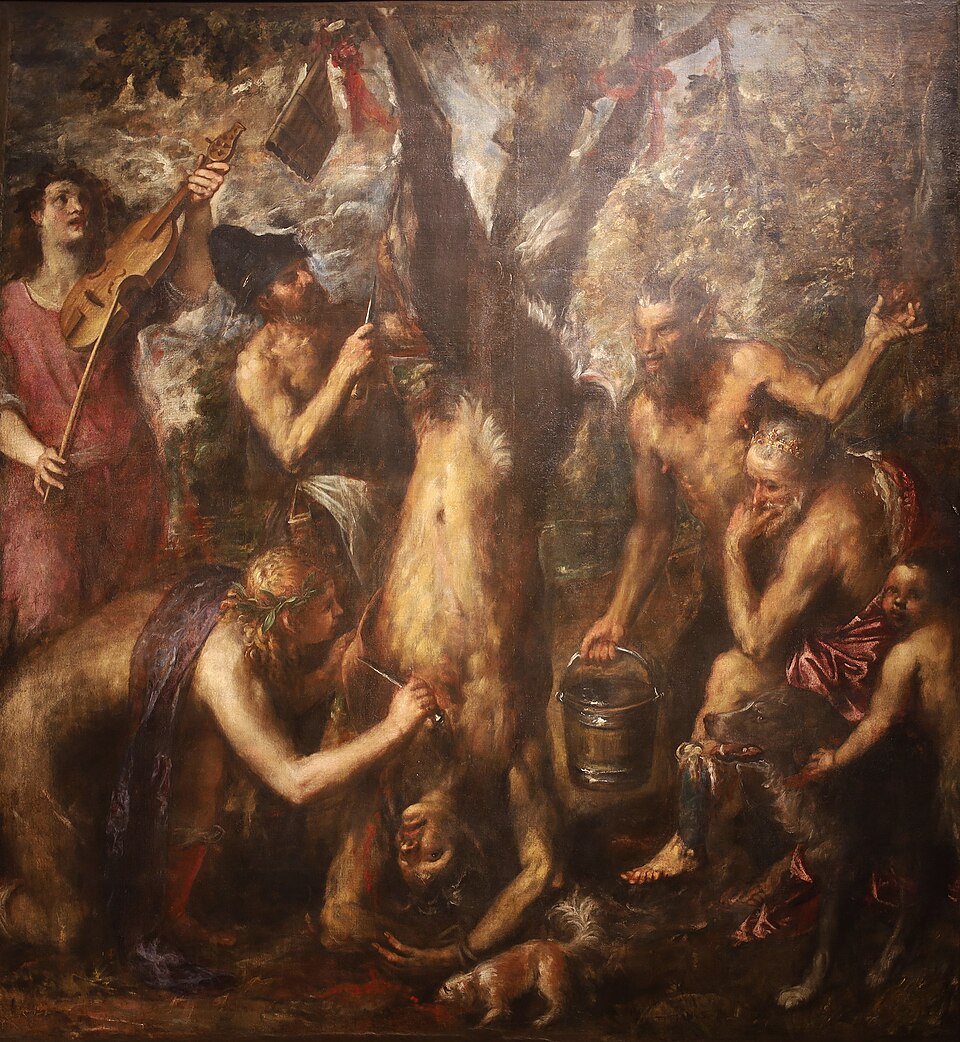
A satyr hangs upside down from a tree while a god peels away his skin, and an old king watches in silence. Titian painted this in his last years, and visitors in London in 1983 stood riveted, unsure how something so cruel could be so beautiful.
The story behind the painting
Titian probably painted this canvas between about 1570 and his death in 1576, when he was in his eighties. It is one of his last works and may be unfinished, though a partial signature sits on the stone in the foreground. The violent subject may have been prompted by the death of Marcantonio Bragadin, the Venetian commander of Famagusta in Cyprus, who was flayed by the Ottomans when the city fell in August 1571, causing enormous outrage in Venice. The composition is clearly derived from a design by Giulio Romano made decades earlier.
What to look for
Marsyas hangs head down, goat legs bound, his body placed like a slaughtered animal; his navel sits almost exactly at the centre of the canvas. Apollo, wearing a laurel wreath, kneels and cuts at his chest, holding a flap of skin. Marsyas's pan pipes hang from the tree above him. A musician plays a lira da braccio, perhaps Apollo again, Orpheus or Olympus. A Scythian figure works on a leg, a satyr carries a bucket, a boy holds back a large dog, and a small dog laps the blood. The seated old man on the right is King Midas, often thought to be a self-portrait. Technical study shows the musician and the boy with the dog were changed or added late.
Meaning and intent
The story comes from Ovid's Metamorphoses: the satyr rashly challenged Apollo to a musical contest and lost, crying out why do you tear me from myself. The usual reading is the disaster that follows pride before a god, and the triumph of the ordered strings over the impulsive pipes. Many writers link it to Renaissance Neoplatonism, the liberation of the spirit from the body, echoing Michelangelo's flayed skin in the Sistine Last Judgment and Dante's prayer to Apollo. It has been called the most discussed, revered and loathed of all Titian's paintings.
Legacy
The painting has been in Kromeriz in Moravia since 1673 and now belongs to the Archbishopric of Olomouc. Far from the usual routes of Venetian art, it did not enter critical literature until 1909, and by the 1930s scholars accepted it as an important late work. At the Royal Academy in London in 1983 it was the star attraction; John Russell called it the most astonishing picture in the show, and Lawrence Gowing wrote that London had been half under its spell. Iris Murdoch called it the greatest in the Western canon and placed it in three of her novels.
Did you know?
- Painted by Titian between about 1570 and 1576, possibly unfinished.
- Based on Ovid's Metamorphoses, Book 6.
- In Kromeriz, Moravia, since 1673.
- The star of the Royal Academy exhibition in London in 1983.
About the artist
Titian (1488-1576)
mythological painting · Venetian school · Apollo
More by Titian
.jpg) Venus of Urbino - Titian (1538)
Venus of Urbino - Titian (1538)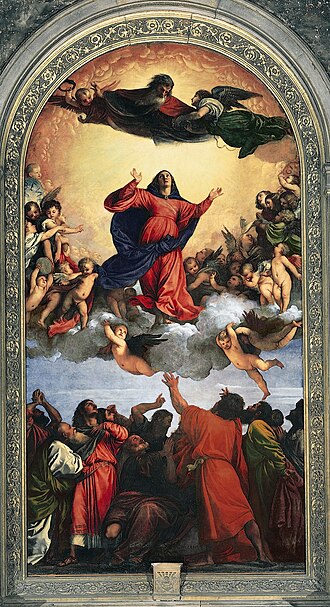 Assumption of the Virgin - Titian (1510s)
FXD.jpg) Sacred and Profane Love - Titian (1510s)
Sacred and Profane Love - Titian (1510s)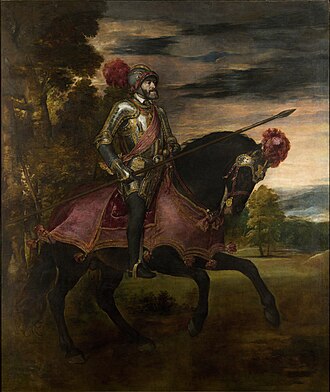 Equestrian Portrait of Charles V - Titian (1548)
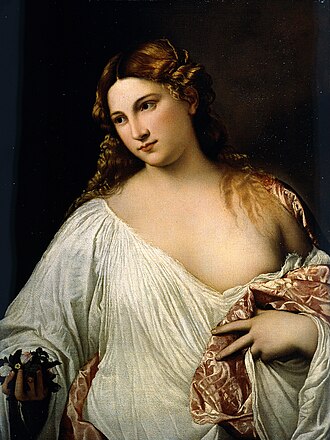 Flora - Titian (1517)
 Allegory of Prudence - Titian (1550)
 Diana and Actaeon - Titian (1550s)
 Bacchus and Ariadne - Titian (1520s)
Paintings by related artists
 Last Supper - Jacopo Tintoretto (1563)
 Miracle of the Slave - Jacopo Tintoretto (1540s)