Impressionismus
Impressionism began in Paris in the 1870s, when a group of young painters stepped outside with their easels to catch light as it changed.
Claude Monet · Pierre-Auguste Renoir · Édouard Manet · Vincent van Gogh · J. M. W. Turner
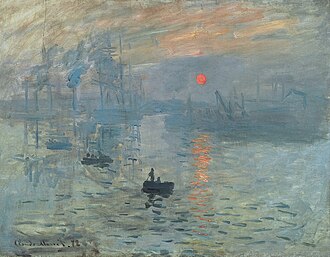 Impression, Sonnenaufgang - Claude Monet (1872)
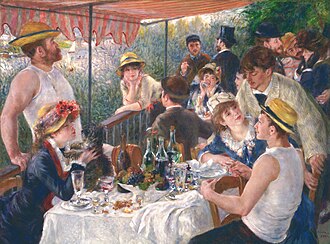 Das Frühstück der Ruderer - Pierre-Auguste Renoir (1881)
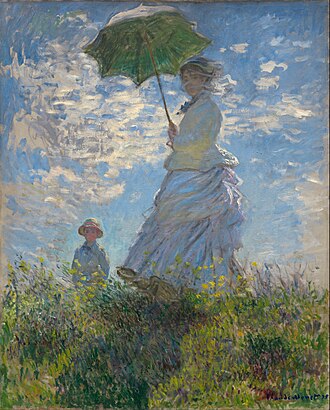 Die Frau mit dem Sonnenschirm - Claude Monet (1875)
%20(33539037428).jpg) Bar in den Folies-Bergère - Édouard Manet (1882)
Bar in den Folies-Bergère - Édouard Manet (1882)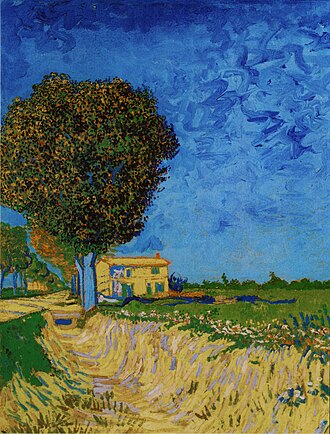 Allee bei Arles - Vincent van Gogh (1888)
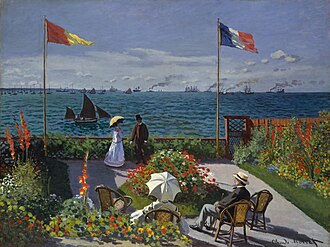 Garten in Sainte-Adresse - Claude Monet (1867)
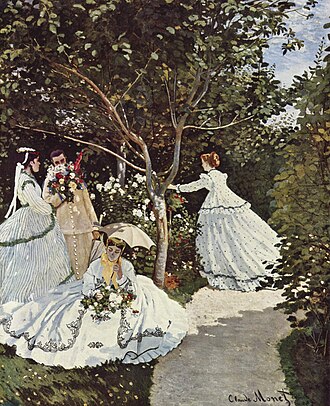 Frauen im Garten - Claude Monet (1866)
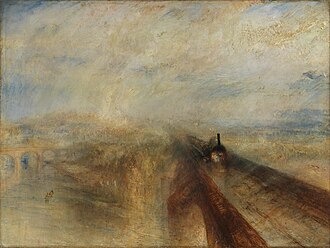 Rain, Steam and Speed - The Great Western Railway - J. M. W. Turner (1844)
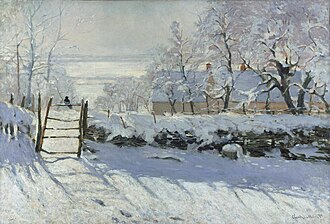 Die Elster - Claude Monet (1868)
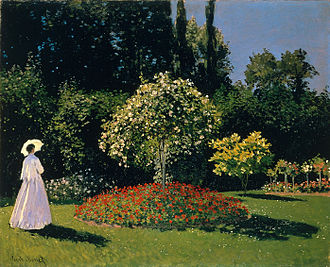 Frau im Garten - Claude Monet (1867)
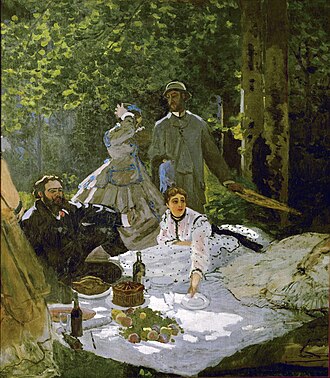 Das Frühstück im Grünen - Claude Monet (1866)
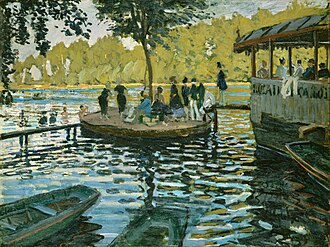 La Grenouillère - Claude Monet (1869)
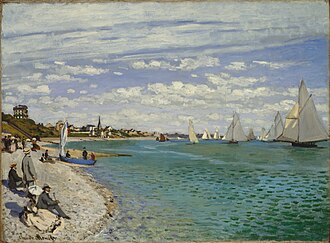 Regatta at Sainte-Adresse - Claude Monet (1867)
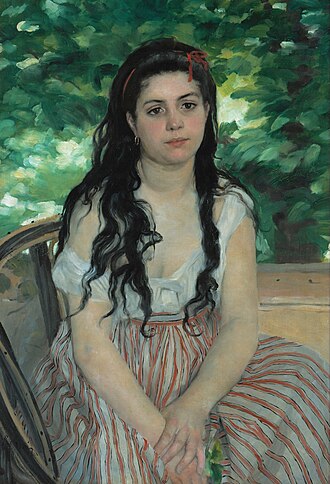 Im Sommer - Pierre-Auguste Renoir (1868)
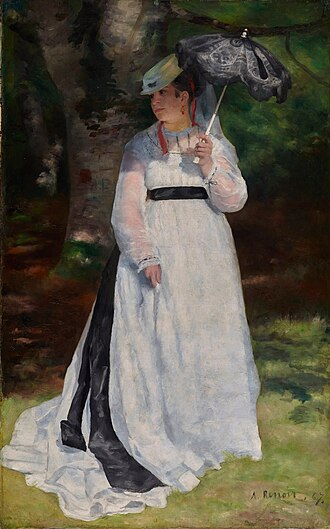 Lise mit dem Sonnenschirm - Pierre-Auguste Renoir (1867)
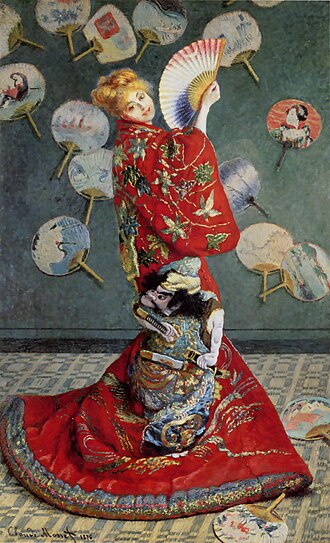 Madame Monet im Kimono - Claude Monet (1876)
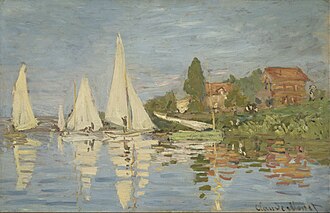 Regatta bei Argenteuil - Claude Monet (1872)
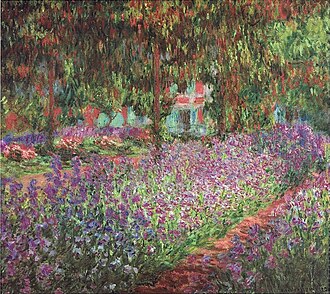 Der Garten des Künstlers in Giverny - Claude Monet (1900)
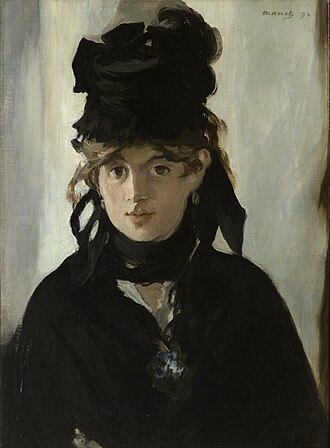 Berthe Morisot mit Veilchenstrauß - Édouard Manet (1872)
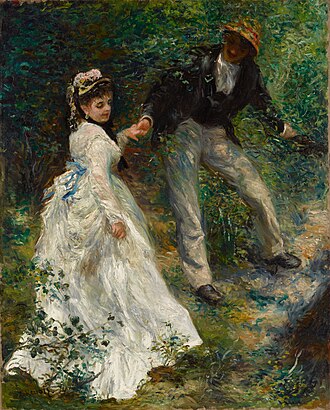 La Promenade - Pierre-Auguste Renoir (1870)
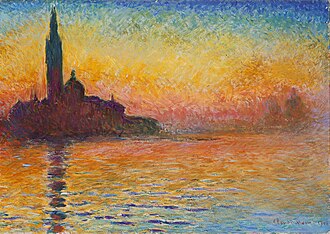 San Giorgio Maggiore in der Dämmerung - Claude Monet (1908)
Neugierig auf Impressionismus?
Impressionism began in Paris in the 1870s, when a group of young painters stepped outside with their easels to catch light as it changed. Their quick, visible brushstrokes and everyday subjects shocked the art world at first, yet today these sunny scenes are among the most loved paintings anywhere.
What is Impressionism, in simple words?
Impressionism is a style of painting that grew in Paris in the 1870s and 1880s. Instead of polished, detailed pictures of history or religion, the Impressionists painted ordinary modern life and landscapes, trying to catch how light looked at a particular moment. They used visible brushstrokes, open compositions and bright colour, and they wanted to express their perception of nature rather than make an exact copy of it.
Why is it called Impressionism?
The name comes from Claude Monet's painting Impression, Sunrise (1872). In 1874 the critic Louis Leroy wrote a mocking review in the newspaper Le Charivari, using the title to suggest the work was only a sketch, not a finished painting. He even compared it unfavourably to wallpaper in its embryonic state. The joke backfired: the label stuck and became the movement's proud name.
When and where did it start?
It took shape in Paris, France, during the 1870s and 1880s. A key moment was April 1874, when the group held its first independent exhibition in the studio of the photographer Nadar. Between 1874 and 1886 they organised eight such exhibitions in total, showing their work outside the official system that usually decided which artists the public would see.
Who were the main painters?
The central figures include Claude Monet, Pierre-Auguste Renoir, Camille Pissarro, Alfred Sisley, Edgar Degas, Berthe Morisot, Gustave Caillebotte, Frédéric Bazille, Armand Guillaumin, Paul Cézanne and Édouard Manet. The American Mary Cassatt also played a major part. Morisot, Cassatt, Eva Gonzalès and Marie Bracquemond are often called the Women Impressionists; Morisot took part in seven of the group exhibitions and Cassatt in four.
How can I recognise an Impressionist painting?
Look for short, thick strokes of unmixed colour placed side by side, so the scene seems to shimmer. Shadows are often blue, reflecting the sky, especially on snow. Pure black is mostly avoided, and canvases often start on a white or light ground. Compositions can feel like a snapshot, with unusual angles and figures cut off at the edge. Subjects are usually everyday: streets, gardens, cafés, rivers and dancers.
How is it different from Realism and from Post-Impressionism?
Impressionism took Realism's interest in ordinary, modern life, which Gustave Courbet had championed, but changed the technique. Instead of precise detail worked out in the studio, it used loose brushwork and painting outdoors to capture light and immediacy. Later, Post-Impressionists such as Cézanne and Van Gogh kept the Impressionist approach to colour but built more structured and personal kinds of painting on top of it.
Why was it controversial at the time?
French art was dominated by the Académie des Beaux-Arts, which valued history and religious subjects and looked down on landscape. Its juries kept rejecting these painters through the 1860s, so their loose, sketch-like works seemed unfinished and even insulting to tradition. The conventional art world reacted with harsh opposition. Gradually, though, the public came to feel the Impressionists had found a fresh and original way of seeing.
What were the painters trying to do?
They wanted to capture fleeting moments: changing light on a landscape, movement in a street, a passing glance. Painting outdoors, en plein air, helped them work fast in real conditions, and new premixed paints in tin tubes made that practical. Photography also pushed them; rather than compete with exact detail, they explored colour and light in ways a camera could not, giving a personal view of the world.
Which famous works should I see first?
Start with Monet's Impression, Sunrise, the painting that named the movement, then his Haystacks and Woman with a Parasol. Add Renoir's Dance at Le Moulin de la Galette, Caillebotte's Paris Street; Rainy Day, Degas's L'Absinthe and The Dance Class, Pissarro's Boulevard Montmartre, Mary Cassatt's The Child's Bath and Berthe Morisot's The Harbour at Lorient. Together they show city life, landscape and intimate home scenes.
Where can I see these paintings today?
In Paris, Impression, Sunrise hangs at the Musée Marmottan Monet, and the Musée d'Orsay has Renoir's Dance at Le Moulin de la Galette and Degas's L'Absinthe. The Art Institute of Chicago holds Caillebotte's Paris Street; Rainy Day and Cassatt's The Child's Bath. Monet's Woman with a Parasol and Morisot's The Harbour at Lorient are in the National Gallery of Art in Washington, and one of Monet's Haystacks is in Boston's Museum of Fine Arts.
Why does Impressionism still matter?
It changed what painting could be about and how it could be made. Outdoor painting, personal perception and modern everyday subjects all became normal; by the 1880s even official Salon art had absorbed a diluted version of its methods. Impressionism also led directly to later movements, including Neo-Impressionism, Post-Impressionism, Expressionism and Cubism, so much of modern art starts here.