Miss La La at the Cirque Fernando
Edgar Degas · 1879
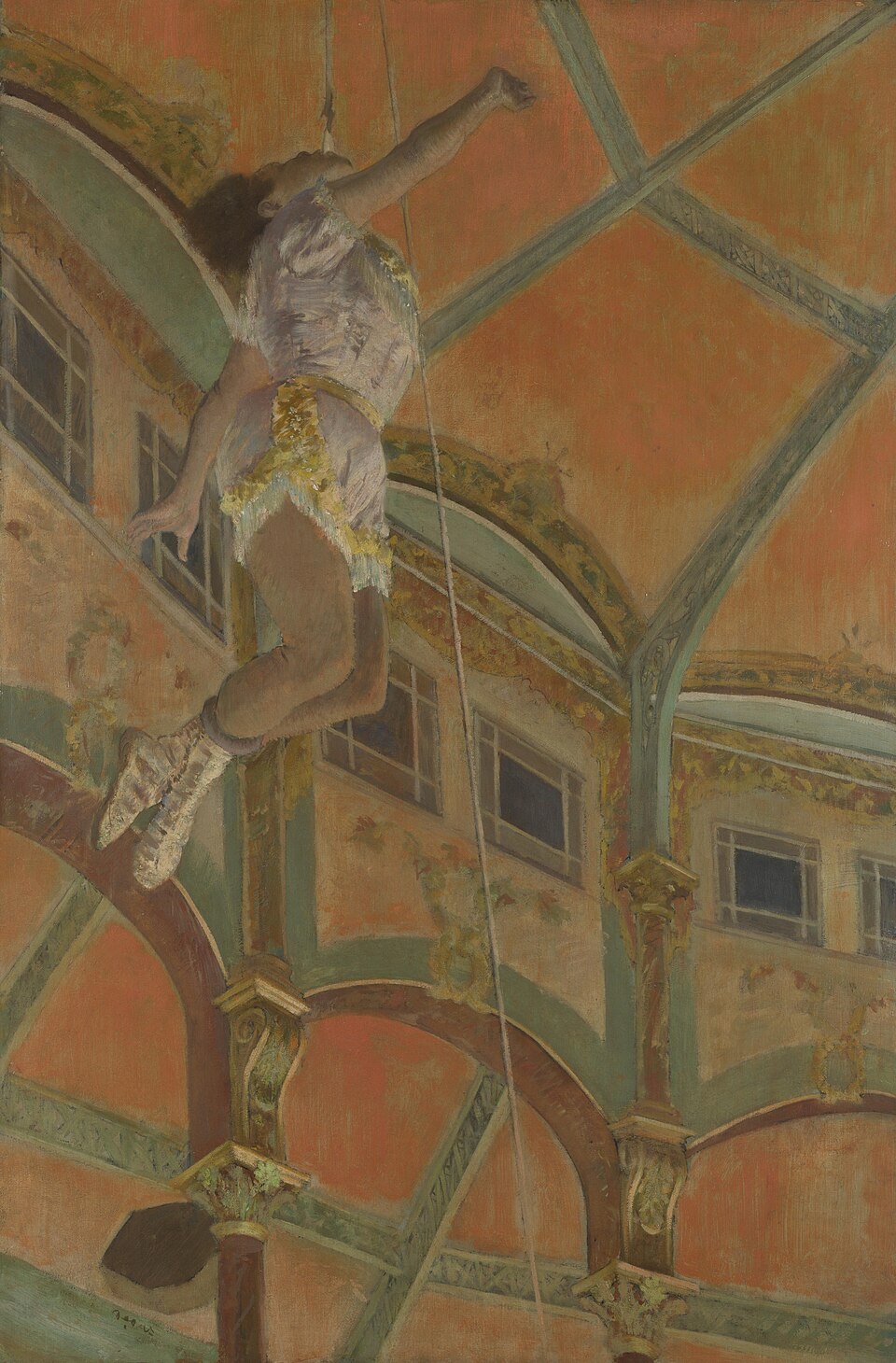
High under a circus dome, a woman hangs from a rope gripped only in her teeth. Degas looked up at her four times in one January week. It is his only circus painting, and she is the only identifiable person of colour in his work.
The story behind the painting
The Cirque Fernando in Paris was built in 1875. Between 19 and 25 January 1879, Degas visited it at least four times. Its star was Miss La La, a mixed race acrobat known as la femme canon, the cannon woman, because she fired a cannon hung on chains that she held in her teeth while hanging by her knees from a trapeze. Degas filled his notebook with sketches and made at least four pastel studies, working out the pose, composition and colours. He showed the painting at the Fourth Impressionist Exhibition that same year.
What to look for
We see her as the audience did, gazing up. She hangs from the rafters by a rope clenched between her teeth. Early sketches showed her from the front, head turned back, as on her posters; Degas changed to a profile for more curves and movement. Behind her, the lines of the ceiling form a web that holds her in place, with many verticals and diagonals but no horizontals. The colours are unsaturated orange and green with greys; even her limbs mix orange and green, a flesh technique Degas learned from Cennino Cennini.
Meaning and intent
The painting is admired and debated. Degas did not give her stereotyped features, and some critics think he wanted to challenge old views of black women. But comparing his studies shows he lightened her skin and changed her blue costume to yellow and violet, and he hid her face. Marilyn R. Brown suggested this may reflect Degas's anxiety about his own racial identity. The low viewpoint has been read as reversing the expected hierarchy between a largely white audience and a mixed race performer. Is it a portrait, or a circus scene?
Legacy
Degas may also have been thinking of the steep, foreshortened ceiling paintings of Italian artists such as Tiepolo. The painting was bought by the trustees of the Courtauld Fund in 1925 and first shown at the Tate, then moved to the National Gallery in London in the 1950s, along with works by Manet, Renoir, Seurat and Van Gogh. In 2024 the National Gallery held an exhibition, Discover Degas and Miss La La, with his drawings and with photographs and posters telling her story.
Schon gewusst?
- Painted in 1879 after at least four visits to the Cirque Fernando.
- Degas's only circus painting.
- Shown at the Fourth Impressionist Exhibition in 1879.
- In the National Gallery, London.
Über den Künstler
Edgar Degas (1834-1917)
Frau · Porträt · National Gallery · Impressionismus · Zirkus
Mehr von Edgar Degas
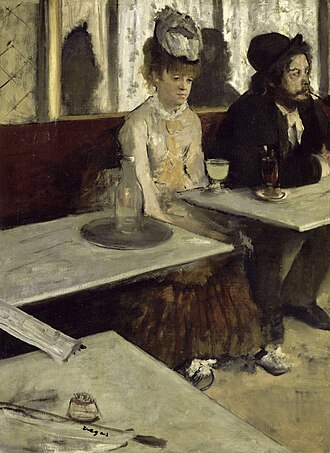 Der Absinth - Edgar Degas (1875)
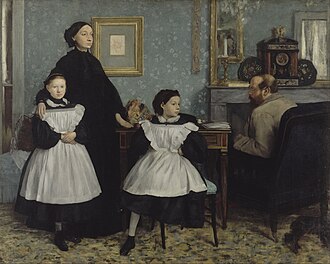 Die Bellelli Familie - Edgar Degas (1858)
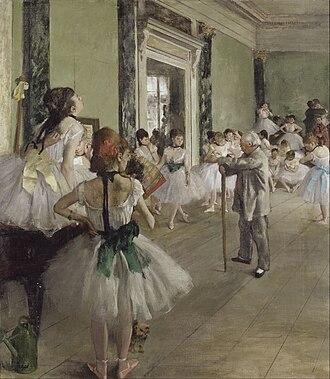 Die Tanzklasse - Edgar Degas (1871)
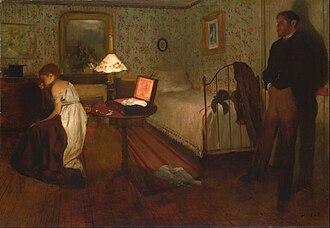 Intérieur - Edgar Degas (1868)
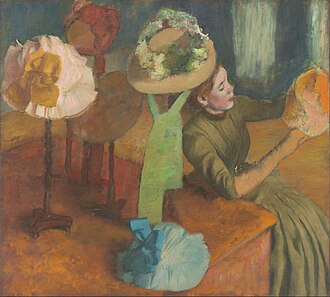 Das Modewarengeschäft - Edgar Degas
.jpg) Das Wannenbad - Edgar Degas (1886)
Das Wannenbad - Edgar Degas (1886)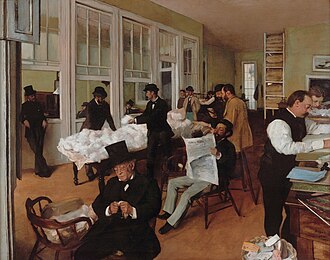 Das Baumwollkontor in New Orleans - Edgar Degas (1873)
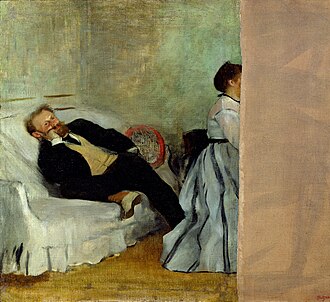 Monsieur und Madame Manet - Edgar Degas (1868)
Werke verwandter Künstler
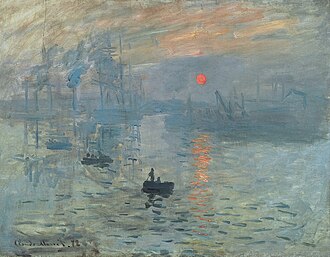 Impression, Sonnenaufgang - Claude Monet (1872)
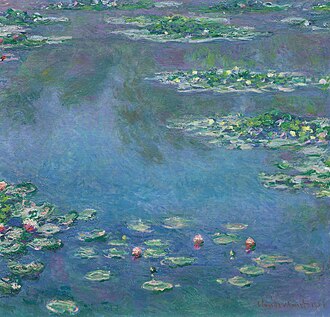 Seerosen - Claude Monet (1906)
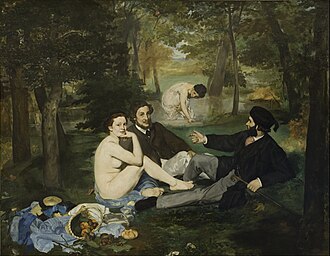 Das Frühstück im Grünen - Édouard Manet (1863)
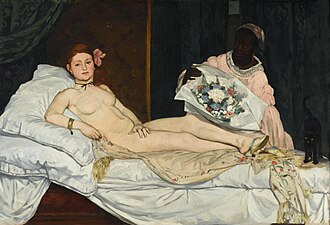 Olympia - Édouard Manet (1863)
 Tanz im Moulin de la Galette - Pierre-Auguste Renoir (1876)
 Das Frühstück der Ruderer - Pierre-Auguste Renoir (1881)
 Die Sternennacht - Vincent van Gogh (1889)
.jpg) Caféterrasse am Abend - Vincent van Gogh (1888)
Caféterrasse am Abend - Vincent van Gogh (1888) Die letzte Fahrt der Temeraire - J. M. W. Turner (1839)
 Rain, Steam and Speed - The Great Western Railway - J. M. W. Turner (1844)
 Woher kommen wir? Wer sind wir? Wohin gehen wir? - Paul Gauguin (1897-1898)
%201889.jpg) Der gelbe Christus - Paul Gauguin (1889)
Der gelbe Christus - Paul Gauguin (1889)