Der Zahnzieher
Caravaggio · 1608
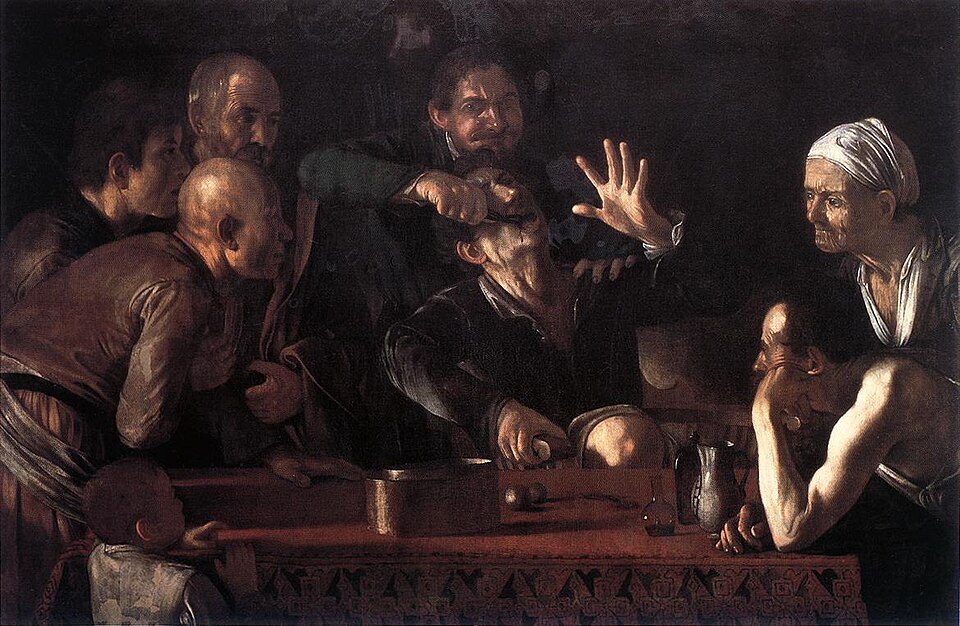
A tooth-puller strains with a comic grimace while his patient's hand flies open in pain and a crowd looks on. The picture hangs in Florence under Caravaggio's name, but the source says it may not be his at all.
The story behind the painting
The Toothpuller, Il cavadenti in Italian, is kept in the Palatine Gallery of the Palazzo Pitti in Florence. The French Wikipedia article says it was perhaps painted by Caravaggio around 1608 to 1610, and that it is only sometimes attributed to him; Wikidata gives the year 1608. It shows a scene of everyday life, the kind of genre painting that began to emerge in Italy in the 1600s through the contribution of Dutch painters. Pulling a tooth in public was, at the time, a sort of entertainment, and the canvas, about 140 by 195 cm, treats it like a stage show with an audience gathered around the chair.
What to look for
Start with the tooth-puller's face, contracted into a comic grimace of extreme effort. Then find the patient, shown at the peak of suffering: one hand open and stretched out, lit by an intense raking light, as if discharging the pain, while the other hand grips the arm of the chair with force. Around them the onlookers react in different ways, some gazing absently, others frightened or contemplative, and there is even a child among them. On the table lie the typical tools of a dentist of the period, a water jug and a small flask of vinegar used for disinfection after the operation.
Meaning and intent
The source describes the effect as caricatural: the picture resembles a scene from comic theatre. The pain is real and sharply lit, yet the faces around it turn the moment into a spectacle, which is exactly what such an event was for people of the time. The painting sits between two worlds, the dramatic light associated with Caravaggio and the new taste for scenes of ordinary life. Whether it moves us to laugh or to wince depends on where we look, at the straining showman or at that open, lit hand.
Legacy
The attribution remains uncertain. The bald figure on the left of the painting reappears in a canvas of around 1615 attributed to José de Ribera, The Denial of Saint Peter. The colours and light also strongly recall Ribera's work of that period. The Toothpuller could therefore date from after Caravaggio's death and in fact have been painted by Ribera. The sources do not settle the question, so the work is best seen as an open case: a striking genre scene that keeps Caravaggio's name on its label while scholars weigh another hand behind it.
Schon gewusst?
- Kept in the Palatine Gallery, Palazzo Pitti, Florence.
- Dated around 1608-1610; Wikidata gives 1608.
- A genre scene treated like comic theatre.
- May in fact be by José de Ribera.
Über den Künstler
Caravaggio (1571-1610)
Genreszene · Italian Baroque painting · Galleria Palatina
Mehr von Caravaggio
 Das Abendmahl in Emmaus - Caravaggio (1601)
 Die Berufung des Hl. Matthäus - Caravaggio (1609)
 Die Enthauptung Johannes des Täufers - Caravaggio (1608)
 Abendmahl in Emmaus - Caravaggio (1601)
 Medusa - Caravaggio (1597)
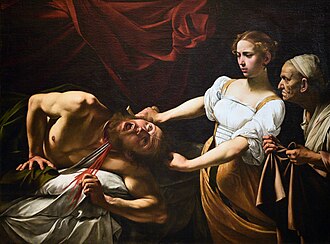 Judith enthauptet Holofernes - Caravaggio (1598)
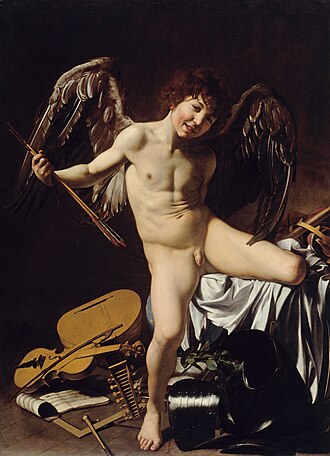 Amor als Sieger - Caravaggio (1600s)
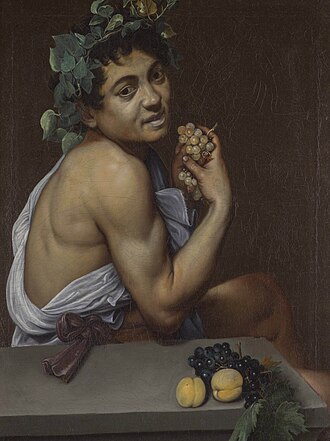 Selbstporträt als Bacchus - Caravaggio (1595)
Werke verwandter Künstler
 Las Meninas - Diego Velázquez (1656)
 Die Übergabe von Breda - Diego Velázquez (1635)
 Saint Francis in Meditation - Francisco de Zurbarán (1639)
 The Immaculate Conception - Francisco de Zurbarán (1661)
 Dreifachporträt von Karl I. - Anthony van Dyck (1635)
 Karl I mit M. de St. Antoine - Anthony van Dyck (1636)
 Die Aufrichtung des Kreuzes - Peter Paul Rubens (1609)
 Der Raub der Töchter des Leukippos - Peter Paul Rubens (1618)
 Die Nachtwache - Rembrandt van Rijn (1642)
 Selbstbildnis - Rembrandt van Rijn (1659)
 Ein Schütze einen Berkemeyer haltend, bekannt als „Der fröhliche Trinker" - Frans Hals (1620s)
 Der lachende Kavalier - Frans Hals (1624)