Selbstporträt als Bacchus
Caravaggio · 1595
%2C%201595%20circa%2C%20534.jpg)
A young god of wine, his skin tinged yellow, offers us grapes. The face is Caravaggio's own, painted in a mirror while he was poor, new to Rome, and gravely ill at some point in those years.
The story behind the painting
Caravaggio arrived in Rome from his native Milan in mid-1592, and this painting belongs to his first, hard years there. Wikipedia dates it to 1593-1594, while Wikidata gives 1595, so the exact year remains uncertain. Sources for this period are thin and probably inaccurate, but they agree that at some point the young artist fell gravely ill and spent six months in the hospital of Santa Maria della Consolazione. His first biographer, Giovanni Baglione, wrote that Caravaggio painted this small cabinet picture using a mirror, making himself the model. The work is known by several names: the Young Sick Bacchus, the Sick Bacchus, or the Self-Portrait as Bacchus, the Italian Bacchino Malato meaning little sick Bacchus.
What to look for
The canvas measures about 67 by 53 centimetres. The head is turned at a three-quarter angle, a view favoured in late Renaissance portraiture, but what strikes you is the grimace and the tilt of the head, and a very real sense of suffering. Look at the skin and the eyes: doctors writing in modern times have read their yellowish tinge as signs of illness. Then turn to the still life of fruit. Compare it, if you can, with the slightly later Boy with a Basket of Fruit, where the fruit is in far better condition. The tensed musculature reflects the training of his teacher Simone Peterzano, and the close attention to realistic detail shows the austere Lombard tradition he brought with him from the north.
Meaning and intent
Bacchus, the god of wine and revelry, should glow with health. Here he looks unwell, and that contradiction is the painting's quiet power. Beyond its autobiographical content, the picture was likely Caravaggio's calling card, a way to market himself by showing that he could paint still life and portraiture and could take on the classical figures of antiquity. Medical readings have added another layer. A 2009 article in Clinical Infectious Diseases suggested the jaundiced skin and eyes point to an active liver disease, probably malaria; Professor Paolo Zamboni of the University of Ferrara has proposed Addison's disease instead. These diagnoses disagree, and none can be proven, but they show how convincingly real the suffering on this face appears.
Legacy
The painting was part of the collection of Giuseppe Cesari, one of Caravaggio's early employers, which was seized in 1607 by the art-loving Cardinal Scipione Borghese, together with Boy Peeling Fruit and Boy with a Basket of Fruit. It hangs today in the Galleria Borghese in Rome. Its strange, intimate honesty still speaks to artists. Cindy Sherman parodied it in Untitled #224, an ironic photographic self-portrait from her History Portraits series of 1989-90. In a 2018 NPR interview, Paul Janeway of St. Paul & the Broken Bones explained that his band's album title, Young Sick Camellia, was an homage to the painting. More than four centuries on, Caravaggio's sickly god still holds our gaze.
Schon gewusst?
- Caravaggio's first biographer, Giovanni Baglione, said the artist painted it using a mirror.
- The work was seized from the painter Giuseppe Cesari's collection by Cardinal Scipione Borghese in 1607.
- Modern doctors have proposed different diagnoses from the painting, including malaria and Addison's disease.
- Cindy Sherman made a photographic parody of it, Untitled #224.
Über den Künstler
Caravaggio (1571-1610)
mythologische Malerei · Italian Baroque painting · Selbstbildnis · Galleria Borghese · Bacchus · Michelangelo Merisi da Caravaggio
Mehr von Caravaggio
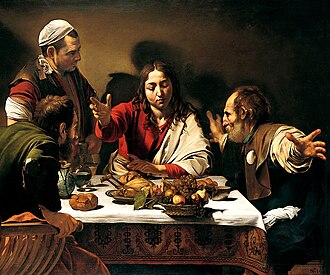 Das Abendmahl in Emmaus - Caravaggio (1601)
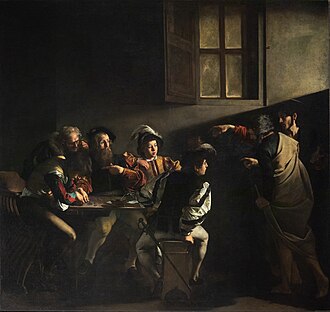 Die Berufung des Hl. Matthäus - Caravaggio (1609)
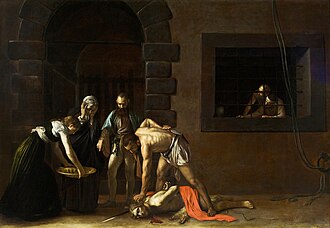 Die Enthauptung Johannes des Täufers - Caravaggio (1608)
 Abendmahl in Emmaus - Caravaggio (1601)
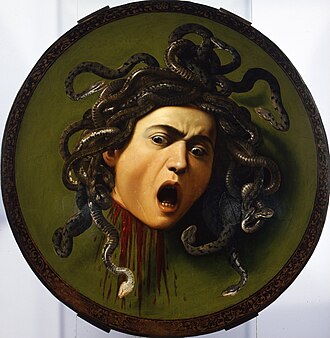 Medusa - Caravaggio (1597)
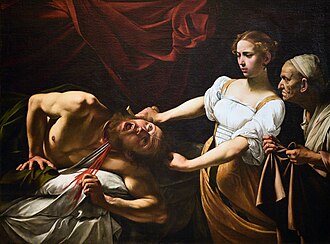 Judith enthauptet Holofernes - Caravaggio (1598)
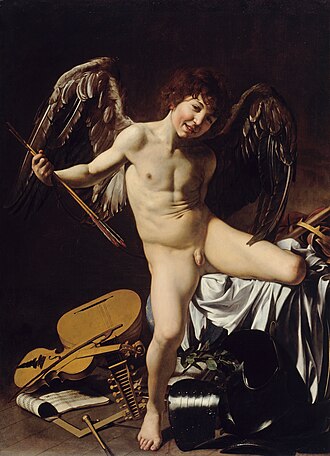 Amor als Sieger - Caravaggio (1600s)
.jpg) Der Tod Mariens - Caravaggio (1600s)
Der Tod Mariens - Caravaggio (1600s)
Werke verwandter Künstler
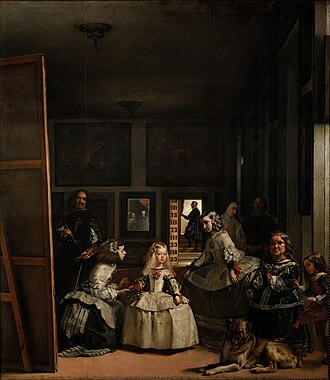 Las Meninas - Diego Velázquez (1656)
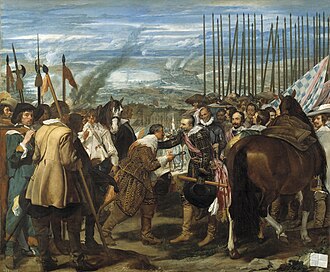 Die Übergabe von Breda - Diego Velázquez (1635)
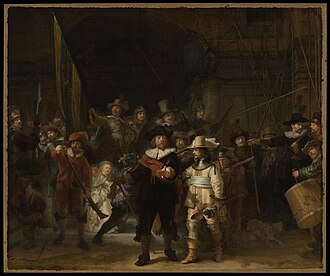 Die Nachtwache - Rembrandt van Rijn (1642)
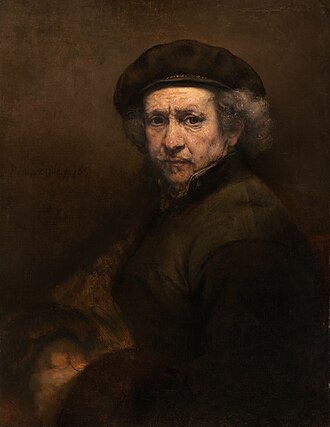 Selbstbildnis - Rembrandt van Rijn (1659)
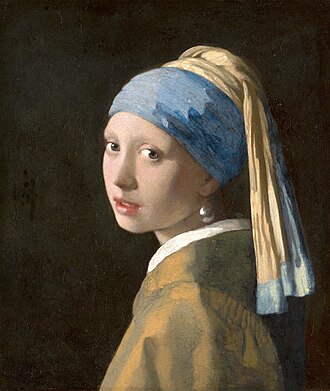 Das Mädchen mit dem Perlenohrgehänge - Johannes Vermeer (1665)
 Dienstmagd mit Milchkrug - Johannes Vermeer (c. 1658)