Medusa
Caravaggio · 1597
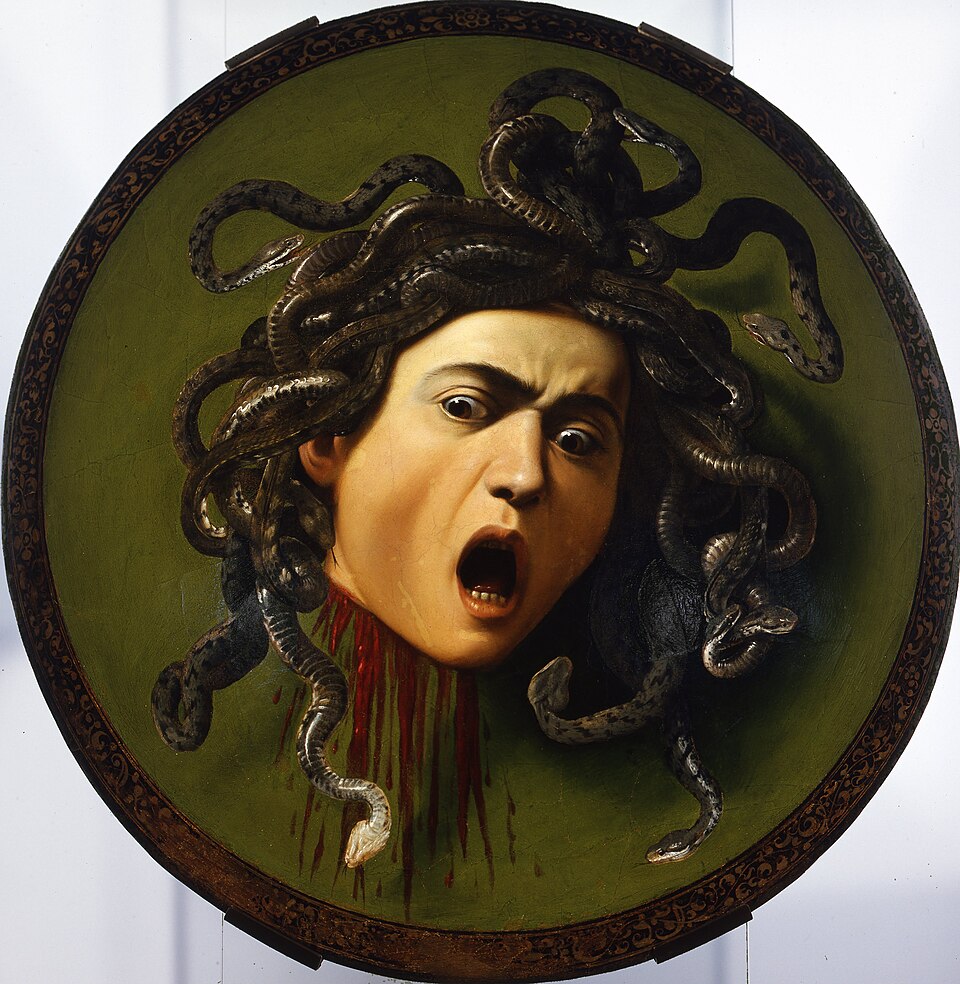
She has just been beheaded, yet she is still screaming. And the face Caravaggio gave the Gorgon Medusa, the sources say, was his own.
The story behind the painting
In the 1590s Caravaggio was working in Rome, his success and wealth growing, but these were also years of run-ins with the law. Arrested in 1598 for carrying a sword, he defended himself by saying he was painter to Cardinal del Monte, living in his house. It was this same patron, Francesco Maria del Monte, who commissioned the Medusa, planning to give the commemorative shield to Ferdinando I de' Medici for the Medici collection. Caravaggio painted two versions. The first, of 1596, is known as the Murtula after the poet Gaspare Murtola, is signed and privately owned. This second, slightly larger version is neither signed nor dated, and is usually placed around 1597. Around the same time he won the commission to decorate the Contarelli Chapel.
What to look for
This is not a flat picture but a convex shield of poplar wood covered in linen, about 60 by 55 centimetres. Caravaggio built it up in many layers: preparation grounds, a reflective layer, then a green background of verdigris mixed with lead-tin yellow, and finally the image itself. Against that cool green the head seems to leap forward. The eyes are wide, the brows creased, the mouth hanging open. Snakes writhe where hair should be, and blood pours from the severed neck. Caravaggio uses tenebrism, deep contrast of light and dark, together with sharp realism to create the illusion of three dimensions on a curved surface, and he lengthens the cheeks and jaw to heighten the effect.
Meaning and intent
The painting captures the moment from Greek myth when the hero Perseus beheads Medusa, the woman cursed by Athena so that anyone who looked at her turned to stone. Caravaggio froze the instant just after death, when the head still seems conscious, horrified at its own fate. By giving Medusa his own features, he set himself up as immune to her deadly gaze, a bold, almost defiant joke. The shield form carries another message. A famous anecdote told how Leonardo da Vinci's father once asked him to paint a shield, and Leonardo created a hybrid monster of snakes, insects and lizards. Caravaggio's snake-haired Medusa invites the comparison, placing the young painter in a contest with a legend.
Legacy
Del Monte's gift was meant for the Medici, and the Medusa remains in Florence today, in the Uffizi Gallery. It is often cited as a sign of Caravaggio's fascination with violence and realism, a world away from the idealised subjects favoured by many painters of his day. The severed head became a recurring motif in his work: he returned to decapitation in Judith Beheading Holofernes, David with the Head of Goliath and The Beheading of Saint John the Baptist. Standing before this shield, you meet an artist testing how far paint could make terror feel real, and a young man daring enough to put his own face at the centre of a myth.
Schon gewusst?
- Caravaggio painted two versions; the earlier 1596 'Murtula' is signed and privately owned.
- The Uffizi version is unsigned and undated; 1597 is the usual estimate.
- It is painted on canvas mounted on a convex shield of poplar wood.
- The green background mixes verdigris with lead-tin yellow.
Über den Künstler
Caravaggio (1571-1610)
Frau · mythologische Malerei · Uffizien
Mehr von Caravaggio
 Das Abendmahl in Emmaus - Caravaggio (1601)
 Die Berufung des Hl. Matthäus - Caravaggio (1609)
 Die Enthauptung Johannes des Täufers - Caravaggio (1608)
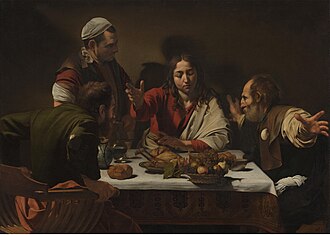 Abendmahl in Emmaus - Caravaggio (1601)
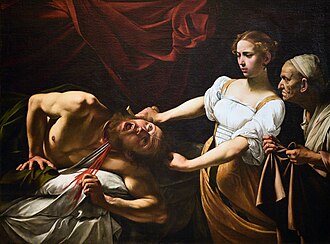 Judith enthauptet Holofernes - Caravaggio (1598)
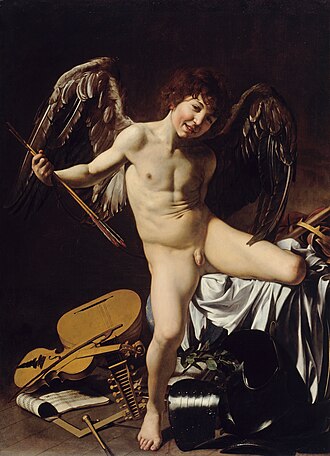 Amor als Sieger - Caravaggio (1600s)
%2C%201595%20circa%2C%20534.jpg) Selbstporträt als Bacchus - Caravaggio (1595)
Selbstporträt als Bacchus - Caravaggio (1595).jpg) Der Tod Mariens - Caravaggio (1600s)
Der Tod Mariens - Caravaggio (1600s)
Werke verwandter Künstler
 Las Meninas - Diego Velázquez (1656)
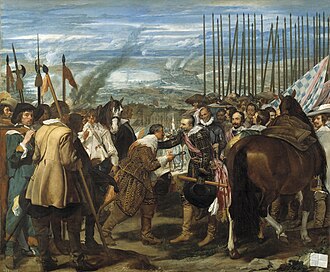 Die Übergabe von Breda - Diego Velázquez (1635)
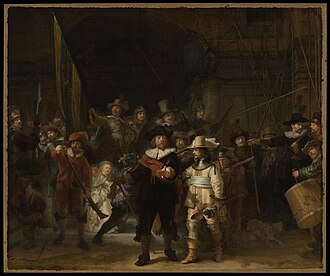 Die Nachtwache - Rembrandt van Rijn (1642)
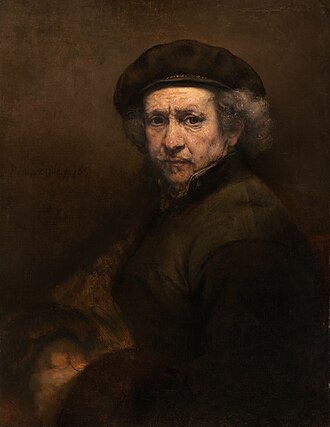 Selbstbildnis - Rembrandt van Rijn (1659)
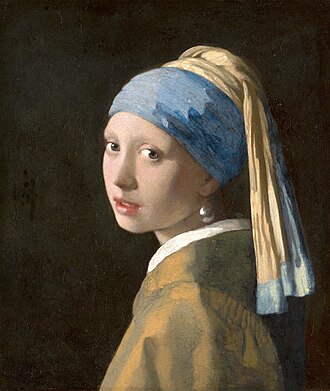 Das Mädchen mit dem Perlenohrgehänge - Johannes Vermeer (1665)
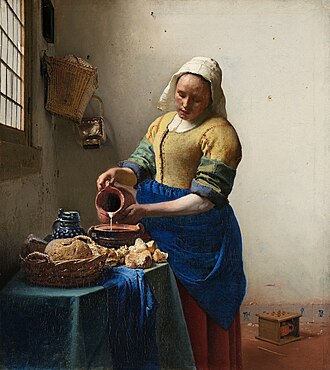 Dienstmagd mit Milchkrug - Johannes Vermeer (c. 1658)