Der Evangelist Matthäus mit dem Engel
Caravaggio · 1602
%20(1571%20-%201610)%20-%20The%20Evangelist%20Matthew%20-%20365%20-%20Gem%C3%A4ldegalerie.jpg)
Caravaggio painted Saint Matthew as a gaping, barefoot peasant guided by an angel, and the church sent the picture back. Then, in 1945, fire in Berlin destroyed it. Today it lives only in old black-and-white photographs.
The story behind the painting
The painting was made for the Contarelli Chapel in San Luigi dei Francesi in Rome, a chapel dedicated to Saint Matthew, built with funds left in 1585 and completed in 1600. Cardinal Del Monte suggested Caravaggio for the scenes of the saint's life. After two of them pleased the patrons, the church rejected a planned statue of the saint by the Flemish artist Jacob Cobaert, and Caravaggio was asked for a third canvas for the altar: Matthew writing his Gospel under an angel's guidance. It was completed in 1602.
What to look for
Only black-and-white photographs taken before the Second World War show the picture, together with enhanced colour reproductions made from them. Look at the angel sweeping down beside the saint and at the stool, which seems to teeter as if in motion. Matthew appears poorly groomed, with dirty feet, looking like an unlearned man gaping in the presence of the angel, his hand guided as he writes. It is arguably one of the earliest examples of Caravaggio's dynamic style, a far livelier composition than the static scenes painters usually gave such subjects.
Meaning and intent
Caravaggio was known for painting real models rather than idealised types. The church leaders, however, wanted an idealised image of a beloved saint that could inspire viewers to live a more moral life. They found this Matthew too crude, a peasant hanging on their sacred altar, and felt he did not match the two Matthews Caravaggio had already painted for the chapel. The artist replaced it with The Inspiration of Saint Matthew, in which the saint looks more serious and in control, encouraged rather than steered by the angel. Even in that refined version, his own style still shows.
Legacy
The rejected canvas entered the collection of what was then the Kaiser Friedrich Museum in Berlin. For safety during the Second World War it was moved to a flak tower, but it was destroyed by fire at the end of the war, in 1945. Its loss means that a work by a pillar of the Baroque, which might have told us more about the artist and his patrons, survives only through photographs. The second version, The Inspiration of Saint Matthew, still hangs in the Contarelli Chapel today.
Schon gewusst?
- Painted in 1602 for the Contarelli Chapel in Rome.
- Rejected by the church as too crude.
- Replaced by The Inspiration of Saint Matthew.
- Destroyed by fire in Berlin in 1945.
Über den Künstler
Caravaggio (1571-1610)
religiöse Kunst · Barock · Sitzen · Engel · Gemäldegalerie Berlin · Buch · Matthäus
Mehr von Caravaggio
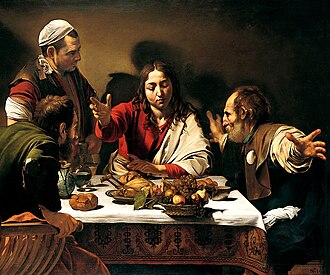 Das Abendmahl in Emmaus - Caravaggio (1601)
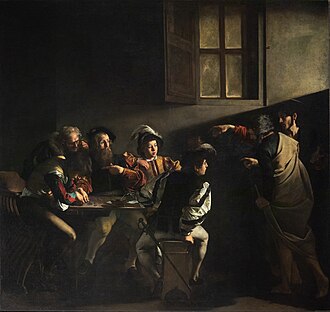 Die Berufung des Hl. Matthäus - Caravaggio (1609)
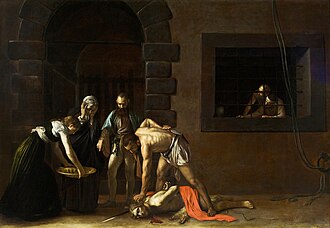 Die Enthauptung Johannes des Täufers - Caravaggio (1608)
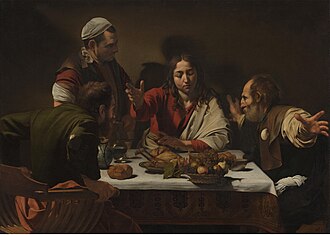 Abendmahl in Emmaus - Caravaggio (1601)
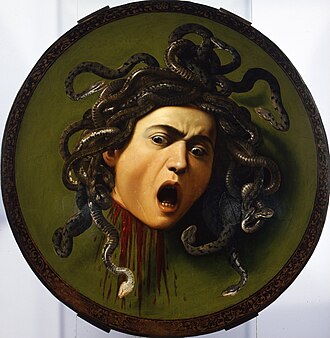 Medusa - Caravaggio (1597)
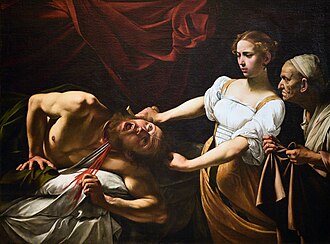 Judith enthauptet Holofernes - Caravaggio (1598)
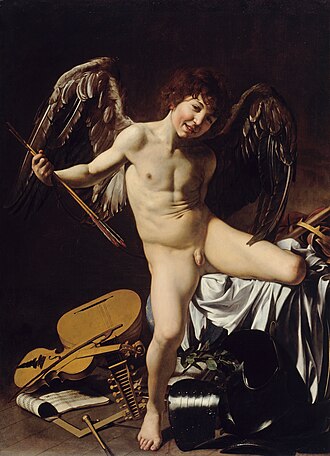 Amor als Sieger - Caravaggio (1600s)
%2C%201595%20circa%2C%20534.jpg) Selbstporträt als Bacchus - Caravaggio (1595)
Selbstporträt als Bacchus - Caravaggio (1595)
Werke verwandter Künstler
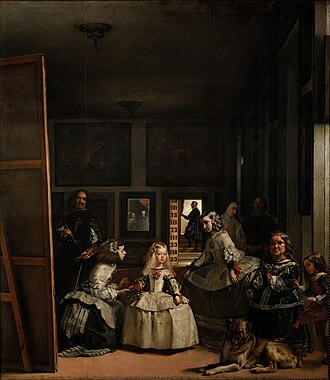 Las Meninas - Diego Velázquez (1656)
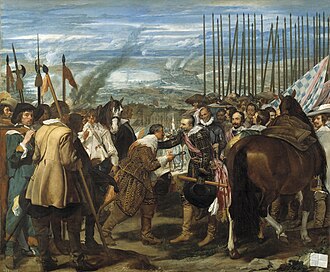 Die Übergabe von Breda - Diego Velázquez (1635)
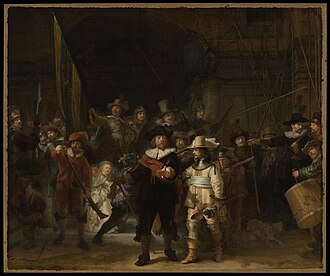 Die Nachtwache - Rembrandt van Rijn (1642)
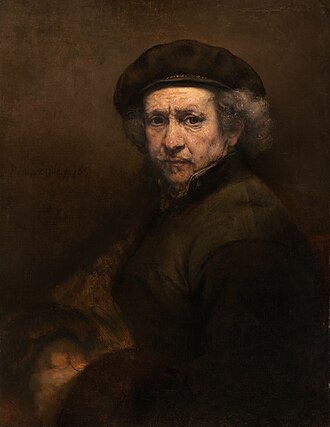 Selbstbildnis - Rembrandt van Rijn (1659)
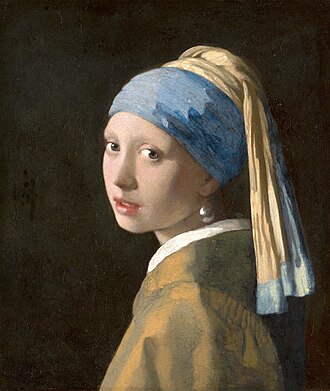 Das Mädchen mit dem Perlenohrgehänge - Johannes Vermeer (1665)
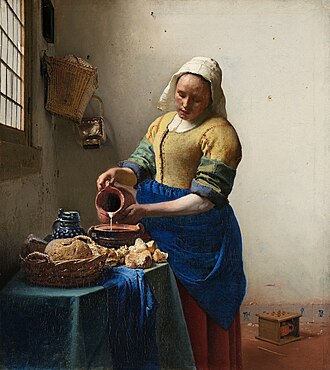 Dienstmagd mit Milchkrug - Johannes Vermeer (c. 1658)