Johannes der Täufer
Caravaggio · 1610
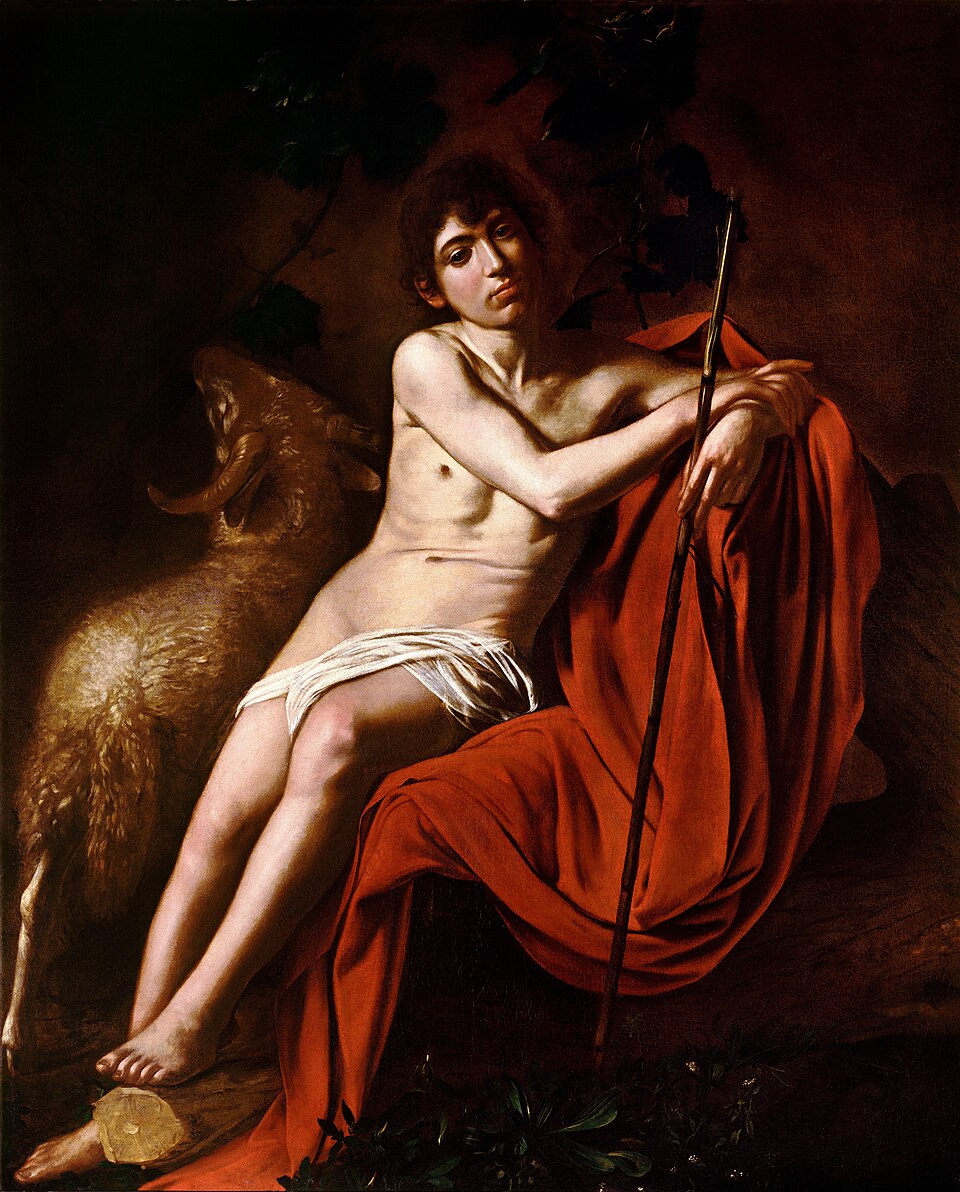
A frail boy lies against the dark, wrapped in a red cloak that burns like a flame, while a ram chews vine leaves beside him. Many scholars now date this Baptist to 1610, the year Caravaggio died.
The story behind the painting
This Saint John the Baptist in the Wilderness is kept in the Galleria Borghese in Rome and is one of seven versions Caravaggio painted of the theme. Its date is debated. Scholars long thought Cardinal Scipione Borghese bought it between his arrival in Rome in 1605 and Caravaggio's flight from the city in 1606. Roberto Longhi instead placed it after 1608, in the artist's Sicilian period, because of similarities of manner and colour, and his view gradually prevailed, leading to a near consensus for 1610.
What to look for
The canvas, 159 by 124 cm according to Wikidata, shows a boy lying limply before a dark background, where a ram chews dull brown vine leaves. The red cloak wrapped around his slight, still childlike body is the only touch of colour apart from his pale skin. John Gash found it richer in colour than the earlier versions in Kansas City and the Capitoline, an essay in reds, whites and golden browns, and a less idealised, more sensual nude. The paint is coarse, giving the surface a rough texture.
Meaning and intent
The boy seems lost in a premonitory dream. Perhaps he thinks sadly of Christ's future sacrifice, necessary for salvation, or senses his own martyrdom; the dominant feeling is melancholy. Gash links the heavier, less idealised figure to Caravaggio's late works such as the Flagellation in Naples and the Beheading of Saint John the Baptist in Valletta. The rough paint, which also dried quickly, is read as a sign of the painter's precarious situation at the end of his life.
Legacy
Cardinal Scipione Borghese was a shrewd collector, eager to enlarge his extraordinary collection, sometimes pressing with the authority of his uncle, Pope Paul V. He had the famous painter Giuseppe Cesari imprisoned on invented charges and confiscated his 106 paintings, among them three Caravaggios still in the gallery: Boy Peeling Fruit, Young Sick Bacchus and Boy with a Basket of Fruit. Those joined the Caravaggios he already owned, including a Saint Jerome and the Madonna of the Palafrenieri. This Baptist remains in the same collection today.
Schon gewusst?
- Dated by a near consensus to 1610, the year Caravaggio died.
- Roberto Longhi linked it to the artist's Sicilian period.
- The red cloak is almost the only colour against the dark.
- Kept in the Galleria Borghese, Rome.
Über den Künstler
Caravaggio (1571-1610)
religiöse Kunst · Barock · Johannes der Täufer · Galleria Borghese · Sammlung Borghese
Mehr von Caravaggio
 Das Abendmahl in Emmaus - Caravaggio (1601)
 Die Berufung des Hl. Matthäus - Caravaggio (1609)
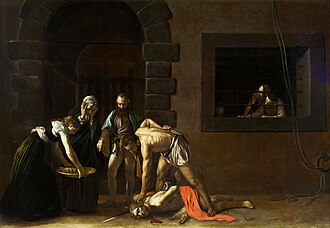 Die Enthauptung Johannes des Täufers - Caravaggio (1608)
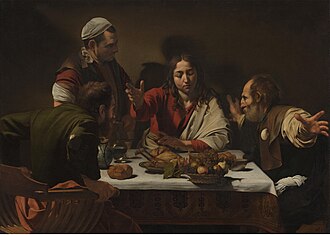 Abendmahl in Emmaus - Caravaggio (1601)
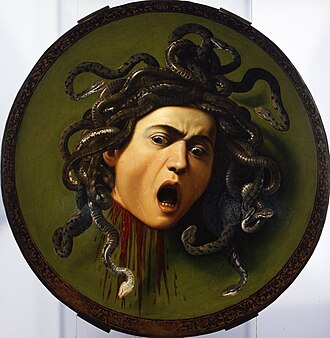 Medusa - Caravaggio (1597)
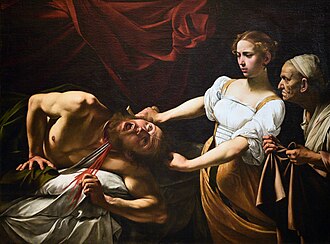 Judith enthauptet Holofernes - Caravaggio (1598)
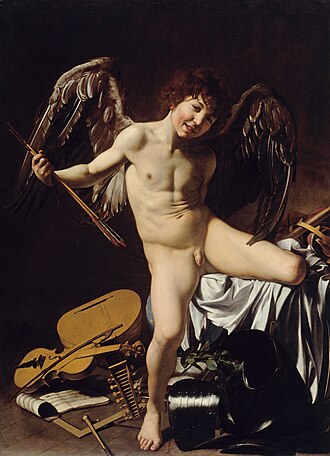 Amor als Sieger - Caravaggio (1600s)
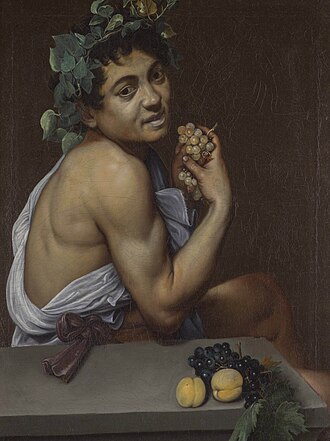 Selbstporträt als Bacchus - Caravaggio (1595)
Werke verwandter Künstler
 Las Meninas - Diego Velázquez (1656)
 Die Übergabe von Breda - Diego Velázquez (1635)
 Saint Francis in Meditation - Francisco de Zurbarán (1639)
 The Immaculate Conception - Francisco de Zurbarán (1661)
 Dreifachporträt von Karl I. - Anthony van Dyck (1635)
 Karl I mit M. de St. Antoine - Anthony van Dyck (1636)
 Die Aufrichtung des Kreuzes - Peter Paul Rubens (1609)
 Der Raub der Töchter des Leukippos - Peter Paul Rubens (1618)
 Die Nachtwache - Rembrandt van Rijn (1642)
 Selbstbildnis - Rembrandt van Rijn (1659)
 Ein Schütze einen Berkemeyer haltend, bekannt als „Der fröhliche Trinker" - Frans Hals (1620s)
 Der lachende Kavalier - Frans Hals (1624)