Narziss
Caravaggio · 1597
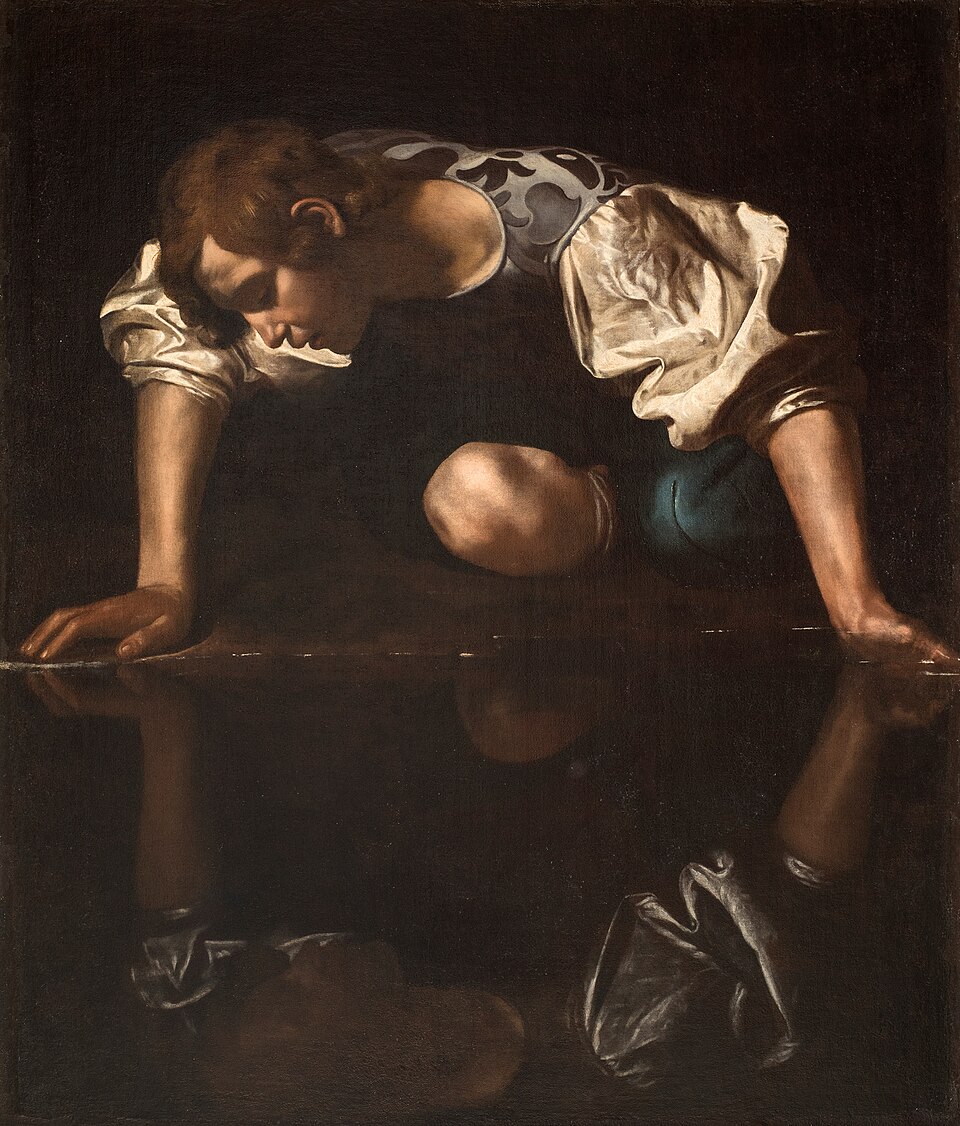
A boy in a brocade doublet leans over dark water, both hands on the bank, staring at his own face. Caravaggio turned Ovid's myth into a closed circle of youth and reflection, ringed by darkness.
The story behind the painting
In Ovid's Metamorphoses, Narcissus is a handsome youth who falls in love with his own reflection. Unable to tear himself away, he dies of his passion, and even as he crosses the Styx he keeps gazing at his image. The story was retold by Dante and Petrarch and was well known in the circles where Caravaggio moved at the time, around collectors such as Cardinal Francesco Maria del Monte and the banker Vincenzo Giustiniani. His friend the poet Giambattista Marino also wrote a description of Narcissus. Caravaggio painted the picture around 1597 to 1599.
What to look for
Caravaggio shows an adolescent page in an elegant brocade doublet, leaning with both hands over the water as he gazes at his own distorted reflection. The figure and his image form a closed loop, and everything around them is darkness. Look at how the reflection below is not a perfect copy but a slightly altered, darker double. The canvas is about 110 by 92 cm, and there is no landscape, no nymph, no detail of the story beyond the boy, the water and the shadow surrounding them.
Meaning and intent
The painting conveys an air of brooding melancholy: Narcissus is locked in a circle with his reflection, so that the only reality is inside this self-regarding loop. The Renaissance theorist Leon Battista Alberti called Narcissus the inventor of painting and asked what painting is but embracing, by art, the surface of the pool, which made the myth especially appealing to artists. The sixteenth-century critic Tommaso Stigliani gave the moral lesson of his time: the myth shows the unhappy end of those who love their things too much.
Legacy
The painting was not always known as a Caravaggio. It was first attributed to him by the art historian Roberto Longhi in 1916, more than three centuries after it was made. Today it hangs in the Galleria Nazionale d'Arte Antica in Rome, the city where Caravaggio worked among the collectors and poets who knew the story of Narcissus so well. There the boy still bends over the water, as Ovid's Narcissus did, unable to look away from the face he cannot reach.
Schon gewusst?
- Painted around 1597-1599.
- First attributed to Caravaggio by Roberto Longhi in 1916.
- Based on the myth told in Ovid's Metamorphoses.
- Now in the Galleria Nazionale d'Arte Antica, Rome.
Über den Künstler
Caravaggio (1571-1610)
mythologische Malerei · Galleria Nazionale d'Arte Antica · Spiegelbild
Mehr von Caravaggio
 Das Abendmahl in Emmaus - Caravaggio (1601)
 Die Berufung des Hl. Matthäus - Caravaggio (1609)
 Die Enthauptung Johannes des Täufers - Caravaggio (1608)
 Abendmahl in Emmaus - Caravaggio (1601)
 Medusa - Caravaggio (1597)
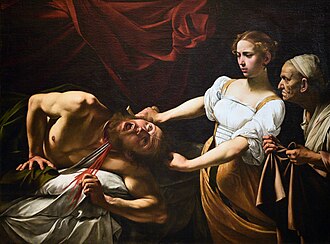 Judith enthauptet Holofernes - Caravaggio (1598)
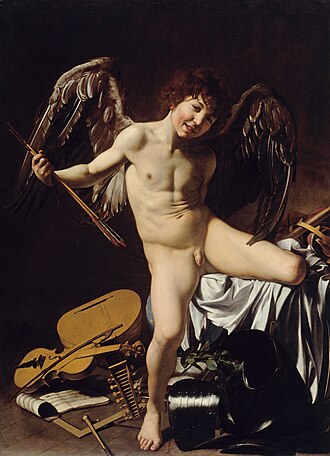 Amor als Sieger - Caravaggio (1600s)
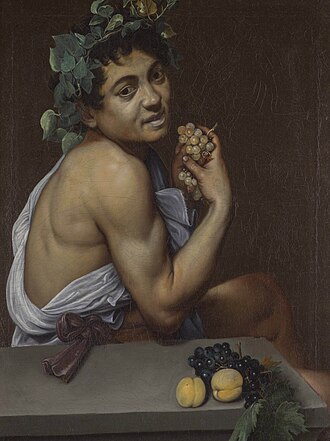 Selbstporträt als Bacchus - Caravaggio (1595)
Werke verwandter Künstler
 Las Meninas - Diego Velázquez (1656)
 Die Übergabe von Breda - Diego Velázquez (1635)
 Saint Francis in Meditation - Francisco de Zurbarán (1639)
 The Immaculate Conception - Francisco de Zurbarán (1661)
 Dreifachporträt von Karl I. - Anthony van Dyck (1635)
 Karl I mit M. de St. Antoine - Anthony van Dyck (1636)
 Die Aufrichtung des Kreuzes - Peter Paul Rubens (1609)
 Der Raub der Töchter des Leukippos - Peter Paul Rubens (1618)
 Die Nachtwache - Rembrandt van Rijn (1642)
 Selbstbildnis - Rembrandt van Rijn (1659)
 Ein Schütze einen Berkemeyer haltend, bekannt als „Der fröhliche Trinker" - Frans Hals (1620s)
 Der lachende Kavalier - Frans Hals (1624)