Martha tadelt Magdalena
Caravaggio · 1598
%2C%20Martha%20and%20Mary%20Magdalene%20(The%20Conversion%20of%20the%20Magdalen)%2C%20c.%201598.jpg)
One sister leans out of the shadows, arguing with all her heart. The other, in red, holds a mirror and an orange blossom and seems to hesitate. Caravaggio caught the very instant a life begins to turn.
The story behind the painting
Caravaggio painted this picture around 1598 while he lived in the palazzo of his patron, Cardinal Francesco Maria del Monte. Wikipedia dates it c. 1598 and also 1598 to 1599. It follows the medieval tradition that the Gospel sisters Martha and Mary were Martha of Bethany and Mary Magdalene, and that Mary had been a courtesan before her conversion. His models were two well-known courtesans of Rome, Fillide Melandroni and Anna Bianchini, who appear in a group of his religious works. Fillide plays Mary, and Anna, who had posed alone for his Penitent Magdalene, plays the quieter but insistent Martha.
What to look for
Martha, her face in shadow, leans forward and argues passionately. Mary twirls an orange blossom between her fingers while she holds a mirror, a sign of the vanity she is about to give up. Watch the Venetian mirror: it reflects her hand and a rectangular window, and her middle finger points to that reflection. On the grained table lie an ivory comb and an alabaster dish with a sponge, a type of dish the Venetians called a sponzarol. Mary wears red, the colour of the Magdalene, in a dress much like those in Caravaggio's Portrait of a Courtesan and Saint Catherine.
Meaning and intent
The power of the image lies in Mary's face, caught at the moment when conversion begins. Since Origen, the Church Fathers saw Martha and Mary as the active and the contemplative sides of Christian faith, a theme Caravaggio would have known from Bernardino Luini's Martha and Mary in Rome. Here the already converted Martha tries to win her sister to a virtuous life. The light, the mirror and the window reflection turn a household scene into a quiet drama of choice, with no saints' haloes and no miracles, only two women talking.
Legacy
Little is known of the painting between 1598 and 1971. It may have belonged to Caravaggio's patron Ottavio Costa, whose 1606 will mentions a picture of this description, and then to Juan Enriquez de Herrera. Seals on the back name a Panzani family that has not been traced. When it reappeared at Christie's in London in 1971 it remained unsold, and scholars such as Benedict Nicolson and Mina Gregori came to accept it slowly. Today it is generally considered an autograph work. The Detroit Institute of Arts acquired it in 1973. Its influence shows in copies, including a version by Orazio Gentileschi in Munich.
Schon gewusst?
- Painted around 1598 in the household of Cardinal del Monte.
- The models were Fillide Melandroni and Anna Bianchini.
- Reappeared in 1971 after centuries of near silence.
- In the Detroit Institute of Arts since 1973.
Über den Künstler
Caravaggio (1571-1610)
religiöse Kunst · Frau · langes Haar · Barock · Kleid · Tisch · Maria Magdalena · Fillide Melandroni
Mehr von Caravaggio
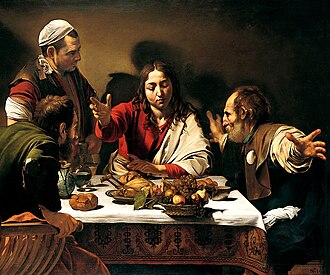 Das Abendmahl in Emmaus - Caravaggio (1601)
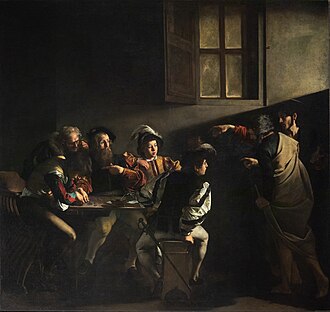 Die Berufung des Hl. Matthäus - Caravaggio (1609)
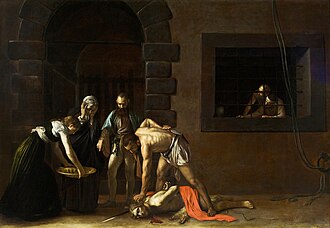 Die Enthauptung Johannes des Täufers - Caravaggio (1608)
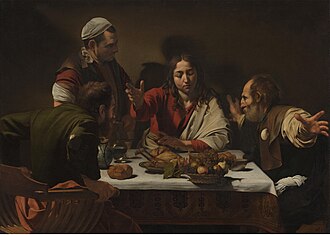 Abendmahl in Emmaus - Caravaggio (1601)
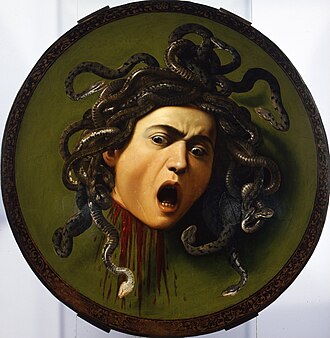 Medusa - Caravaggio (1597)
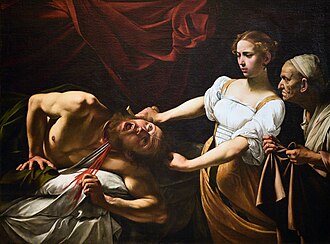 Judith enthauptet Holofernes - Caravaggio (1598)
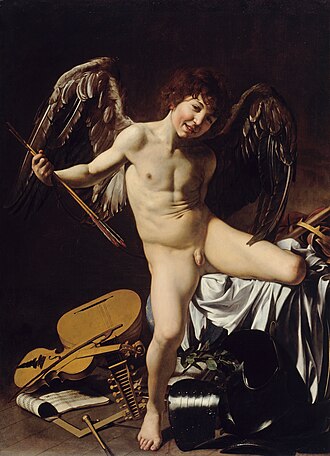 Amor als Sieger - Caravaggio (1600s)
%2C%201595%20circa%2C%20534.jpg) Selbstporträt als Bacchus - Caravaggio (1595)
Selbstporträt als Bacchus - Caravaggio (1595)
Werke verwandter Künstler
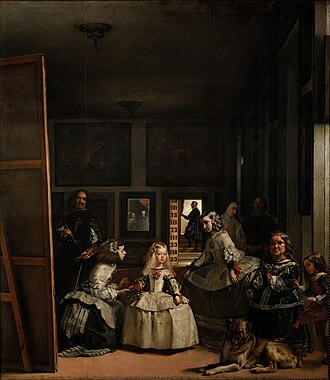 Las Meninas - Diego Velázquez (1656)
 Die Übergabe von Breda - Diego Velázquez (1635)
 Die Nachtwache - Rembrandt van Rijn (1642)
 Selbstbildnis - Rembrandt van Rijn (1659)
 Das Mädchen mit dem Perlenohrgehänge - Johannes Vermeer (1665)
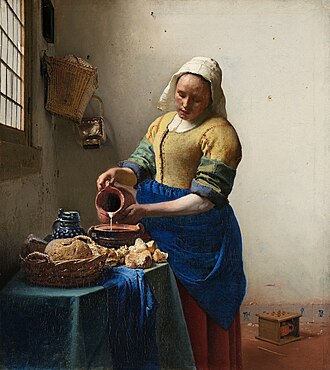 Dienstmagd mit Milchkrug - Johannes Vermeer (c. 1658)