Ecce Homo
Hieronymus Bosch · 1490s
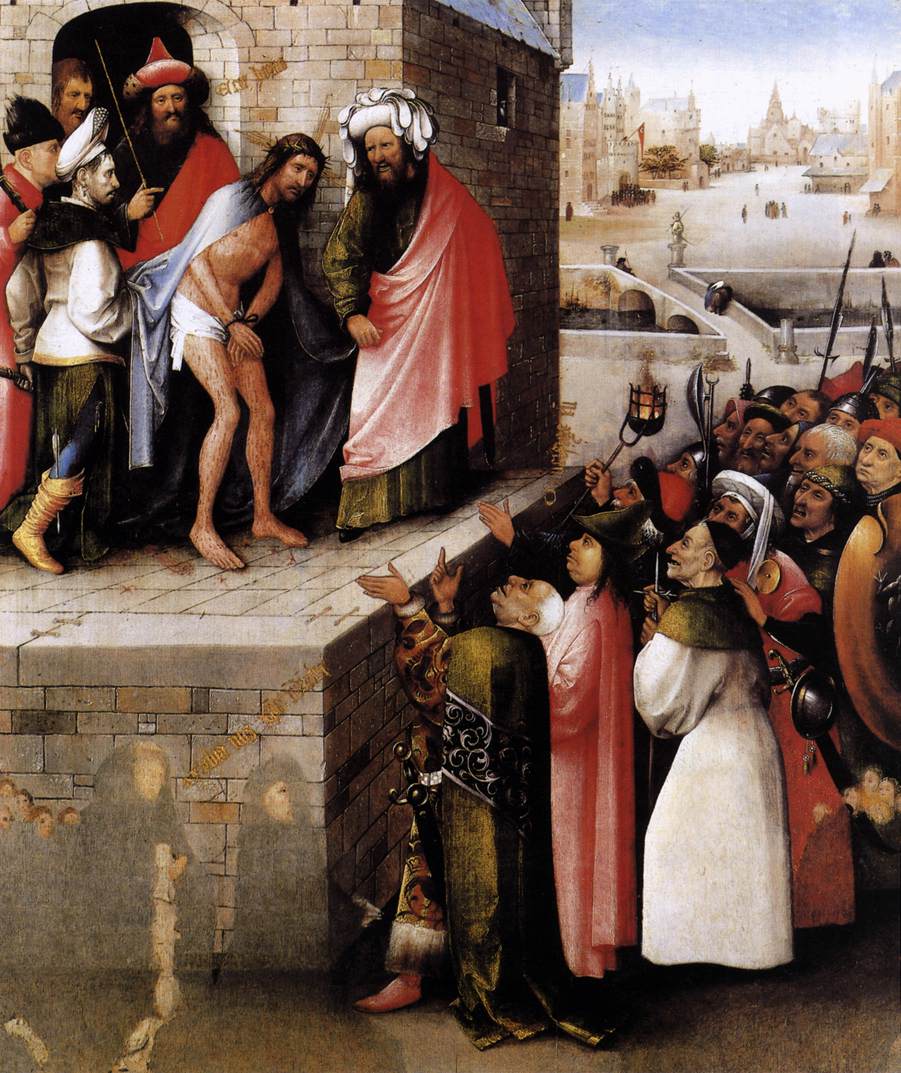
Behold the man, says Pilate, and the crowd below shouts back: crucify him. Bosch wrote their words into the painting itself, like speech floating from their mouths.
The story behind the painting
Ecce Homo shows an episode from the Passion: Pontius Pilate presenting Jesus to an angry crowd in Jerusalem before he is sentenced to crucifixion. The title is Latin for Behold the Man. Hieronymus Bosch painted the original version, which has a provenance in collections in Ghent and is now in the Städel Museum in Frankfurt; a copy is in the Museum of Fine Arts, Boston. The dating needs care. The source places it between 1475 and 1485, citing dendrochronology of the oak panel, and notes it is generally believed to date to 1475 to 1480. Wikidata instead gives the 1490s. The panel measures 71.4 by 61 centimetres.
What to look for
Jesus stands stripped, wearing the Crown of Thorns, hands shackled, the reddened flesh of his legs, hands and chest showing he has been scourged. Members of the Roman council present him, flanked by soldiers, while the crowd jeers. Look for the words. Three Gothic inscriptions near the speakers' mouths work like speech balloons: Pilate's Ecce Homo, the mob's Crucifige Eum, crucify him, and at lower left Salve nos Christe redemptor, save us, Christ Redeemer, once spoken by two donors who were later painted over. An owl perches above Pilate and a giant toad sits on a soldier's shield. Upper right, an empty Netherlandish town stands in for Jerusalem.
Meaning and intent
The source places this painting in a tradition that narrates the event literally, showing Christ as utterly human, stooped and humiliated. Quoting the art historian Michael Worton, it suggests the implied lesson is that the judgement of one's contemporaries is often flawed and blind. Bosch fills the scene with symbols: the owl and the toad were traditionally emblems of evil in Christian imagery. The eerie emptiness of the town contrasts sharply with the dense crowd of grotesquely caricatured and exotically dressed figures below. Between the quiet, suffering Christ and the shouting mob, the painting asks the viewer where they themselves would stand.
Legacy
According to the source, Ecce Homo was not often painted before the Renaissance, and Bosch is one of the best known early artists to take on the scene. Later High Renaissance versions tended to focus on Christ's heroic sacrifice, often leaving out the jeering crowd. This work keeps many features of Netherlandish painting of its time: homely faces, slight figures that seem flat beneath heavy clothes. Technical study by the Bosch Research and Conservation Project found typical Renaissance pigments, including azurite, lead-tin yellow and vermilion, along with red and green glazes and gold leaf. The painted-over donors remain a quiet trace of the work's original purpose.
Schon gewusst?
- Source dates it 1475-1485; Wikidata gives the 1490s
- Original in the Städel Museum, Frankfurt; a copy is in Boston
- Contains three Gothic inscriptions, including Ecce Homo and Crucifige Eum
- Two donor figures were later painted over
Über den Künstler
Hieronymus Bosch (1450-1516)
religiöse Kunst · Mann · Jesus Christus · Städelsches Kunstinstitut
Mehr von Hieronymus Bosch
 Der Garten der Lüste - Hieronymus Bosch
 Das Narrenschiff - Hieronymus Bosch (1500s)
 Die sieben Todsünden und vier letzten Dinge - Hieronymus Bosch (1500)
.jpg) Heuwagen-Triptychon - Hieronymus Bosch (1510s)
Heuwagen-Triptychon - Hieronymus Bosch (1510s)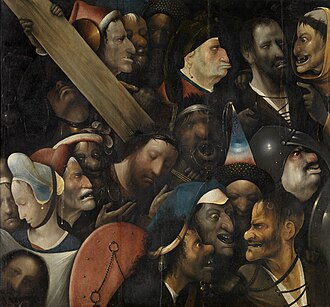 Kreuztragung - Hieronymus Bosch (1510s)
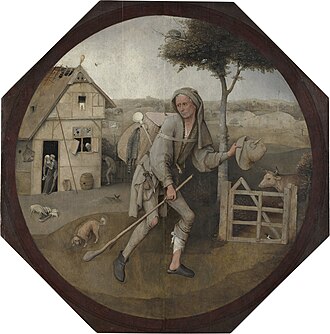 Der Wanderer - Hieronymus Bosch (1500)
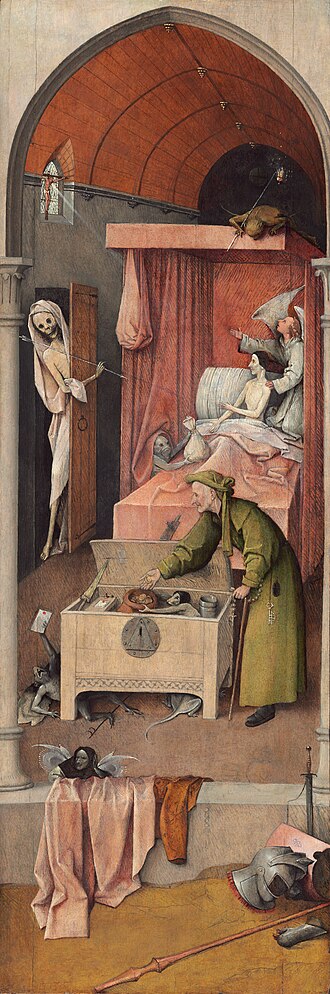 Der Tod und der Geizhals - Hieronymus Bosch (1500s)
.jpg) Steinschneiden - Hieronymus Bosch (1500s)
Steinschneiden - Hieronymus Bosch (1500s)
Werke verwandter Künstler
 Mona Lisa - Leonardo da Vinci (1503-1519)
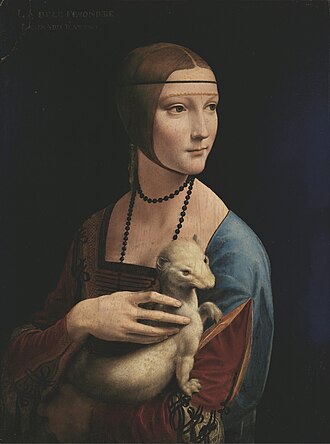 Dame mit dem Hermelin - Leonardo da Vinci (1490)
.jpg) Venus von Urbino - Titian (1538)
Venus von Urbino - Titian (1538)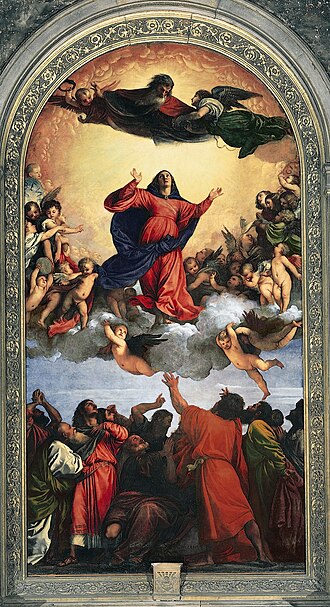 Mariä Himmelfahrt - Titian (1510s)
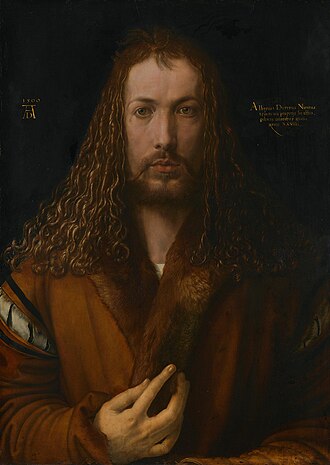 Selbstbildnis im Pelzrock - Albrecht Dürer (1500)
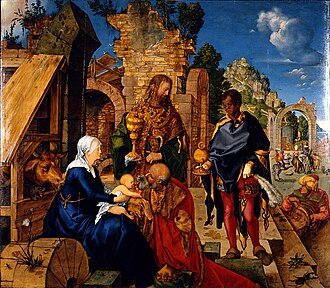 Anbetung der Könige - Albrecht Dürer (1504)
 Die Geburt der Venus - Sandro Botticelli (c. 1485)
 Primavera - Sandro Botticelli (1480s)
%20-%20Google%20Art%20Project.jpg) Die Jäger im Schnee - Pieter Bruegel the Elder (1565)
Die Jäger im Schnee - Pieter Bruegel the Elder (1565) Die niederländischen Sprichwörter - Pieter Bruegel the Elder (1551)