Kreuztragung
Hieronymus Bosch · 1510s
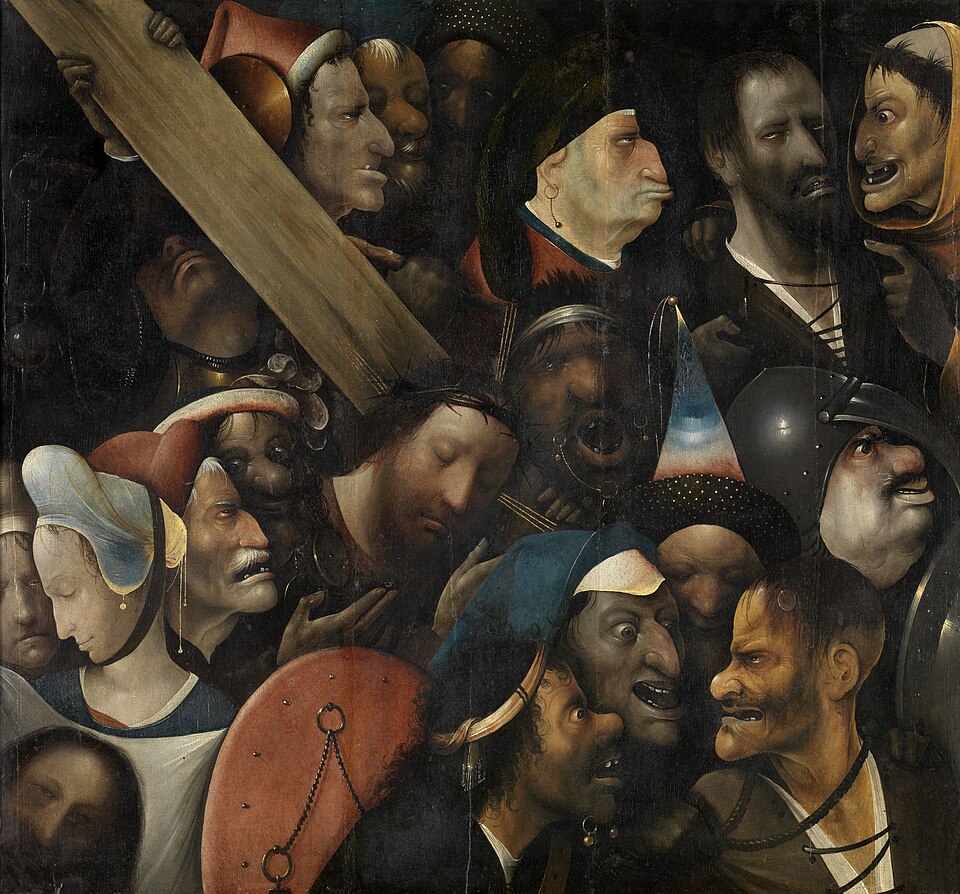
Out of a black void crowd eighteen faces, twisted, leering and shouting. In their midst, eyes closed, Christ seems almost to fade away.
The story behind the painting
This panel in the Museum of Fine Arts in Ghent has long carried the name of Hieronymus Bosch, and Wikidata lists him as its painter with a date in the 1510s. The source, however, tells a more complicated story. The museum bought the work in 1902 and it was restored in 1956 and 1957. The 2001 Bosch exhibition in Rotterdam dated it 1510 to 1535 and assigned it to a follower. In 2015 the Bosch Research and Conservation Project also rejected Bosch's authorship, proposing that it may be a replica of a lost Bosch original, painted around 1530 to 1540. Other scholars, among them Griet Stayaert and Fritz Koreny, have disputed that view.
What to look for
Everything happens against a dark background, in black and red tones, with bodies dissolving into shadow so that only faces and hands remain. There are eighteen heads in all, plus one more: the face of Christ printed on Saint Veronica's veil. Most of the heads are grotesque caricatures, with distorted features that some writers compare to abstract expression. Find the two quiet faces among them. Christ and Veronica both have their eyes closed, their heads inclined, their expressions full of sorrow. Christ is painted almost transparently, so pale against the jostling crowd that he seems close to vanishing. Simon of Cyrene, who helped carry the cross, is also among the figures named by Wikidata.
Meaning and intent
The power of the painting lies in contrast. The tormentors seethe with anger, while Christ holds a solemn, inward calm; the source describes this as the difference between selflessness and rage. Its caricatured faces are said to express a pessimistic view of humanity associated with Bosch. Scholars disagree on where the distortions come from. Kurt Falk and others link them to Leonardo da Vinci's studies of deformed faces, while Walter Gibson points instead to a northern tradition in which Christ's persecutors are shown as animal-like. Either way, the viewer is pressed into the crowd, close enough to feel its noise around a silent centre.
Legacy
The debate over who painted this panel has itself become part of its story. Maximiliaan Martens compared its linear underdrawing with those of Bosch's Saint Jerome and Death and the Miser and found them all different, while cautioning that artists' methods can change over time. Paul van de Broeck argued that Bosch was a paradoxical artist who deliberately varied his style. The source also describes the work as the conclusion of a series of half-figure Passion scenes that began with Christ Crowned with Thorns. Whoever held the brush, the Ghent panel remains one of the most unforgettable images connected with Bosch's name.
Schon gewusst?
- Bought by the Museum of Fine Arts, Ghent, in 1902
- Restored in 1956-1957
- In 2015 the Bosch Research and Conservation Project attributed it to a follower, about 1530-1540
- Shows eighteen faces plus the face on Veronica's veil
Über den Künstler
Hieronymus Bosch (1450-1516)
religiöse Kunst · Mann · Jesus Christus
Mehr von Hieronymus Bosch
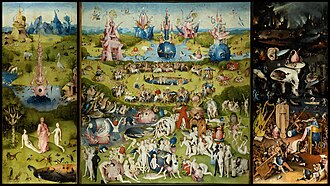 Der Garten der Lüste - Hieronymus Bosch
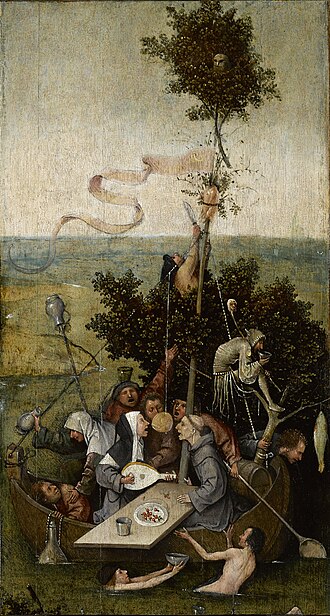 Das Narrenschiff - Hieronymus Bosch (1500s)
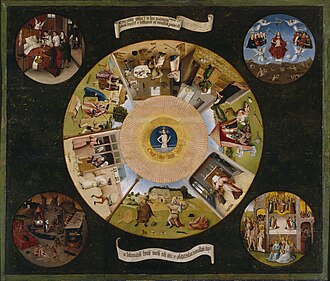 Die sieben Todsünden und vier letzten Dinge - Hieronymus Bosch (1500)
.jpg) Heuwagen-Triptychon - Hieronymus Bosch (1510s)
Heuwagen-Triptychon - Hieronymus Bosch (1510s) Der Wanderer - Hieronymus Bosch (1500)
 Der Tod und der Geizhals - Hieronymus Bosch (1500s)
 Ecce Homo - Hieronymus Bosch (1490s)
.jpg) Steinschneiden - Hieronymus Bosch (1500s)
Steinschneiden - Hieronymus Bosch (1500s)
Werke verwandter Künstler
 Mona Lisa - Leonardo da Vinci (1503-1519)
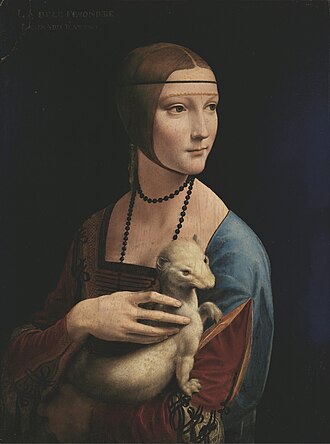 Dame mit dem Hermelin - Leonardo da Vinci (1490)
.jpg) Venus von Urbino - Titian (1538)
Venus von Urbino - Titian (1538)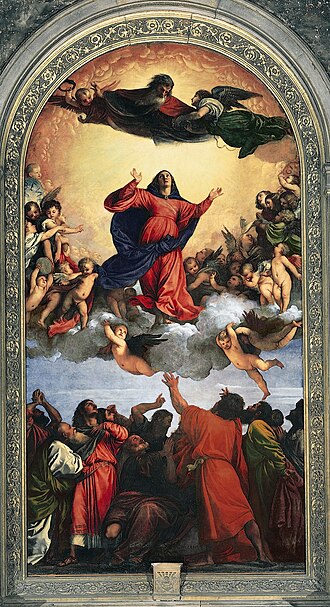 Mariä Himmelfahrt - Titian (1510s)
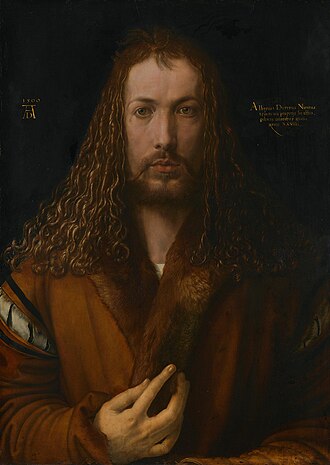 Selbstbildnis im Pelzrock - Albrecht Dürer (1500)
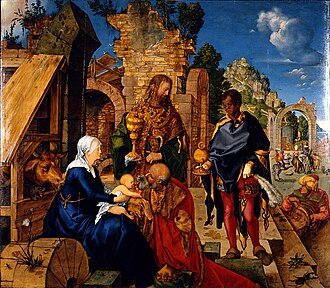 Anbetung der Könige - Albrecht Dürer (1504)
 Die Geburt der Venus - Sandro Botticelli (c. 1485)
 Primavera - Sandro Botticelli (1480s)
%20-%20Google%20Art%20Project.jpg) Die Jäger im Schnee - Pieter Bruegel the Elder (1565)
Die Jäger im Schnee - Pieter Bruegel the Elder (1565) Die niederländischen Sprichwörter - Pieter Bruegel the Elder (1551)