3人の音楽家
Diego Velázquez · 1618
%20-%20The%20Three%20Musicians%20-%20413F%20-%20Gem%C3%A4ldegalerie.jpg)
Three young men gather around a table, two of them singing, while the youngest turns to us with a glass of wine and a mocking smile. It is one of the earliest paintings we have from Diego Velázquez.
The story behind the painting
Three Musicians belongs to Velázquez's early Seville period. It is one of roughly ten paintings in the bodegón style that he made before 1622 while living in Seville, scenes in which everyday food, drink and ordinary people share the stage. Wikidata dates the canvas to 1618. Its subject is close to that of another of his works from these years, The Farmers' Lunch, where figures are likewise grouped around a table. Here the young painter set himself a lively challenge: three musicians caught in the middle of eating, drinking and making music, and a still life of simple things laid out before them. The result is an oil painting of 88 by 111 cm, a compact stage on which a young artist could test everything he was learning about light and texture.
What to look for
Begin with the light. It falls from the left, carving sharp shadows and bright highlights out of the darkness, the chiaroscuro that Baroque painters used to give figures a sense of volume. Two men hold stringed instruments and sing. The third, the youngest, keeps an instrument tucked under his arm and lifts a glass of wine, showing it off with a mocking smile. Now look into the background: a monkey is there, holding a pear. Finally, lower your eyes to the table. A loaf of bread rests on a napkin beside a glass of wine and a piece of cheese with a knife stuck into it. Velázquez used these humble objects to study different textures, the soft crumb, the clear glass, the dense cheese.
Meaning and intent
What is this scene really about? The source notes that the painting raises a variety of questions. On one level it is a genre picture, an everyday moment of music and wine. Yet the youngest boy's gesture, pointing out the wine that seems to inspire the singers, invites a closer reading. The monkey with its pear is said to emphasize the grotesque character of the scene. Because of such details, some see hidden layers of meaning behind the apparently ordinary moment, allowing the picture to be read as an allegory. Velázquez does not settle the matter for us. He leaves the boy's smile hanging between joke and comment, and lets us decide how much to read into a table of bread, cheese and wine.
Legacy
Three Musicians is valued today as one of Velázquez's earliest works, a window onto the young Spanish painter, considered one of the great Spanish naturalists, before his later career. It shows the strong contrasts of light and dark and the careful study of textures that mark his Seville bodegones. The painting now belongs to the Gemäldegalerie in Berlin, where it is part of the collection. Seen there, it offers visitors a rare chance to watch a great painter at the start of his path, already confident in handling shadow, faces and the quiet poetry of ordinary things set on a table.
豆知識
- Painted in Velázquez's early Seville period; Wikidata dates it to 1618.
- One of about ten bodegón-style paintings he made before 1622.
- Oil painting, 88 × 111 cm.
- Collection of the Gemäldegalerie, Berlin.
画家について
Diego Velázquez (1599-1660)
風俗美術 · 男性 · 少年 · ヒト · 絵画館 · 音楽家
同じ画家の作品: Diego Velázquez
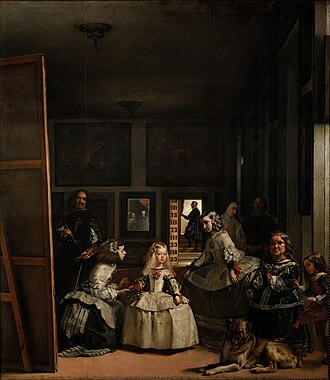 ラス・メニーナス - Diego Velázquez (1656)
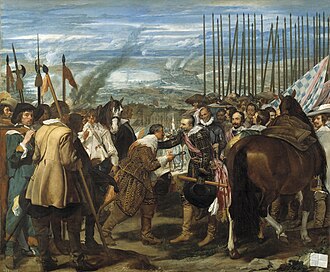 ブレダの開城 - Diego Velázquez (1635)
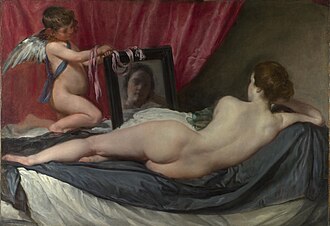 鏡のヴィーナス - Diego Velázquez (1644)
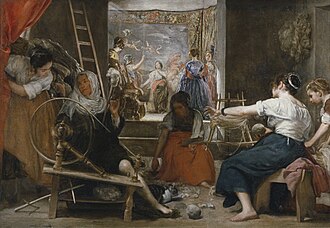 アラクネの寓話 - Diego Velázquez
.jpg) インノケンティウス10世の肖像 - Diego Velázquez
インノケンティウス10世の肖像 - Diego Velázquez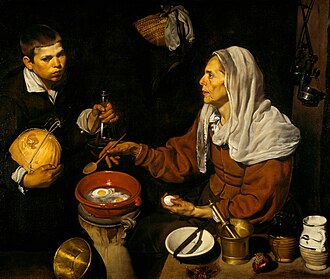 卵を調理する老女 - Diego Velázquez (1618)
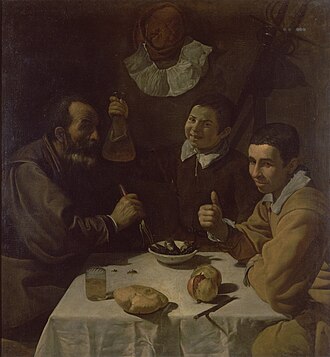 昼食 - Diego Velázquez (1617)
.jpg) バッカスの勝利 - Diego Velázquez (1628)
バッカスの勝利 - Diego Velázquez (1628)
 エマオの晩餐
 聖マタイの召命
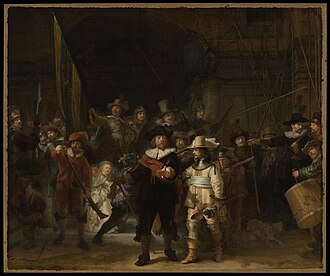 夜警
夜警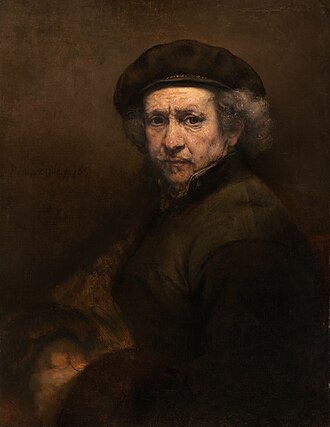 自画像
自画像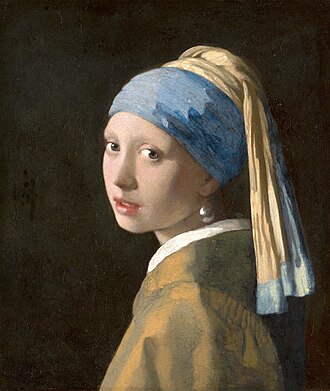 真珠の耳飾りの少女
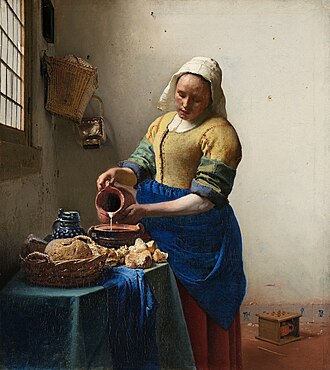 牛乳を注ぐ女