結婚式の踊り
Pieter Bruegel the Elder · 1566
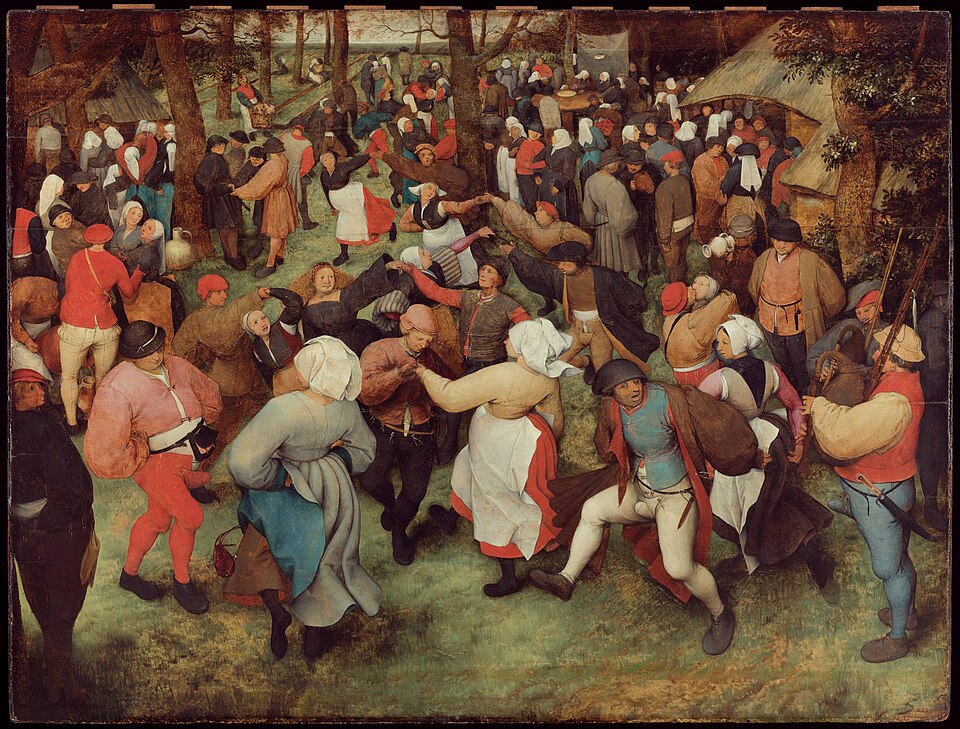
A hundred and twenty-five guests stamp, swing and flirt under the trees, and the bride, dressed in black, dances with her father. Bruegel's Wedding Dance was lost for centuries before turning up at a London sale in 1930.
The story behind the painting
Bruegel painted The Wedding Dance, also called The Village Dance, in oil on panel in 1566, in the last years of his life. It is believed to form a trilogy with The Peasant Wedding of 1567 and The Peasant Dance of 1569, all sharing the theme of a peasant wedding, and all three with pipers playing the pijpzak, the Flemish bagpipe. For many years the painting was thought lost, until Wilhelm Valentiner, then director of the Detroit Institute of Arts, discovered it at a sale in London in 1930 and brought it to Detroit, where it is still owned by the museum.
What to look for
The scene seems chaotic at first: 125 guests in the clothes of the time fill an outdoor party ringed by trees. In the middle the bride, wearing black as was customary, dances with an older man, her father. The men wear codpieces, an important part of dress then. On the right, behind a musician playing the pijpzak, a man watches from the side; the writing tools on his belt suggest a writer or perhaps a painter. Behind him hangs a tablecloth decorated with a crown, above the bride's table. Watch, too, for the glances and couples throughout the picture: voyeurism runs through the whole work.
Meaning and intent
In the sixteenth century dancing followed strict rules, and church and authorities saw it as a social evil; swinging arms and legs or laughing too loud was rude. These peasants break every rule, and scholars disagree on what Bruegel meant. Some see a joyful celebration of fertility and freedom from upper-class limits; Thomas Craven called it a celebration of gluttony painted with bursting vitality. Others read a warning: Walter S. Gibson saw a sermon against gluttony and an allegory of the Church abandoned by Christ, and Robert Quist placed it in a series on the deadly sins. The painting holds both readings at once.
Legacy
Robert L. Bonn called Bruegel's wedding trilogy superb examples of anthropological painting, setting him apart from the painters of his day and many who followed. Few earlier artists had looked at village festivities with such close attention to dress, music, food and gesture. The Wedding Dance is now one of the best-known Bruegels in America, a rare example of his work outside Europe. Its rediscovery in 1930 brought back to view a picture that shows not saints or kings but ordinary people celebrating, with all their noise and appetite, five centuries ago.
豆知識
- Oil on panel, 1566, about 119 x 158 cm.
- Shows 125 wedding guests; the bride wears black.
- Rediscovered at a London sale in 1930 by Wilhelm Valentiner.
- Part of a trilogy with The Peasant Wedding and The Peasant Dance.
画家について
Pieter Bruegel the Elder (1525-1569)
同じ画家の作品: Pieter Bruegel the Elder
%20-%20Google%20Art%20Project.jpg) 雪中の狩人 - Pieter Bruegel the Elder (1565)
雪中の狩人 - Pieter Bruegel the Elder (1565) ネーデルラントの諺 - Pieter Bruegel the Elder (1551)
 死の勝利 - Pieter Bruegel the Elder (1560s)
%20-%20Blind%20leading%20the%20blind%20Google%20Art%20Project.jpeg) 盲人の寓話 - Pieter Bruegel the Elder (1568)
盲人の寓話 - Pieter Bruegel the Elder (1568)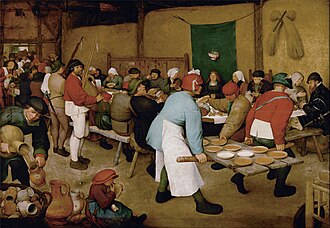 農民の婚宴 - Pieter Bruegel the Elder (1560s)
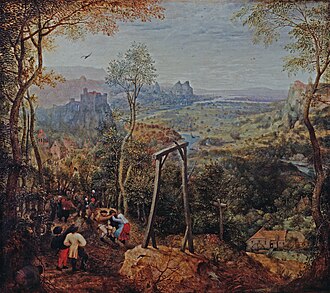 絞首台の上のかささぎ - Pieter Bruegel the Elder (1568)
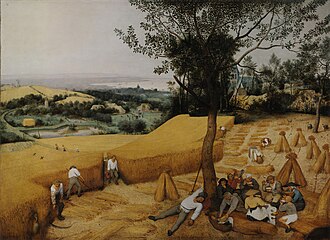 穀物の収穫 - Pieter Bruegel the Elder (1565)
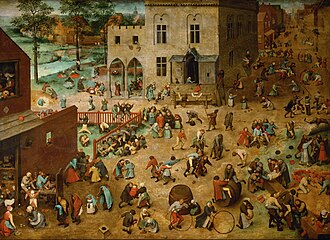 子供の遊戯 - Pieter Bruegel the Elder (1560)
関連する画家の作品
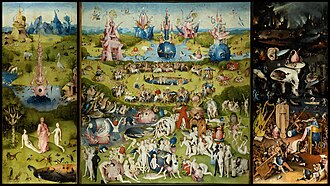 快楽の園 - Hieronymus Bosch
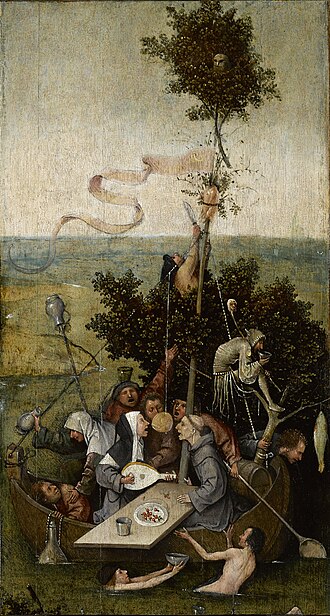 愚者の船 - Hieronymus Bosch (1500s)
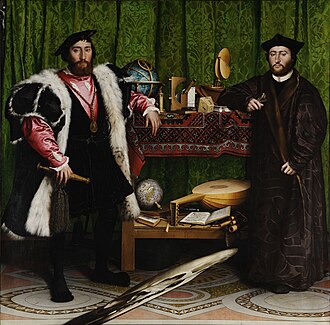 大使たち - Hans Holbein the Younger (1533)
 墓の中のキリストの屍 - Hans Holbein the Younger (1520s)