絞首台の上のかささぎ
Pieter Bruegel the Elder · 1568
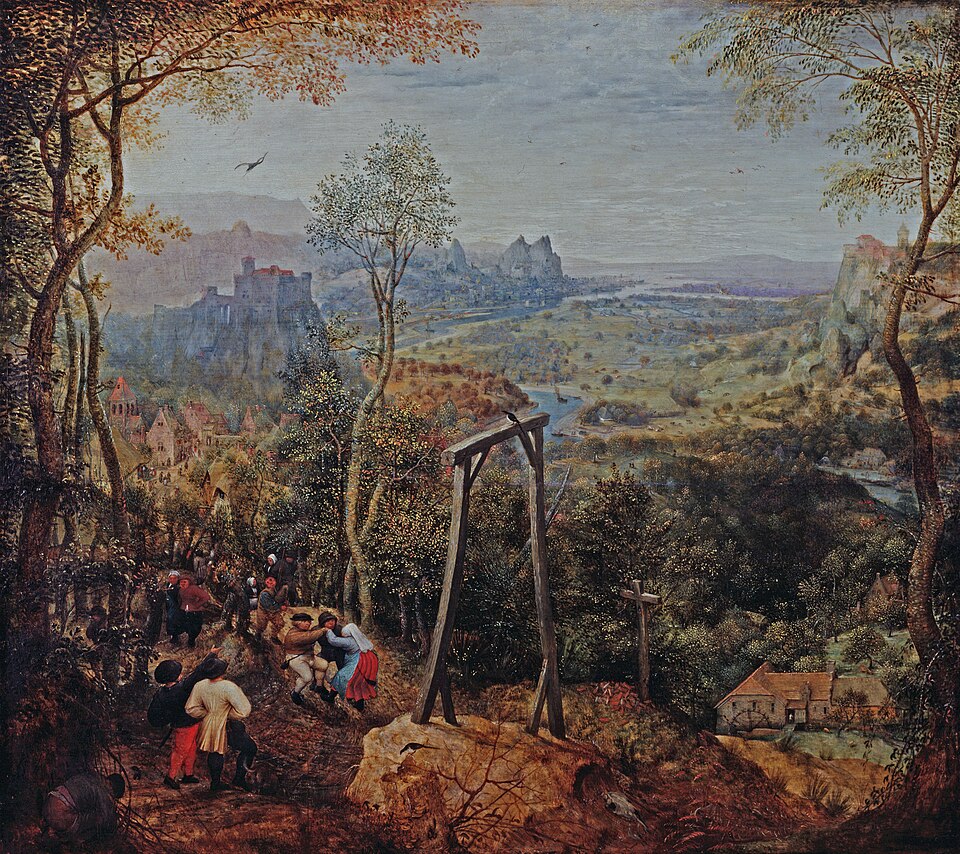
In a sunny clearing, peasants dance to the bagpipes right beside a gallows, where a magpie sits watching. It may be Bruegel's final painting, and the one he asked his wife to keep.
The story behind the painting
Pieter Bruegel the Elder painted The Magpie on the Gallows in 1568, in oil on a wooden panel. It is not known why or for whom the picture was made. The year matters: it came just after Fernando Álvarez de Toledo, 3rd Duke of Alba, arrived in the Netherlands, sent by the Spanish king Philip II to suppress the Dutch Revolt. The date also makes this one of Bruegel's last works before his death in 1569, perhaps his very last. A touching story survives with it. Bruegel asked his wife to burn some of his pictures after his death, but told her to keep The Magpie on the Gallows for herself. Whatever it meant to him, he wanted this small panel to stay close to home.
What to look for
The gallows stands in the very centre, splitting the picture in two, with a magpie perched near the exact middle of the panel. Look at its posts: their bases seem planted side by side, yet the right end of the crossbeam recedes into the distance, and the lighting contradicts itself, an impossible object rather like a Penrose triangle. A second magpie sits on a rock at its foot, near the skull of an animal. People appear only in the left foreground: three peasants dance to a bagpipe while others watch, and in the shadows a man relieves himself. Behind the dancers rise two intertwined trees. On the right stand a cross and a watermill. Beyond, a river valley opens, with a town and a castle on a crag, a tower on a rock, and hills fading into the sky.
Meaning and intent
Bruegel loved proverbs, and this panel seems to hold several. Dancing on the gallows, or relieving oneself on it, were Netherlandish sayings for mocking the state, and both are acted out here. Magpies were thought to be gossips, and gossip was believed to lead to hangings. Another saying held that the road to the gallows runs through pleasant meadows, and indeed the setting is a lovely landscape. Painted the year after Alba's arrival, the gallows may stand for the threat of execution hanging over those who preached the new Protestant doctrine. The composition supports the unease: the left side feels closed, the right side open, and the depth runs from dense browns in front, through green middle tones, to light blues and greys far away. Joy and danger share the same sunny clearing.
Legacy
Because Bruegel singled this picture out for his wife to keep, it carries a special place among his works, a last word from an artist who died the following year. The intertwined trees behind the dancers reuse a motif from an earlier drawing of his showing bears playing in a forest, a small thread linking the panel to the rest of his art. The broad world landscape, seen from high above the river valley, shows his gift for setting small human dramas inside vast nature. Today The Magpie on the Gallows is in the Hessian State Museum in Darmstadt, Germany, where visitors can still puzzle over its impossible gallows and its dancing peasants.
豆知識
- Painted in 1568, oil on wood panel; possibly Bruegel's last work
- Size: 46 × 51 cm
- Bruegel asked his wife to keep this painting after his death
- Now in the Hessian State Museum, Darmstadt
画家について
Pieter Bruegel the Elder (1525-1569)
同じ画家の作品: Pieter Bruegel the Elder
%20-%20Google%20Art%20Project.jpg) 雪中の狩人 - Pieter Bruegel the Elder (1565)
雪中の狩人 - Pieter Bruegel the Elder (1565)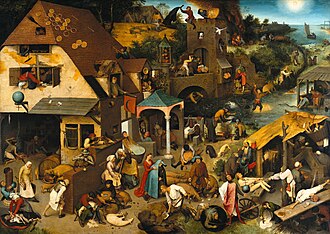 ネーデルラントの諺 - Pieter Bruegel the Elder (1551)
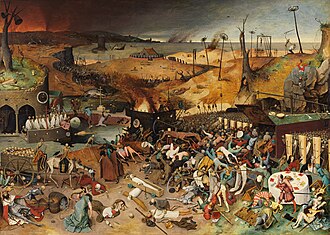 死の勝利 - Pieter Bruegel the Elder (1560s)
%20-%20Blind%20leading%20the%20blind%20Google%20Art%20Project.jpeg) 盲人の寓話 - Pieter Bruegel the Elder (1568)
盲人の寓話 - Pieter Bruegel the Elder (1568)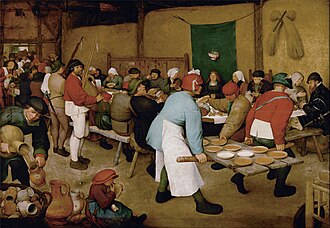 農民の婚宴 - Pieter Bruegel the Elder (1560s)
 穀物の収穫 - Pieter Bruegel the Elder (1565)
 子供の遊戯 - Pieter Bruegel the Elder (1560)
%20-%20Christ%20and%20the%20woman%20taken%20in%20adultery.jpg) キリストと姦通の女 - Pieter Bruegel the Elder (1565)
キリストと姦通の女 - Pieter Bruegel the Elder (1565)
 快楽の園
快楽の園 愚者の船
愚者の船