死の勝利
Pieter Bruegel the Elder · 1560s
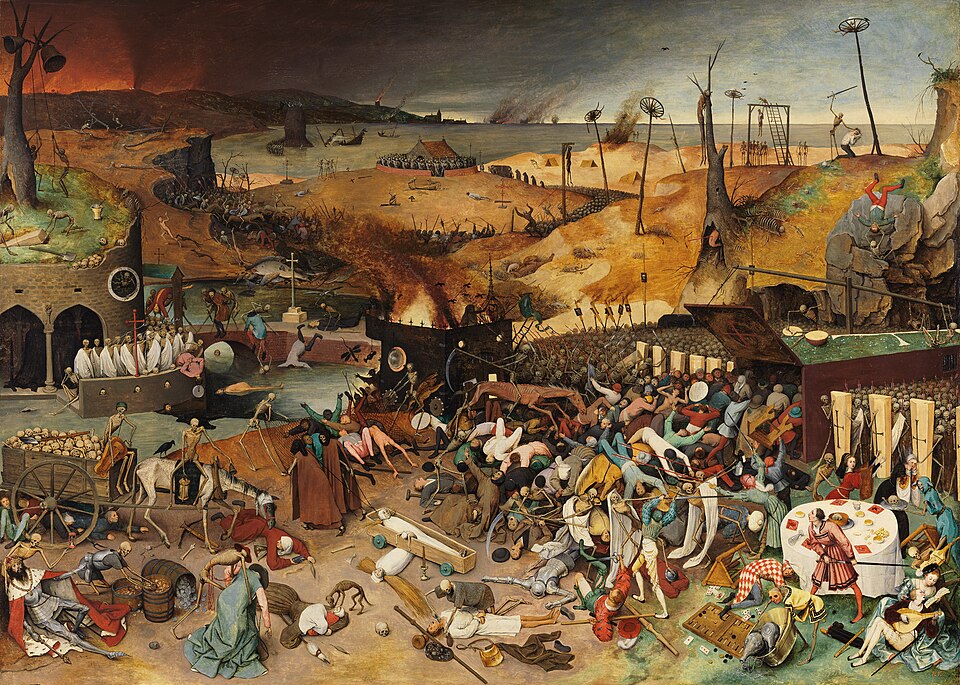
An army of skeletons sweeps across a burning land, and no one - not peasant, soldier, cardinal or king - is spared. Bruegel painted the end of the world as a crowd scene.
The story behind the painting
Pieter Bruegel the Elder painted The Triumph of Death in oil on panel around 1562 (Wikidata gives simply the 1560s). It belongs to a time when the threat of plague in Europe was very severe, and the panel is full of the clothes, games, instruments and customs of mid-sixteenth-century life. Bruegel brought together two visual traditions: the Northern woodcuts of the Dance of Death, in which skeletons lead people of every rank away, and the Italian theme of the Triumph of Death, known from frescoes such as those in Palermo and at the Camposanto in Pisa. The result is something new: not a procession but an invasion.
What to look for
Take it slowly; the panel rewards patience. The landscape is scorched and barren, fires burn on the horizon and ships founder at sea. Upper left, skeletons ring a bell, the death knell of the world. In the foreground a cart of skulls rolls on while a skeleton plays a hurdy-gurdy. Find the king, reaching for his barrels of coins as a skeleton holds up an empty hourglass, and the cardinal led away by a skeleton wearing his red hat. People are herded into a vast coffin-shaped trap. At lower right a dinner has broken up: diners draw swords, a jester hides beneath the table, cards and a backgammon board lie scattered, and a lute player sings on, unaware.
Meaning and intent
The message is ancient and blunt: death comes to all, whatever their rank or wealth. Bruegel makes it vivid through detail. A woman holding a thread and scissors evokes Atropos, the Fate who cuts life short; another with spindle and distaff recalls her sisters. The mounted skeletons probably allude to the Four Horsemen of the Apocalypse. A man with a millstone around his neck echoes Matthew 18:6. The dying king, still grasping at gold, seems to have forgotten repentance. Among the scenes of cruelty there are harrowing moments involving even a mother and child - Bruegel spares no one, and the effect is meant to sober, not to thrill. A cross stands at the centre.
Legacy
The painting has been in the Museo del Prado in Madrid since 1827 and is included in the BBC's 100 Great Paintings. Its influence began in Bruegel's own family: five copies are known, by Jan Brueghel the Elder, Pieter Brueghel the Younger (three) and Jan Brueghel the Younger. Close study suggests they worked not from the panel itself but from sketches in Bruegel's estate, which is why their details differ. Centuries later it echoes through culture - Sylvia Plath's poem "Two Views of a Cadaver Room", Don DeLillo's novel Underworld, a Monty Python sketch and album covers. Its vision of mortality has never stopped feeling contemporary.
豆知識
- It has been in the Museo del Prado since 1827.
- Five copies by Bruegel's descendants are known, probably made from his sketches rather than the original panel.
- Sylvia Plath describes the lovers in its lower right corner in her poem "Two Views of a Cadaver Room".
- It combines the Northern Dance of Death with the Italian Triumph of Death tradition.
画家について
Pieter Bruegel the Elder (1525-1569)
同じ画家の作品: Pieter Bruegel the Elder
%20-%20Google%20Art%20Project.jpg) 雪中の狩人 - Pieter Bruegel the Elder (1565)
雪中の狩人 - Pieter Bruegel the Elder (1565)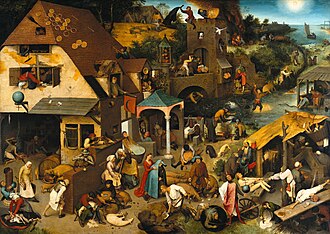 ネーデルラントの諺 - Pieter Bruegel the Elder (1551)
%20-%20Blind%20leading%20the%20blind%20Google%20Art%20Project.jpeg) 盲人の寓話 - Pieter Bruegel the Elder (1568)
盲人の寓話 - Pieter Bruegel the Elder (1568)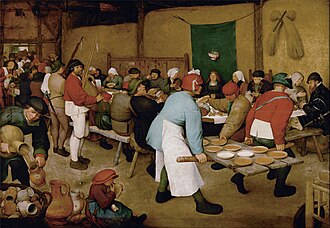 農民の婚宴 - Pieter Bruegel the Elder (1560s)
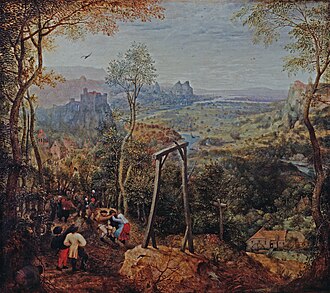 絞首台の上のかささぎ - Pieter Bruegel the Elder (1568)
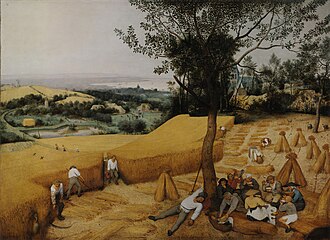 穀物の収穫 - Pieter Bruegel the Elder (1565)
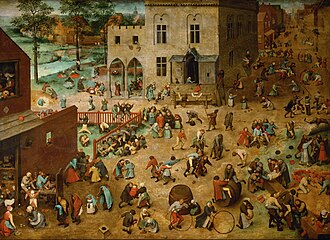 子供の遊戯 - Pieter Bruegel the Elder (1560)
%20-%20Christ%20and%20the%20woman%20taken%20in%20adultery.jpg) キリストと姦通の女 - Pieter Bruegel the Elder (1565)
キリストと姦通の女 - Pieter Bruegel the Elder (1565)
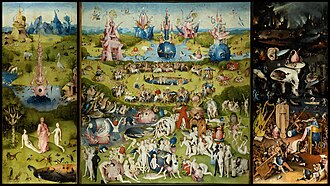 快楽の園
快楽の園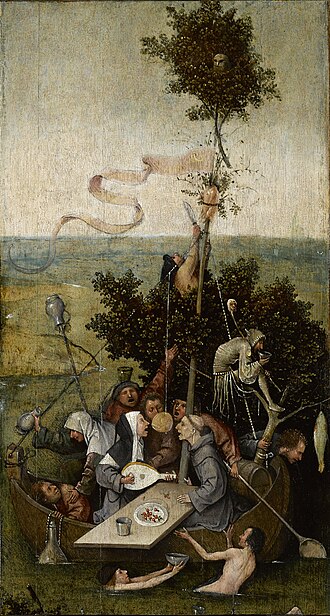 愚者の船
愚者の船