エウロペの略奪
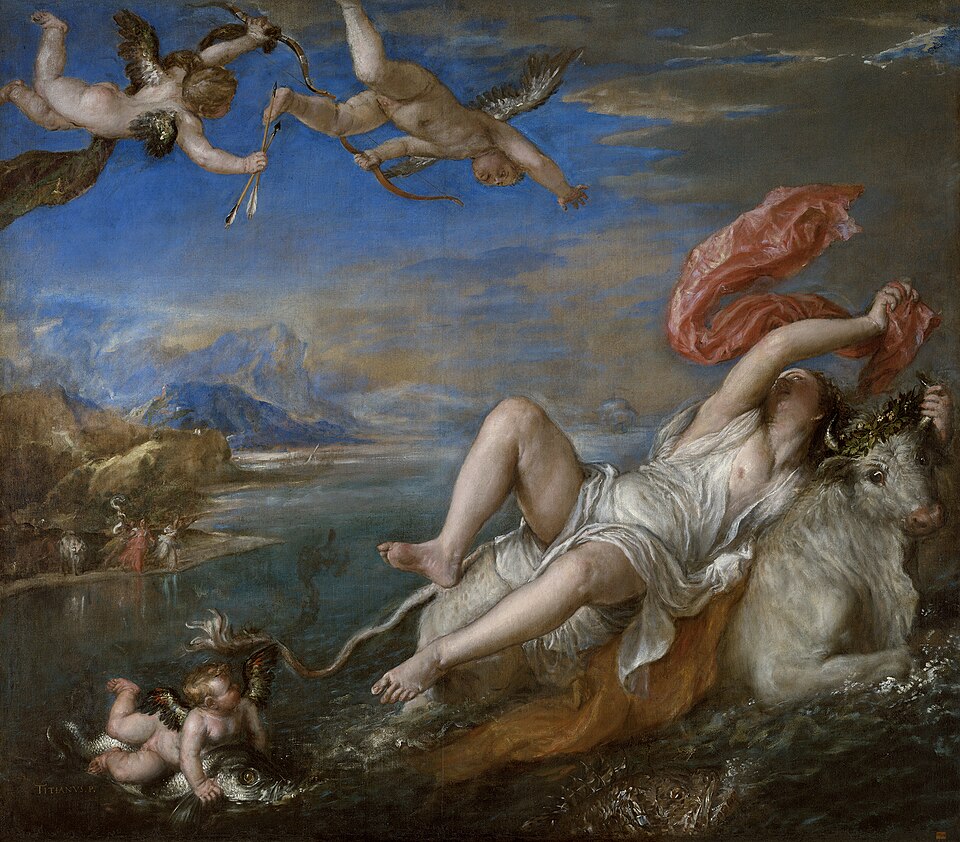
A young woman is carried out to sea on the back of a white bull, her scarf whipping in the wind as the shore falls away. Titian does not soften what is happening to her.
The story behind the painting
Titian painted The Rape of Europa around 1560 to 1562 as one of his poesie, a series of mythological paintings for Philip II of Spain. The story comes from Greek myth: Zeus took the form of a bull, enticed Europa onto his back, then carried her across the sea to Crete. Ovid's Metamorphoses is one source, but a more direct inspiration may be a description of a painted Europa in Achilles Tatius's novel Leucippe and Clitophon, printed in Italian in Venice in 1546. Its dolphins, scarf, Cupid and Europa's position on the bull are all echoed here.
What to look for
Europa lies sprawled on her back across the bull, just off the shore of her homeland, clothes in disarray, her legs suggesting she is precariously balanced or even kicking to free herself. She holds up a red silk scarf, and an attendant on the distant shore wears a similar garment. Two putti chase her through the sky, another rides a dolphin, and a sea monster lurks in the foreground. The bull is snowy white with a powerful neck, close to Ovid's description. Wikidata records the size as 185 by 205 cm; Wikipedia gives 178 by 205 cm.
Meaning and intent
The title uses the old sense of rape as abduction, but the painting makes the threat plain. The act of sexual violence is not shown, yet it is implied by Europa's posture and fearful expression, by the waving scarf and by the monster below. Titian seems to stress that this is a scene of force, not romance. The scholar Yael Even has suggested that Titian may have taken on the subject less from attachment to it than to assert his abilities as a painter.
Legacy
Philip V of Spain later gave the picture to the French ambassador, and it entered the Orleans Collection in Paris for most of the eighteenth century. Rubens made a faithful copy in 1628 to 1629, now in the Prado. Bernard Berenson bought the painting for Isabella Stewart Gardner in 1896, and it remains in her museum in Boston; it was not taken in the museum's 1990 theft. In 2021 to 2022 the museum reunited all six of Titian's poesie for the first time since the sixteenth century.
豆知識
- Painted c. 1560-1562 for Philip II of Spain.
- One of Titian's six poesie.
- Isabella Stewart Gardner Museum, Boston, since 1896.
- Size: 185 x 205 cm (Wikidata) or 178 x 205 cm (Wikipedia).
画家について
ティツィアーノ・ヴェチェッリオ (1488-1576)
神話画 · イザベラ・スチュワート・ガードナー美術館 · ゼウス
同じ画家の作品: ティツィアーノ・ヴェチェッリオ
.jpg) ウルビーノのヴィーナス - Titian (1538)
ウルビーノのヴィーナス - Titian (1538) 聖母被昇天 - Titian (1510s)
FXD.jpg) 聖愛と俗愛 - Titian (1510s)
聖愛と俗愛 - Titian (1510s) 騎乗像 - Titian (1548)
 フローラ - Titian (1517)
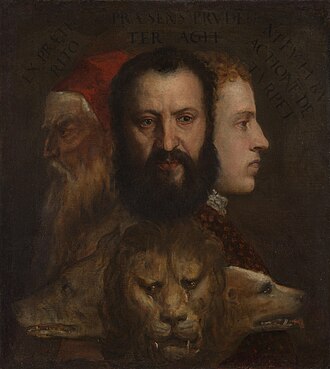 賢明の寓意 - Titian (1550)
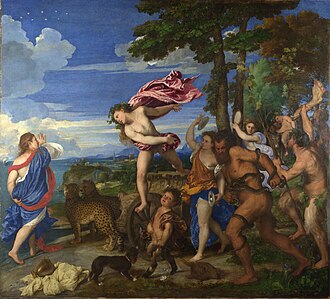 バッカスとアリアドネ - Titian (1520s)
%20nave%20left%20-%20Altar%20of%20Madona%20di%20Ca'Pesaro.jpg) ペーザロ家の祭壇画 - Titian
ペーザロ家の祭壇画 - Titian
 モナ・リザ
モナ・リザ 白貂を抱く貴婦人
 自画像
自画像 東方三博士の礼拝
 ヴィーナスの誕生
 プリマヴェーラ