ベツレヘムの人口調査
Pieter Bruegel the Elder · 1566
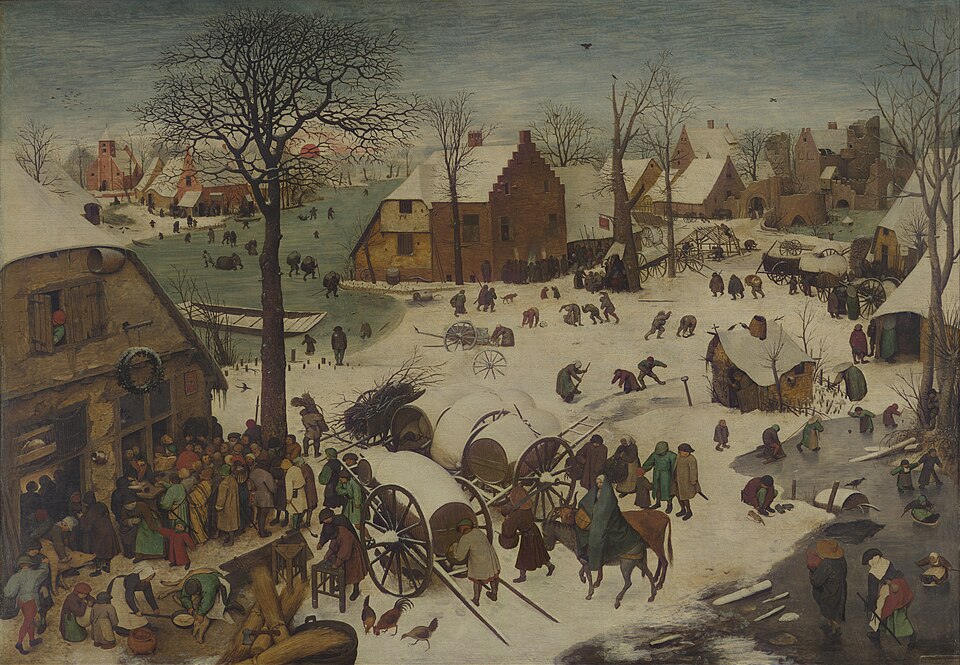
At sundown in a snowy Flemish village, people gather at a building to be registered. Among them, almost unnoticed, a pregnant woman rides a donkey: Mary, with Joseph at her side, arriving in Bethlehem.
The story behind the painting
Pieter Bruegel the Elder painted The Census at Bethlehem, also called The Numbering at Bethlehem, in 1566. It is signed, about 115.5 by 163.5 cm, and has been in the Oldmasters Museum in Brussels since 1902. It belongs to a brief run of five snowy landscapes that established the winter landscape as a genre in Western art, from the Adoration of the Magi in the Snow to The Hunters in the Snow of 1565. The group is often linked to the sharp cold of northern European winters, especially the very hard winter of 1564 to 1565. Bruegel died three years later, in 1569.
What to look for
A crowd gathers at a building on the left, where a scribe takes down names; a sign with the Habsburg double-headed eagle hangs on the wall. Others make their way towards it, among them Joseph and the pregnant Mary on a donkey. A pig is being slaughtered, something that could never have happened in Jewish Bethlehem. Children play on the ice and throw snowballs. At the very centre lies a spoked wheel, sometimes read as the wheel of fortune. To the right, a man in a small hut holds a clapper, the warning of a leper, with a begging bowl in front. Far off stand a well-kept church and a ruined castle based on the gates of Amsterdam.
Meaning and intent
Bruegel tells the story from Luke 2, the decree of Caesar Augustus that all the world should be registered, as if it happened in his own country. The census of Quirinius becomes a Flemish tax day under Habsburg rule, and some have read it as a reference to the taxes paid to the administration in the Netherlands. He may also be making a broader criticism of bureaucracy. Mary and Joseph are just two more cold travellers in the line, and that ordinariness is the point: the sacred arrives unannounced among everyday hardship.
Legacy
The subject was rare in earlier Netherlandish art, and indeed in Western art as a whole. After Bruegel's death his son Pieter Brueghel the Younger and his studio made dozens of copies; one, dated 1610, also hangs in the Oldmasters Museum. The original remains a quiet masterpiece of winter light, where snow, low sun and busy figures turn a Gospel verse into a day anyone in sixteenth-century Flanders would have recognised.
豆知識
- Painted and signed in 1566.
- One of Bruegel's five snowy landscapes.
- In the Oldmasters Museum, Brussels, since 1902.
- Pieter Brueghel the Younger's studio made dozens of copies.
画家について
Pieter Bruegel the Elder (1525-1569)
宗教美術 · 女性 · 聖母マリア · ナザレのヨセフ · 雪 · ベルギー王立美術館
同じ画家の作品: Pieter Bruegel the Elder
%20-%20Google%20Art%20Project.jpg) 雪中の狩人 - Pieter Bruegel the Elder (1565)
雪中の狩人 - Pieter Bruegel the Elder (1565)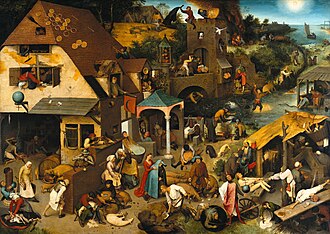 ネーデルラントの諺 - Pieter Bruegel the Elder (1551)
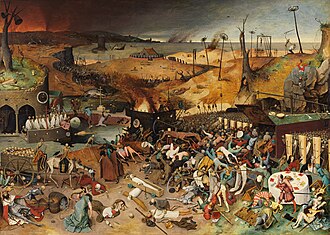 死の勝利 - Pieter Bruegel the Elder (1560s)
%20-%20Blind%20leading%20the%20blind%20Google%20Art%20Project.jpeg) 盲人の寓話 - Pieter Bruegel the Elder (1568)
盲人の寓話 - Pieter Bruegel the Elder (1568)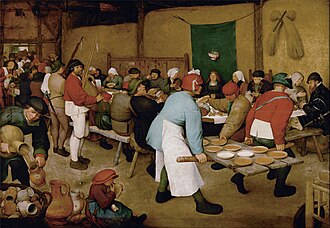 農民の婚宴 - Pieter Bruegel the Elder (1560s)
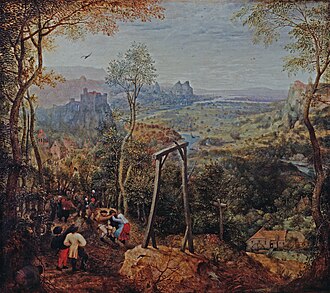 絞首台の上のかささぎ - Pieter Bruegel the Elder (1568)
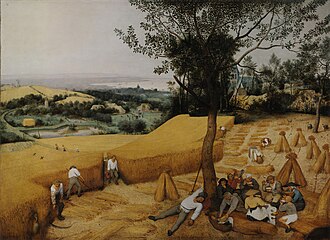 穀物の収穫 - Pieter Bruegel the Elder (1565)
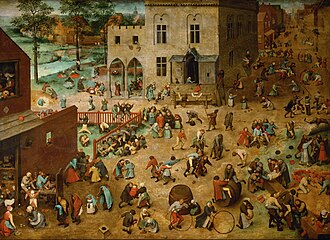 子供の遊戯 - Pieter Bruegel the Elder (1560)
関連する画家の作品
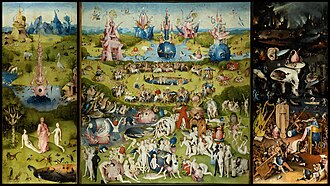 快楽の園 - Hieronymus Bosch
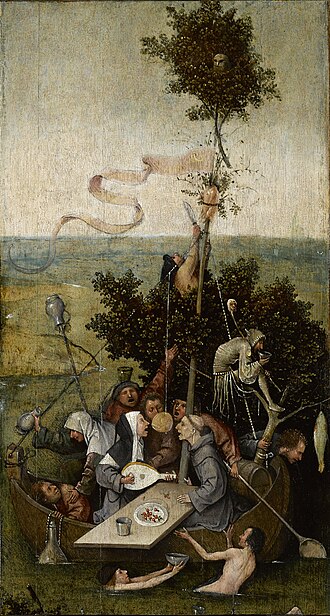 愚者の船 - Hieronymus Bosch (1500s)
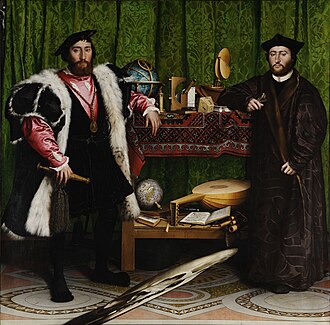 大使たち - Hans Holbein the Younger (1533)
 墓の中のキリストの屍 - Hans Holbein the Younger (1520s)