サンパウロ美術館所蔵のグレコによる受胎告知
エル・グレコ · 1600
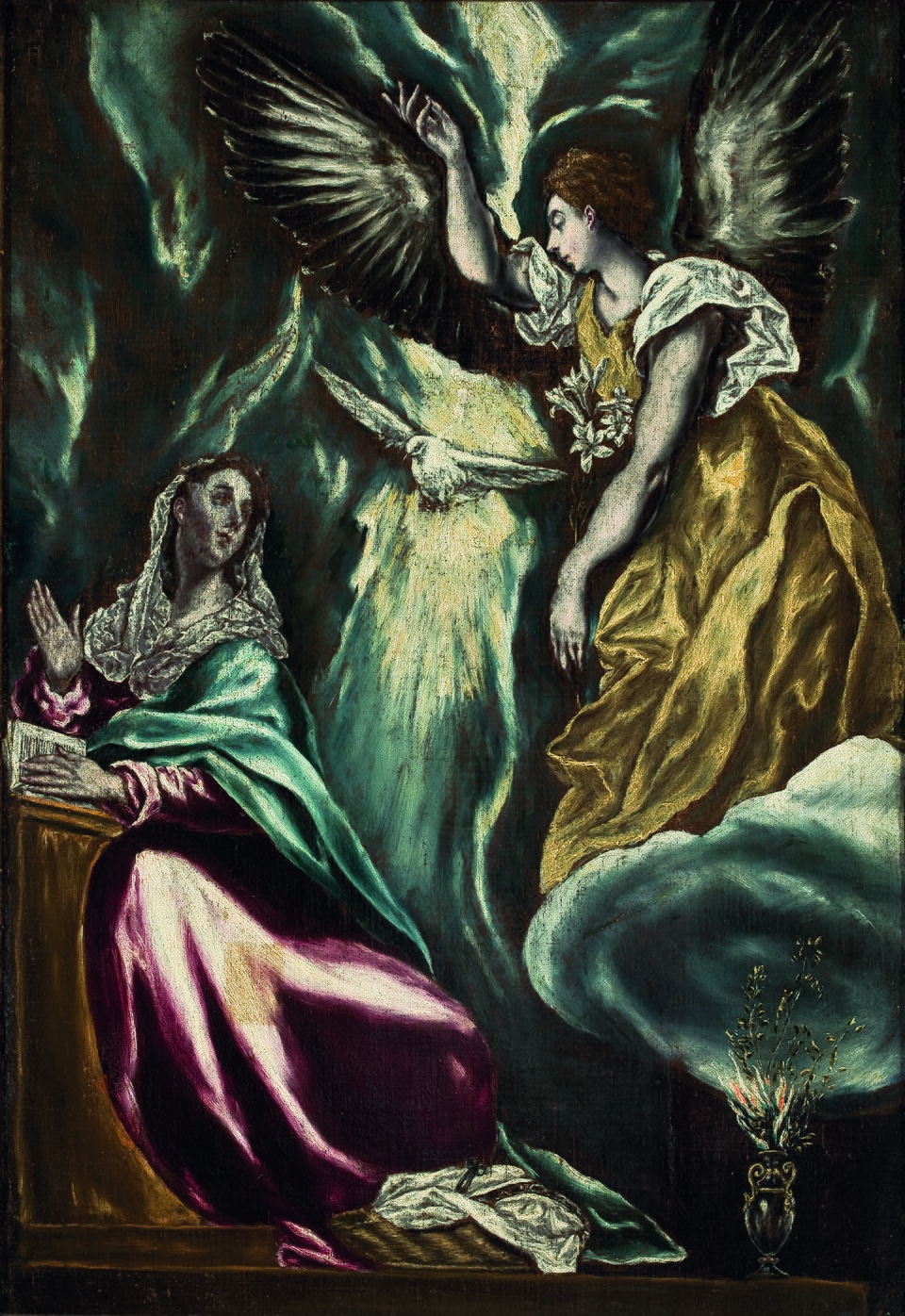
Dazzling light, flashes like fire, and forms pulled upward: El Greco painted the angel's message to Mary as a mystical vision. This version, now in São Paulo, belongs to a family of at least seven near-identical canvases.
The story behind the painting
This oil on canvas is traditionally attributed to El Greco and dated to around 1600. It belongs to a group of at least seven almost identical versions of varying quality, all traditionally credited to him and made between 1595 and 1605. The group seems to derive from the Annunciation El Greco painted for the Modena Triptych, an early work made at the end of his Cretan period and the start of his Venetian one. The theme stayed with him from his arrival in Venice to his last years: the inventory of his workshop at his death lists five paintings of the Annunciation, and most of his versions were painted in Toledo.
What to look for
The Spanish Wikipedia article calls this an emblematic, almost expressionist work, with dazzling light, colours and chromatic chords. The picture is built from zones that are distinct in form, joined by upward movements and broken by mystical lights and flashes of fire. Compare it with El Greco's Annunciations from Venice and Rome, which cared about setting, architecture and perspective, sometimes even a chequered floor to deepen space. Here that stage set has almost gone. What remains are the figures and the light, so that the eye follows the movement rather than a room. Wikidata gives its size as about 106.5 by 72.5 cm.
Meaning and intent
The painting belongs to El Greco's last period in Toledo, when his work took on a more religious stance than in Italy. Probably under the influence of Counter-Reformation doctrine, he gave less importance to scenery and architecture and more to a mental image, staging a mystical event rather than a historical appearance, in line with the idea that religious images should stir devotion. The article suggests one reason the Annunciation returns so often in Toledo: El Greco's possible contact with the writings of Ildefonsus of Toledo, a popular local saint he painted several times, who devoted much of his study to the Virgin.
Legacy
The tradition of the scene is ancient. Luke's Gospel tells how the archangel Gabriel announced to Mary that she would be the mother of Jesus, and she answered that she was the servant of the Lord. The feast of the Annunciation has been kept since at least the fifth century, and over the centuries painters added lilies, a white dove for the Holy Spirit, and Mary's surprise at the angel. El Greco's late versions, like this one, use that freedom while keeping touches of Byzantine iconography. The painting has been in the Museu de Arte de São Paulo since 1952.
豆知識
- Traditionally attributed to El Greco, about 1600.
- One of at least seven near-identical versions made 1595-1605.
- Derived from the Annunciation of the Modena Triptych.
- In the São Paulo Museum of Art since 1952.
Wikipedia (Spanish) · Wikidata
画家について
エル・グレコ (1541-1614)
同じ画家の作品: エル・グレコ
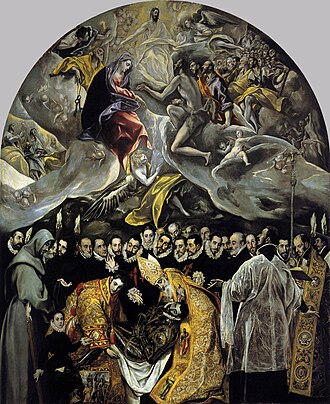 オルガス伯の埋葬 - El Greco (1586)
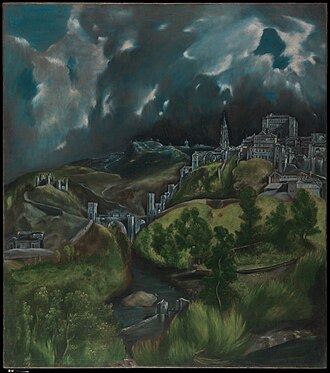 トレドの風景 - El Greco (1596)
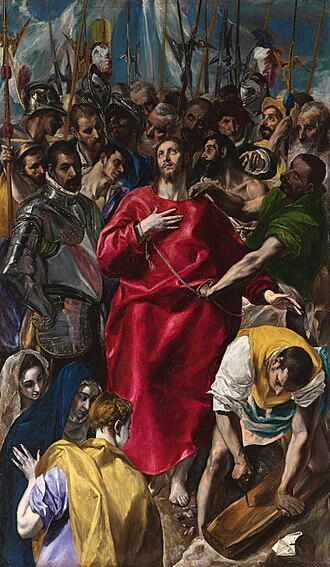 聖衣剥奪 - El Greco (1570s)
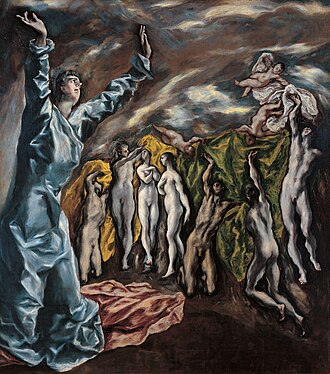 黙示録第5の封印 - El Greco (1610)
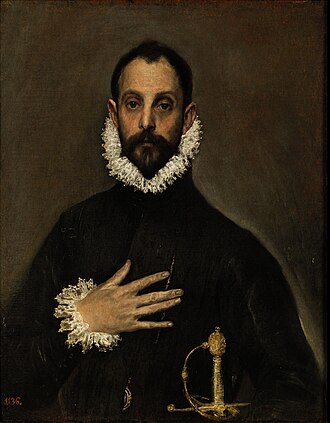 胸に手を置く騎士 - El Greco (1580)
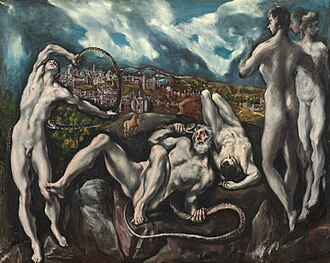 ラオコーン - El Greco (1610s)
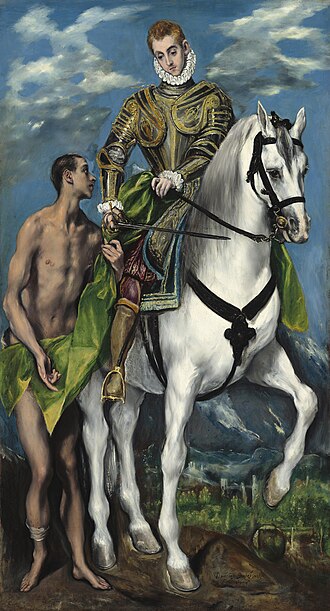 聖マルティヌスと乞食 - El Greco (1597)
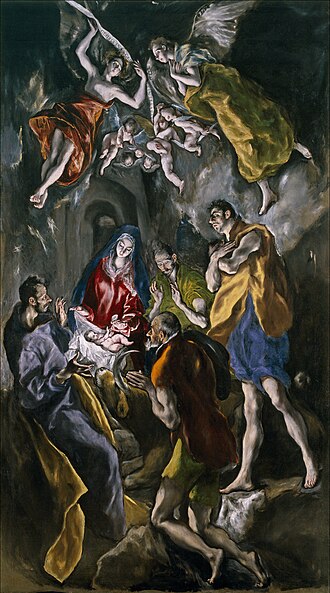 羊飼いの礼拝 - El Greco (1612)
関連する画家の作品
 カナの婚礼 - Paolo Veronese (1560s)
 レヴィ家の饗宴 - Paolo Veronese (1573)
 最後の晩餐 - Jacopo Tintoretto (1563)
 奴隷を解放する聖マルコ - Jacopo Tintoretto (1540s)
 ウルビーノのヴィーナス - Titian (1538)
 聖母被昇天 - Titian (1510s)
 エマオの晩餐 - Caravaggio (1601)
 聖マタイの召命 - Caravaggio (1609)
 大使たち - Hans Holbein the Younger (1533)
 墓の中のキリストの屍 - Hans Holbein the Younger (1520s)