東方三賢王の礼拝
Pieter Bruegel the Elder · 1564
.jpg)
Three richly dressed kings crowd around a baby on a cold winter's day, but the faces around them are rough, odd, even grotesque, and soldiers press in from behind. Bruegel turned a sacred scene into a crowd of very human reactions.
The story behind the painting
Pieter Bruegel the Elder painted this Adoration of the Kings in Brussels in 1564, signing and dating it lower right: BRVEGEL M.D.LXIIII. It was a tense time in the Spanish Netherlands, shortly before the Eighty Years' War broke out. The panel was probably made as an altarpiece, perhaps for Nicholas Jongelinck. It is one of very few Bruegel paintings in upright portrait format rather than his usual wide landscapes. Two other Adorations by him survive: an earlier one in tempera on canvas from around 1556, now in Brussels, and the Adoration of the Magi in the Snow of 1563, in the Oskar Reinhart Collection in Winterthur.
What to look for
Mary sits in her blue cloak before a ruined stable, the naked Christ Child loosely wrapped in white on her lap. Old Caspar kneels in green and pink trimmed with ermine, offering a gold vessel full of coins; the gold on his robe shows a star, a centaur, a man with a snake and a slug. Melchior bows in red and blue with lidded frankincense. Balthazar stands to the right in a white robe and pointed red boots, his myrrh held in a golden ship built around a nautilus shell. Behind Joseph, one man wears spectacles, and armed soldiers with a crossbow and polearms crowd in. A donkey eats straw in the shadows.
Meaning and intent
This is the first Bruegel painting made almost entirely of large figures, a grouping borrowed from Italian painters like Parmigianino. But he used it differently. Instead of ideal beauty, he gives each face its own distinct, sometimes grotesque expression, recording the range of human reactions to the sacred event. The three kings stand for the three ages of man and the three continents then known. Unusually, soldiers fill the scene, perhaps echoing the political situation in the Netherlands, and the soldiers, the cross-shaped crossbow and the child's shroud may foreshadow the Crucifixion. Mary alone is shown naturally. The crowded composition, seen from slightly above, feels claustrophobic.
Legacy
The design draws chiefly on a Hieronymus Bosch Adoration triptych now in the Prado, and in part on Jan Gossaert's Adoration in the National Gallery. The technique is masterly yet fast: brushstrokes of the priming and the underdrawing still show through the paint. The blue sky has faded to a dull grey. Archduke Ernest of Austria bought the panel in 1594, and it entered the Habsburg imperial collection. Later it passed to a private collector. In 1920 the National Gallery in London bought it, with support from the Art Fund and the shipbroker Arthur Serena, and it remains there today.
豆知識
- Signed and dated 1564; painted in Brussels on an oak panel.
- One of very few Bruegel paintings in upright format.
- His first work composed almost entirely of large figures.
- Bought by the National Gallery, London, in 1920.
画家について
Pieter Bruegel the Elder (1525-1569)
宗教美術 · 女性 · 男性 · 聖母マリア · イエスの幼少時代 · 少年 · ナショナル・ギャラリー · 東方三博士の礼拝 · 崇拝 · 東方の三博士
同じ画家の作品: Pieter Bruegel the Elder
%20-%20Google%20Art%20Project.jpg) 雪中の狩人 - Pieter Bruegel the Elder (1565)
雪中の狩人 - Pieter Bruegel the Elder (1565)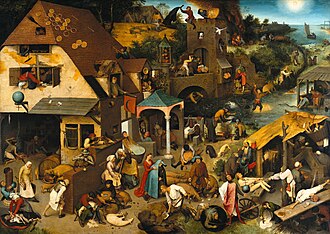 ネーデルラントの諺 - Pieter Bruegel the Elder (1551)
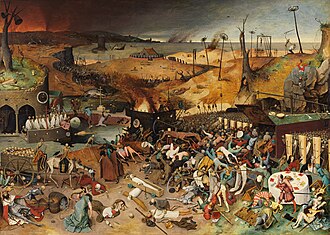 死の勝利 - Pieter Bruegel the Elder (1560s)
%20-%20Blind%20leading%20the%20blind%20Google%20Art%20Project.jpeg) 盲人の寓話 - Pieter Bruegel the Elder (1568)
盲人の寓話 - Pieter Bruegel the Elder (1568)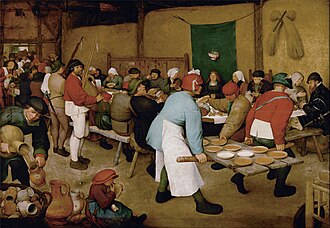 農民の婚宴 - Pieter Bruegel the Elder (1560s)
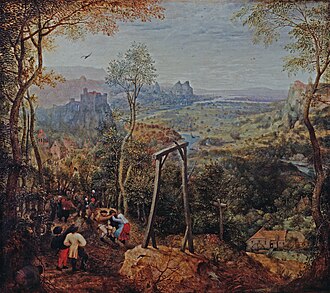 絞首台の上のかささぎ - Pieter Bruegel the Elder (1568)
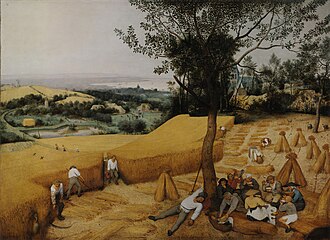 穀物の収穫 - Pieter Bruegel the Elder (1565)
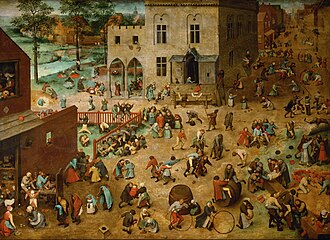 子供の遊戯 - Pieter Bruegel the Elder (1560)
関連する画家の作品
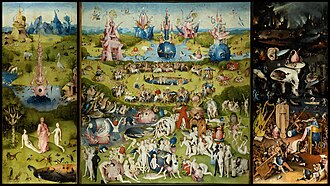 快楽の園 - Hieronymus Bosch
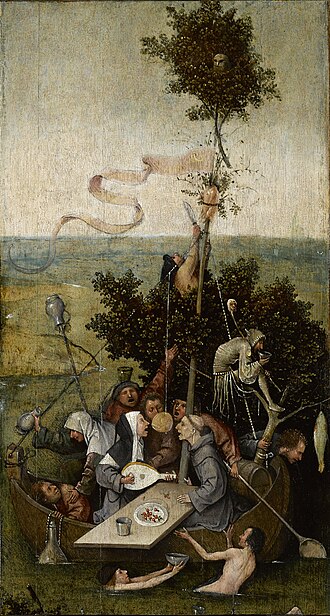 愚者の船 - Hieronymus Bosch (1500s)
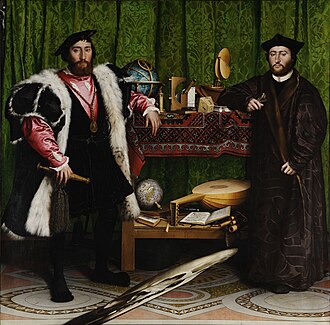 大使たち - Hans Holbein the Younger (1533)
 墓の中のキリストの屍 - Hans Holbein the Younger (1520s)