聖クリストフォロス
ヒエロニムス・ボス · 1500
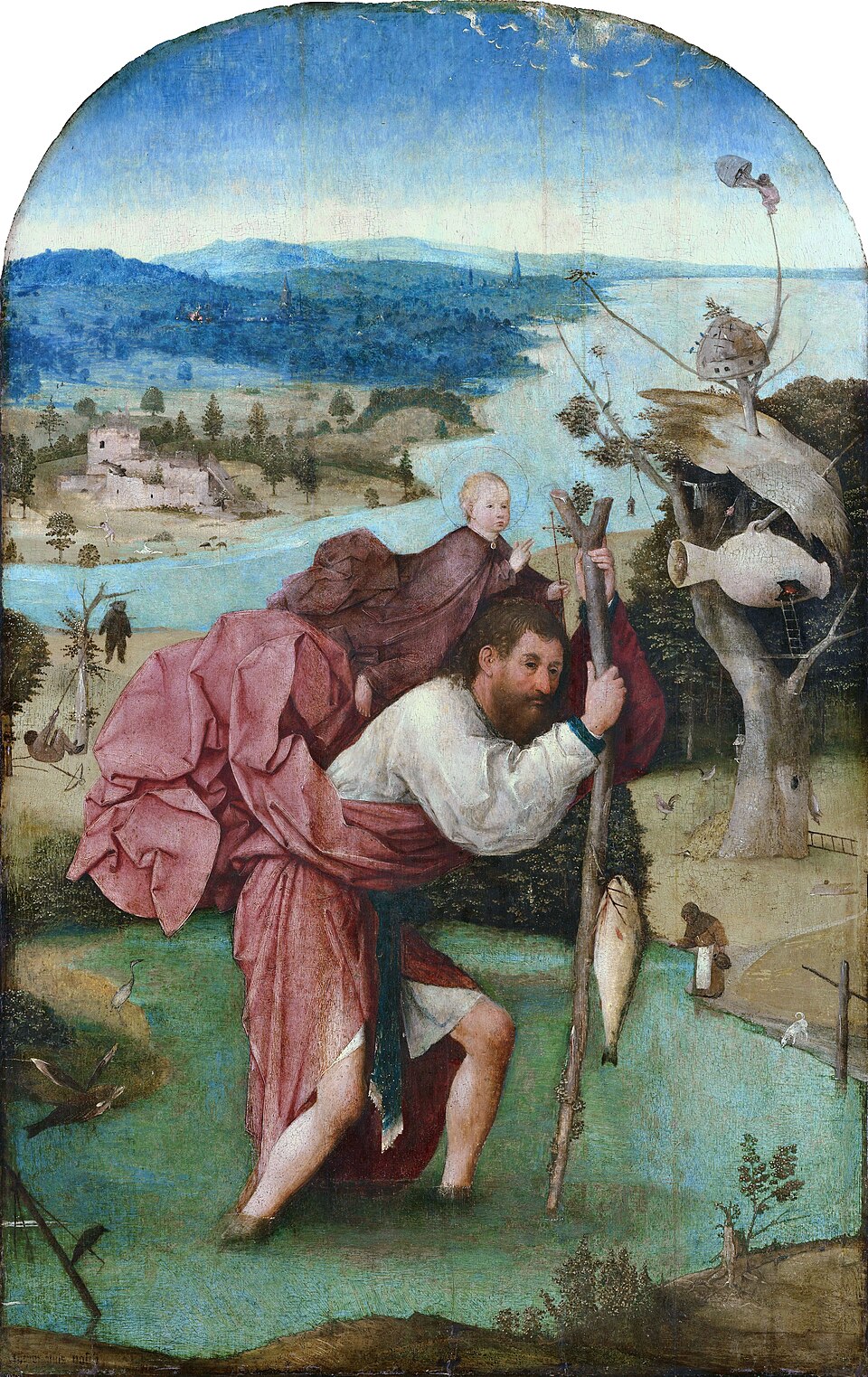
A barefoot giant wades through a wide river, bowed under a child who floats above his shoulders. Behind him a town burns, a dragon rises from ruins and a hermit lives in a giant jug hung in a tree. This is Bosch's Saint Christopher.
The story behind the painting
Hieronymus Bosch painted this panel between about 1490 and 1500, though dating is uncertain: Baldass placed it with the Saint John on Patmos, around 1490 to 1500, others around 1504 to 1505, and tree-ring study shows it was made after 1490 to 1496. Bosch may have painted it for the altar of the Brotherhood of Our Lady in the cathedral of 's-Hertogenbosch, which he had joined in 1486 or 1487. According to Mosmans it was meant for the altar of the chapel of Saint Anne in the same town, but no document recording the commission or its destination has been found.
What to look for
The saint and the child fill most of the panel above a wide river that curves across to the horizon. Christopher's legs are bare, and his large red cloak floats behind him like a throne for the child, who does not sit on his shoulders but hovers above, holding a slender cross instead of the usual globe. A fish hangs from his staff, which bends under the strain and begins to bud. Look for the burning town, the dragon chasing a naked man from a ruined castle, a bear hoisted into a tree, a lantern hanging from a branch and the hermit's huge jug.
Meaning and intent
In the Golden Legend Christopher was a giant who wanted to serve the most powerful master, from a king to the devil to Christ, and a hermit told him to carry travellers across a river. One night a child grew ever heavier on his shoulders, saying he carried the sins of the whole world. Because the child seems to float rather than sit, one specialist speaks of a mental burden rather than a physical one. De Tolnay read the fish as the fast after conversion and the jug as a hypocritical hermit's feast, while others saw it as hermit asceticism.
Legacy
In the Middle Ages Christopher was invoked against sudden death without confession, and according to Marijnissen and Ruyffelaere it is no surprise that Bosch painted him, since dying in a state of sin is central to his work. The panel has an unusual lowered arch, perhaps changed by sawing, and parts of the paint show excessive cleaning. It was in an Italian collection, then with the dealer Paul Cassirer in 1931 and Franz Koenigs in Haarlem, who lent it to the Museum Boijmans Van Beuningen in Rotterdam. Daniel George van Beuningen acquired it in 1940 and gave it to that museum in 1941.
豆知識
- Painted between about 1490 and 1500; dating is debated.
- The Christ Child holds a cross instead of a globe.
- Christopher was invoked against sudden death.
- Given to the Museum Boijmans Van Beuningen in 1941.
画家について
ヒエロニムス・ボス (1450-1516)
宗教美術 · イエスの幼少時代 · 少年 · 初期フランドル派 · ボイマンス・ファン・ベーニンゲン美術館
同じ画家の作品: ヒエロニムス・ボス
 快楽の園 - Hieronymus Bosch
 愚者の船 - Hieronymus Bosch (1500s)
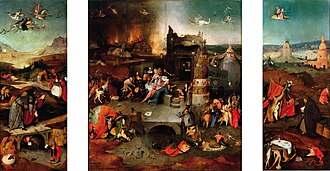 聖アントニウスの誘惑の三連祭壇画 - Hieronymus Bosch (1501)
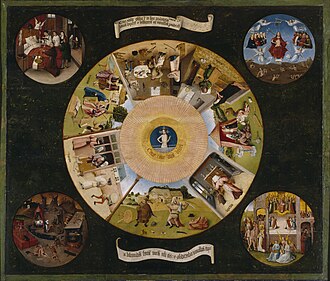 七つの大罪と四終 - Hieronymus Bosch (1500)
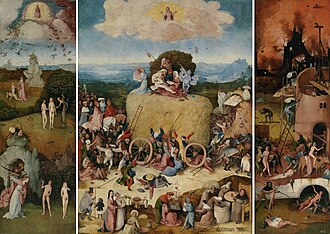 乾草車の三連祭壇画 - Hieronymus Bosch (1510s)
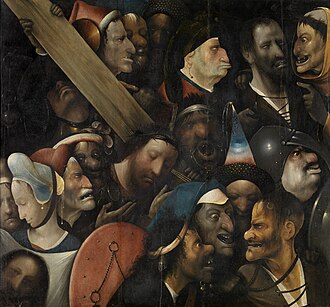 十字架を担うキリスト - Hieronymus Bosch (1510s)
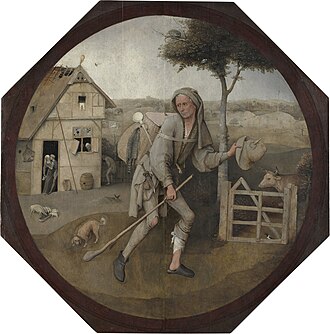 放浪者 - Hieronymus Bosch (1500)
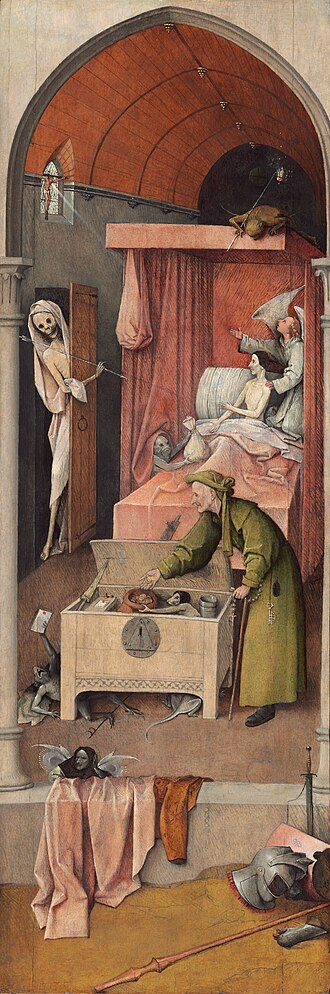 守銭奴の死 - Hieronymus Bosch (1500s)
関連する画家の作品
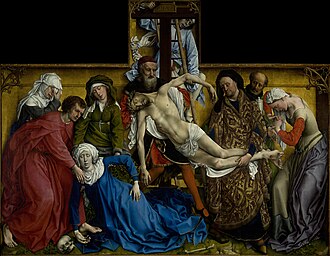 十字架降架 - Rogier van der Weyden (1440s)
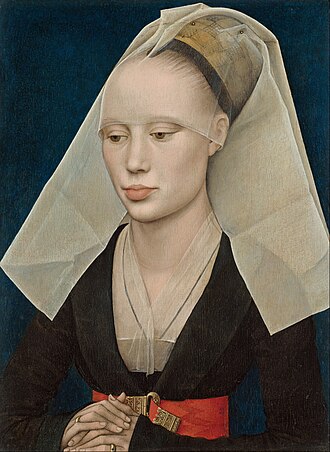 女性の肖像 - Rogier van der Weyden (1460)
 アルノルフィーニ夫妻像 - Jan van Eyck (1434)
 ヘントの祭壇画 - Jan van Eyck (1432)
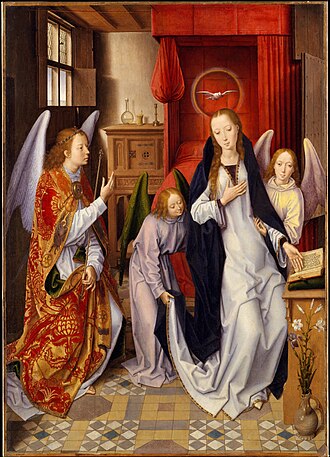 受胎告知 - Hans Memling (1480s)
 キリストの受難の場面 - Hans Memling (1470)
 雪中の狩人 - Pieter Bruegel the Elder (1565)
 ネーデルラントの諺 - Pieter Bruegel the Elder (1551)