十字架降架
ロヒール・ファン・デル・ウェイデン · 1440s
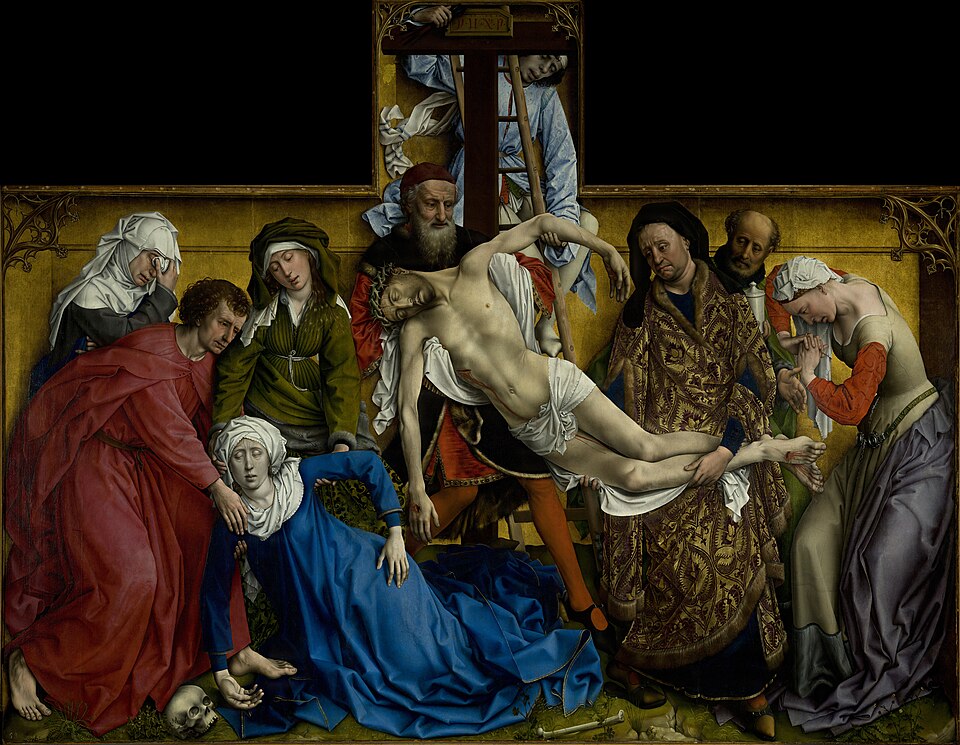
Ten figures gather as Christ's body is lowered from the cross, and his mother collapses in the same curve as her son. Few paintings have made grief so visible.
The story behind the painting
Rogier van der Weyden painted The Descent from the Cross early in his career, shortly after his apprenticeship with Robert Campin, whose influence shows in the hard, sculpted surfaces, realistic faces and vivid reds, whites and blues. The Wikipedia article dates it to about 1435 on grounds of style and because Rogier grew wealthy and famous around then, probably thanks to this very work; Wikidata gives the 1440s, so the sources differ. It was a deliberate attempt to create a masterpiece that would win him an international reputation. The commission came from the Leuven guild of archers for their chapel of Onze-Lieve-Vrouw-van-Ginderbuiten. The panel, about 205 by 262 cm, is now in the Museo del Prado in Madrid.
What to look for
Read the figures from left to right, following Lorne Campbell: Mary Cleophas; John the Evangelist; Mary Salome in green; the Virgin Mary, swooning; the body of Christ; Nicodemus in red; a young man on the ladder; Joseph of Arimathea in robes of gold brocade, the most sumptuous costume in the painting; a bearded man holding a jar; and Mary Magdalene in a dramatic pose at the right. Scholars disagree on who is who, since Dirk de Vos swaps Joseph and Nicodemus. Now look at Christ's body, set in the T-shape of a crossbow, a nod to the archers who commissioned it. Then look closely at the faces for the painted tears.
Meaning and intent
The gospels do not mention Mary at the deposition; her role grew in medieval devotion. Barbara Lane suggests a passage from the Meditations on the Life of Christ may lie behind such images, describing Mary taking her son's hanging hand, pressing it to her cheek and kissing it with heavy tears. Miri Rubin writes that Rogier's panel was the most influential painting of the Swoon of the Virgin, which theologians called the spasimo. Here the Virgin's collapse mirrors her son's body, joining mother and son in one shared suffering. Erwin Panofsky wrote that the painted tear, a shining pearl born of the strongest emotion, epitomises what Italians admired in Early Flemish painting: brilliance and sentiment.
Legacy
Art historians describe the work as arguably the most influential Netherlandish painting of the crucifixion story, copied and adapted widely in the two centuries after it was made. Its emotional impact and subtle handling of space have drawn extensive commentary. The theme of the swooning Virgin it helped popularise became so widespread that, in the early sixteenth century, Pope Julius II was asked to declare a feast day of the spasimo; the request was refused. Today in the Prado, the panel still shows why the young Rogier's bid for fame succeeded, and why viewers have lingered over its tears for nearly six centuries.
豆知識
- Commissioned by the Leuven guild of archers; Christ's body echoes the shape of a crossbow.
- The Wikipedia article dates it about 1435; Wikidata gives the 1440s.
- It is described as the most influential painting of the Swoon of the Virgin.
- It is now in the Museo del Prado, Madrid.
画家について
ロヒール・ファン・デル・ウェイデン (1390s-1464)
宗教美術 · プラド美術館 · イエス・キリスト · 初期フランドル派 · 福音記者ヨハネ · キリスト降架 · アリマタヤのヨセフ · ニコデモ
同じ画家の作品: ロヒール・ファン・デル・ウェイデン
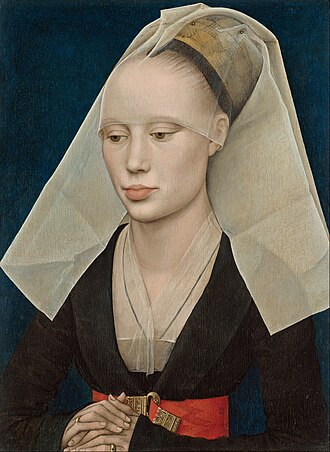 女性の肖像 - Rogier van der Weyden (1460)
.jpg) 最後の審判 - Rogier van der Weyden (1443)
最後の審判 - Rogier van der Weyden (1443)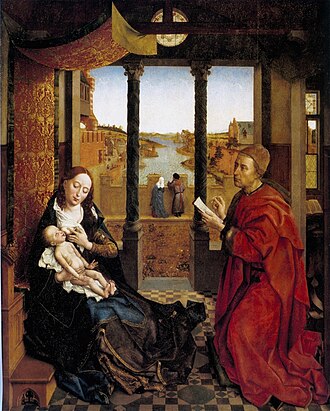 聖母を描く聖ルカ - Rogier van der Weyden (1490)
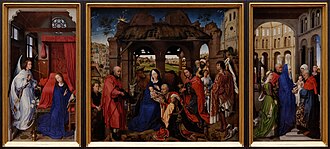 コルンバ祭壇画 - Rogier van der Weyden (1450s)
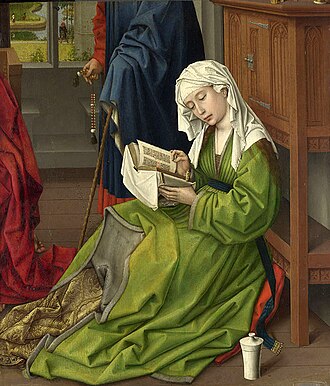 読書するマグダラのマリア - Rogier van der Weyden (1435)
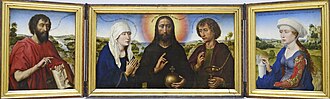 ブラック家の祭壇画 - Rogier van der Weyden (1452)
%20-%20Prado%20P02722.jpg) ドゥランの聖母 - Rogier van der Weyden (1430s)
ドゥランの聖母 - Rogier van der Weyden (1430s)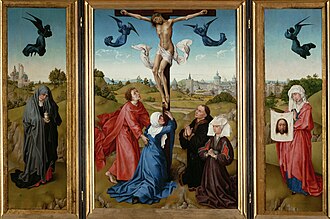 キリストの磔刑の三連祭壇画 - Rogier van der Weyden (1440s)
 快楽の園
快楽の園 愚者の船
愚者の船 アルノルフィーニ夫妻像
 ヘントの祭壇画
%20-%20Google%20Art%20Project.jpg) 雪中の狩人
雪中の狩人 ネーデルラントの諺