ジュリアーノ・デ・メディチの肖像
Sandro Botticelli · 1470s
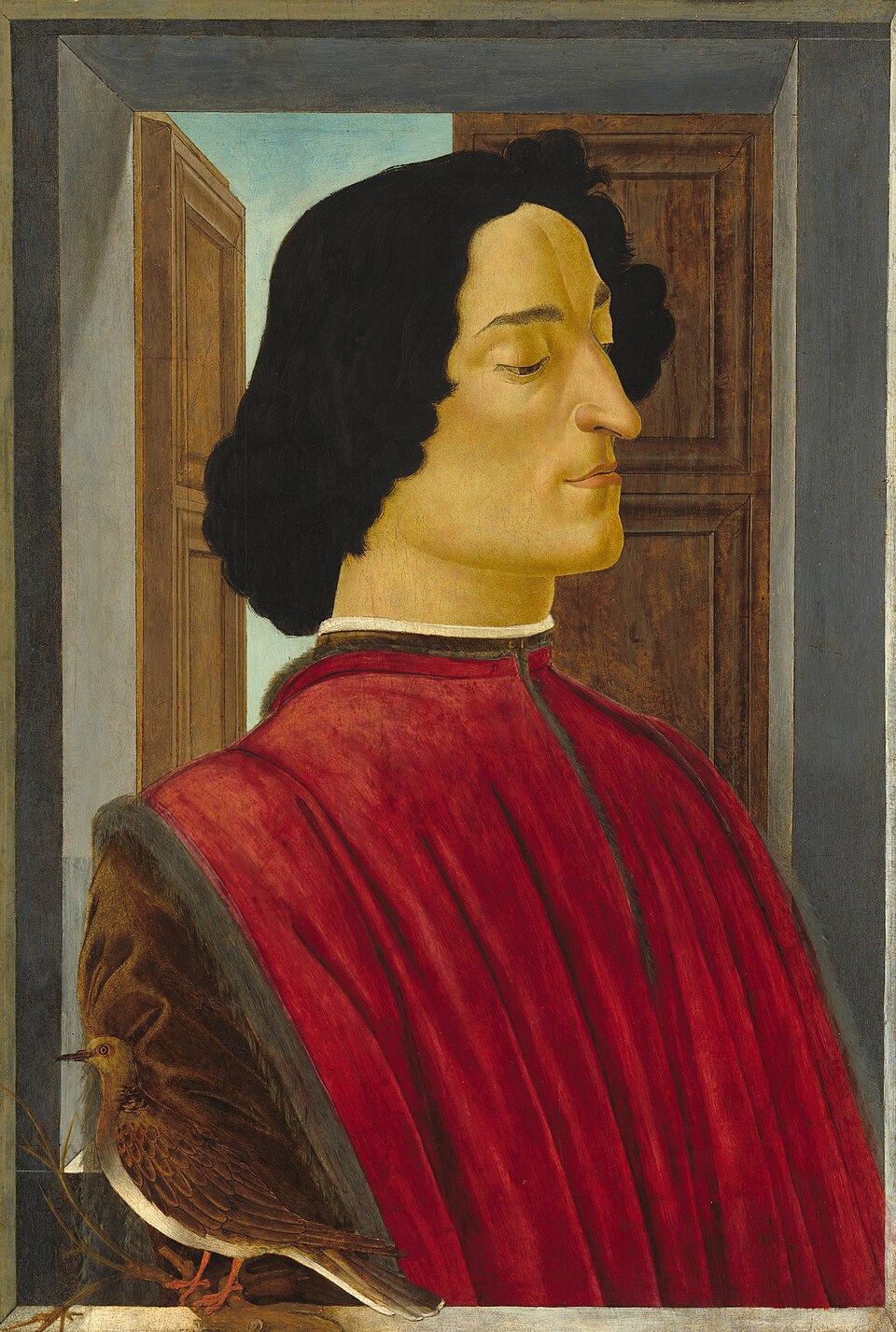
A young man with downcast, almost closed eyes sits by a half-open window while a dove perches on a dead branch. Botticelli painted Giuliano de' Medici, murdered in 1478, and every detail here seems to speak of farewell.
The story behind the painting
Giuliano de' Medici was the younger brother of Lorenzo the Magnificent. He was killed in 1478 in the Pazzi conspiracy, a plot backed by Pope Sixtus IV and other Italian princes to end Medici rule in Florence. The plot failed: Lorenzo escaped and the assassins were arrested. Just afterwards Botticelli was called to paint the condemned conspirators as hanged men on the walls of the Palazzo Vecchio. In the same period he probably painted Giuliano, at least once in life and perhaps again after his death from his death mask, as the closed eyelids suggest, along with copies for people who wanted a keepsake of the young man.
What to look for
As in the other two versions, Giuliano is shown in three-quarter view with his head turned so far to the right that he appears almost in profile. A furrow marks the centre of his forehead; the nose is aquiline and pointed, the hair thick, black and curly, the chin slight, the upper lip thin and the lower one full. His eyes are almost closed and his melancholy gaze is turned downward. He wears the red, fur-trimmed jacket of the rich Florentine class of the day. Here a dark shirt shows only at the sleeves. Behind him is a window with one shutter open and one closed. On the ledge in the foreground, at the left, a dove sits on a dry branch.
Meaning and intent
The French Wikipedia article reads the details as symbols. The dove stands for fidelity, perhaps the faithfulness Giuliano had pledged to his beloved Simonetta Vespucci, or the loyalty of whoever ordered the portrait. The dry branch alludes to death. The half-open, half-closed window is a typical symbol of the passage from life to death, which is why this version must date from after 1478. The article sees in the whole figure a proud man aware of his high rank, now looking down, eyes nearly shut, as if already elsewhere.
Legacy
Three versions survive, in Washington, Berlin and Bergamo. All are of uncertain origin, and scholars do not agree which is the original, since the painted surfaces are not in good condition. The Washington panel is the largest and most detailed; some critics see it as the first of the series, others as an intermediate work drawn from the Bergamo version or from a lost prototype. The article dates it about 1478 to 1480, while Wikidata gives the 1470s. It is tempera on wood, about 75.5 by 52.5 cm, in the National Gallery of Art, Samuel H. Kress Collection.
豆知識
- Tempera on wood, about 1478-1480.
- Shows Giuliano de' Medici, killed in the Pazzi conspiracy of 1478.
- The largest and most detailed of three versions.
- In the National Gallery of Art, Washington.
画家について
Sandro Botticelli (1445-1510)
肖像 · Early Renaissance · ナショナル・ギャラリー・オブ・アート · サミュエル・H・クレス・コレクション
同じ画家の作品: Sandro Botticelli
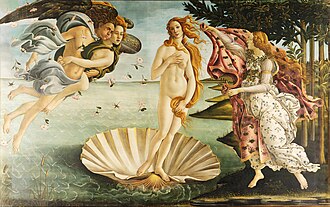 ヴィーナスの誕生 - Sandro Botticelli (c. 1485)
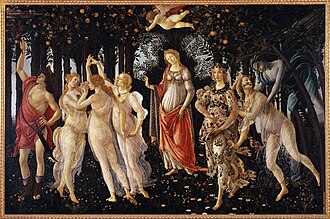 プリマヴェーラ - Sandro Botticelli (1480s)
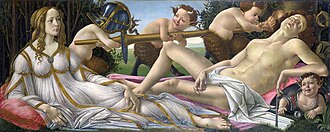 ヴィーナスとマルス - Sandro Botticelli (1485)
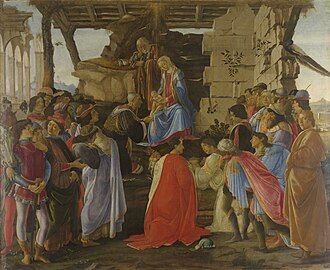 東方三博士の礼拝 - Sandro Botticelli (1470s)
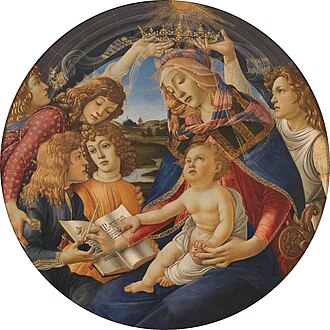 マニフィカートの聖母 - Sandro Botticelli (1481)
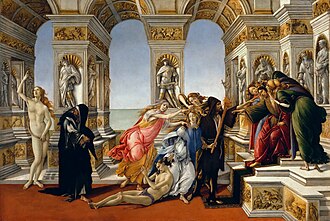 アペレスの誹謗 - Sandro Botticelli (1490s)
.jpg) パラスとケンタウロス - Sandro Botticelli (1482)
パラスとケンタウロス - Sandro Botticelli (1482)%20-%20Google%20Art%20Project.jpg) Idealized Portrait of a Lady - Sandro Botticelli (1480)
Idealized Portrait of a Lady - Sandro Botticelli (1480)
 モナ・リザ
モナ・リザ 白貂を抱く貴婦人
 受胎告知
受胎告知 東方三博士の礼拝