ヴィーナスとマルス
Sandro Botticelli · 1485
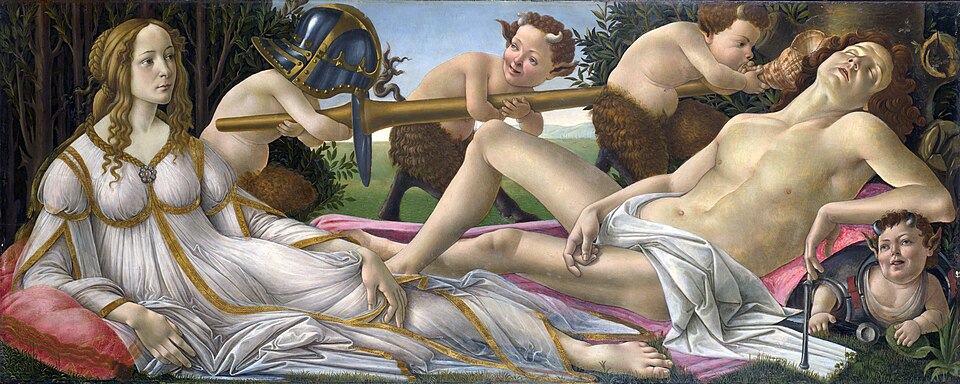
The god of war lies fast asleep, while the goddess of love watches him, calm and fully awake. Around them, little satyrs make off with his armour and blow a conch in his ear, and still he does not stir.
The story behind the painting
Botticelli painted Venus and Mars on panel in about 1485, the date the National Gallery gave it in 2017. The exact year is unknown: Ronald Lightbown suggests probably around 1483, and Leopold and Helen Ettlinger the latter half of the 1480s, all based on style. It likely follows the Primavera and Pallas and the Centaur and sits near The Birth of Venus. The wide format and close view suggest it celebrated a wedding, set into panelling or furniture in a bridal bedroom. Botticelli probably worked out its learned ideas with an adviser such as Poliziano, the Medici house poet. A wasps' nest in the corner may point to the Vespucci family, his neighbours, whose name means little wasps.
What to look for
Venus reclines on the left, dressed and attentive. Opposite, Mars sprawls asleep, a figure Lightbown called Botticelli's most perfect male nude. Now follow the baby satyrs: two carry off his helmet and lance, another rests inside his breastplate under his arm, and a fourth blows a small conch into his ear, without success. Look at the top right for the wasps' nest in a hollow tree, and the swarm of wasps around Mars' head. The couple lie in a grove of myrtle or laurel, perhaps both, with a glimpse of meadow and a distant walled city. In the bottom right, a satyr holds a fruit that the National Gallery has identified as a thorn apple.
Meaning and intent
Most scholars read the panel as a celebration of marriage and sensual pleasure, with love conquering or outlasting war, an idea Ernst Gombrich and Edgar Wind analysed in Neoplatonic terms. The philosopher Marsilio Ficino wrote that Venus masters Mars, but Mars never masters Venus. The design draws on Lucian's description of a lost ancient painting in which little cupids played with Alexander the Great's armour, and on lines by Lucretius about Mars resting in Venus's arms. The wasps may hint that love brings pain. Not everyone agrees on a happy reading: Charles Dempsey saw the satyrs as tormenting spirits and the scene as an empty fantasy that disarms valour, while the Victorian John Addington Symonds disliked the picture.
Legacy
Venus and Mars is the only one of Botticelli's great mythological paintings of these years not in the Uffizi in Florence. It has belonged to the National Gallery in London since 1874, and for the gallery's 200th anniversary it travelled to the Fitzwilliam Museum in Cambridge from May to September 2024. Its models have long been debated: Giuliano de' Medici has been proposed for Mars, though he was killed in 1478, before the earliest suggested date, and Simonetta Vespucci for Venus, as for so many Botticelli beauties. The thorn apple identification, proposed by David Bellingham in 2010, is questioned by some, yet the conversation it sparked shows how alive this panel remains.
豆知識
- Dated about 1485 by the National Gallery in 2017; other scholars suggest c. 1483 or the later 1480s.
- Probably made to celebrate a wedding, set into furniture or panelling.
- In the National Gallery, London, since 1874; 69.2 × 173.9 cm.
画家について
Sandro Botticelli (1445-1510)
神話画 · Early Renaissance · ナショナル・ギャラリー · ウェヌス · 枕
同じ画家の作品: Sandro Botticelli
 ヴィーナスの誕生 - Sandro Botticelli (c. 1485)
 プリマヴェーラ - Sandro Botticelli (1480s)
 東方三博士の礼拝 - Sandro Botticelli (1470s)
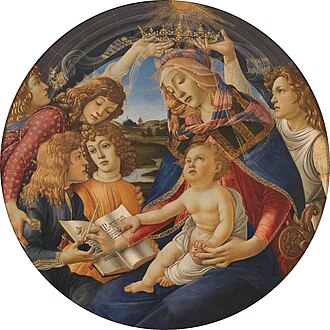 マニフィカートの聖母 - Sandro Botticelli (1481)
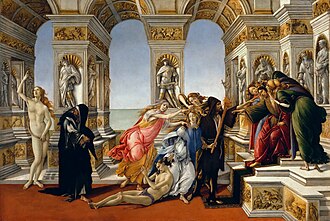 アペレスの誹謗 - Sandro Botticelli (1490s)
.jpg) パラスとケンタウロス - Sandro Botticelli (1482)
パラスとケンタウロス - Sandro Botticelli (1482)%20-%20Google%20Art%20Project.jpg) Idealized Portrait of a Lady - Sandro Botticelli (1480)
Idealized Portrait of a Lady - Sandro Botticelli (1480)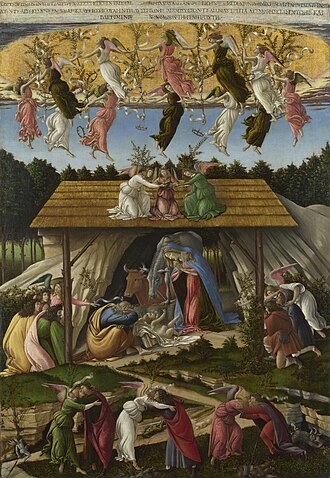 神秘の降誕 - Sandro Botticelli (1500)
 モナ・リザ
モナ・リザ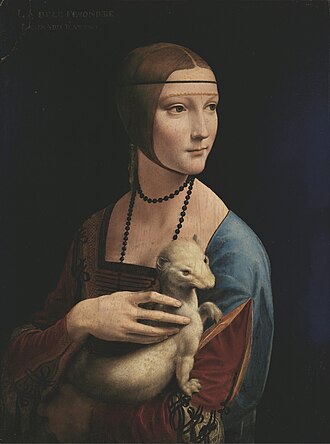 白貂を抱く貴婦人
.jpg) ウルビーノのヴィーナス
ウルビーノのヴィーナス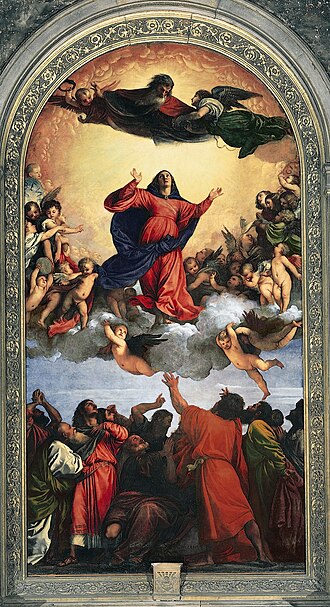 聖母被昇天
聖母被昇天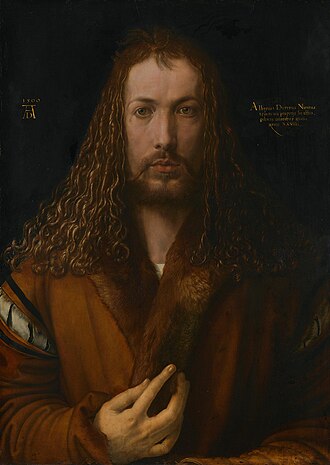 自画像
自画像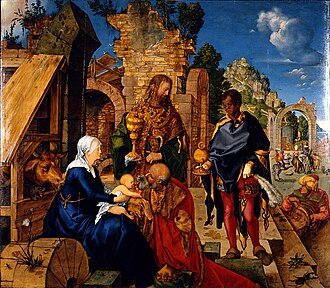 東方三博士の礼拝