マニフィカートの聖母
Sandro Botticelli · 1481
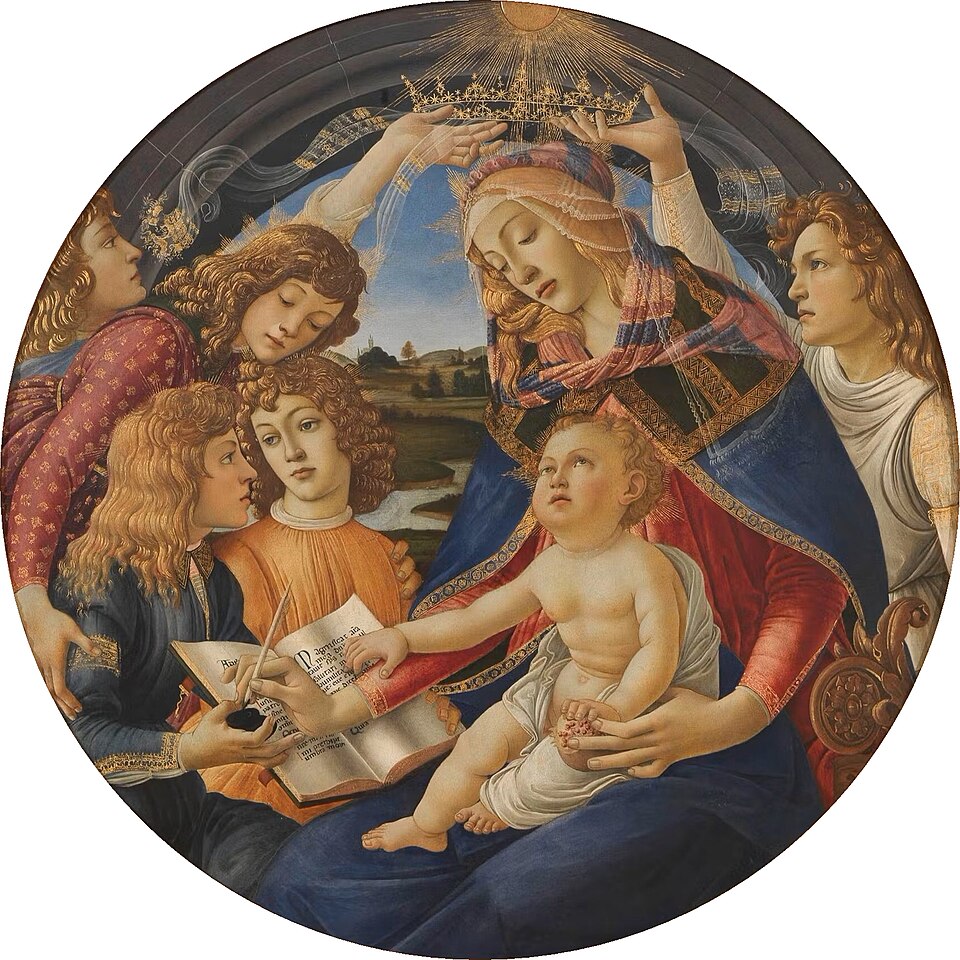
In a perfect circle of gold and blue, the Virgin Mary does something rarely shown: she writes. Her infant son rests his hand on hers as the words of her song take shape.
The story behind the painting
This round painting, or tondo, by Sandro Botticelli is also known as the Virgin and Child with Five Angels. Wikidata dates it to 1481. Much of its early history is lost. The Uffizi in Florence acquired it from a private collection in 1784, and it may once have come from one of the many monasteries suppressed by Archduke Pietro Leopoldo. Art historians place works like this in Botticelli's so-called "Medici phase", when he painted several tender Madonnas, among them another large tondo, the Madonna of the Pomegranate. In these pictures he joined the grace of courtly painting and his study of classical works with the dress of contemporary Florentines.
What to look for
Mary sits at the centre, a sheer veil over flowing blonde hair and a Byzantine-style scarf around her shoulders. Two angels hold a crown above her head. With her right hand she writes the opening of the Magnificat on the right-hand page of a book; the left page carries part of the Benedictus. The Christ Child, on her lap, guides her hand and looks upward, perhaps to the sky, perhaps to his mother. In her left hand rests a pomegranate. To the left, three angels lean close around the book as if deep in conversation. Behind them opens a bright, serene landscape, and the circular framing seems to divide heaven from earth. Note the pale, porcelain faces touched with pink, typical of Botticelli's women.
Meaning and intent
The Magnificat, the Song of Mary from the Gospel of Luke, is her praise of God when visiting her cousin Elizabeth; the Benedictus is the song of Zechariah at the circumcision of his son John the Baptist. Unusually, Botticelli shows Mary writing rather than reading. Scholars have read this as a "rhetoric of impossibility": her literacy framed as a miracle no ordinary woman could share, a compliment that may also sidestep real women writers of the day. The pomegranate, symbol of resurrection, immortality and fertility, often stands in Renaissance art for Christ's suffering. Some once proposed that Mary portrays Lucrezia Tornabuoni and the angels her sons, but no reliable source confirms it, and that idea is largely disregarded.
Legacy
The tondo remains in the galleries of the Uffizi in Florence. Its appeal is clear from the number of copies made of it, including one in the Louvre and another in the Morgan Library & Museum in New York. The Louvre version differs: the leftmost angel crowning the Virgin is erased, leaving room for a wide spread of wings on the highest angel of the trio at left. Within Botticelli's own work, it stands beside the Madonna of the Pomegranate as one of his great circular Madonnas, admired for the tenderness between mother and child and for the quiet novelty of a Virgin who holds a pen.
豆知識
- Tondo (circular painting); also called Virgin and Child with Five Angels.
- Wikidata date: 1481.
- Acquired by the Uffizi from a private collection in 1784.
- Copies exist in the Louvre and the Morgan Library & Museum.
画家について
Sandro Botticelli (1445-1510)
女性 · 宗教美術 · 聖母マリア · 少年 · イエスの幼少時代 · Early Renaissance · ウフィツィ美術館 · 母 · 聖母子
同じ画家の作品: Sandro Botticelli
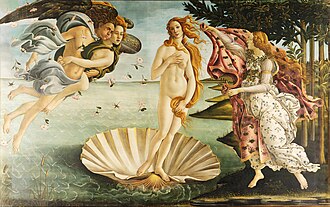 ヴィーナスの誕生 - Sandro Botticelli (c. 1485)
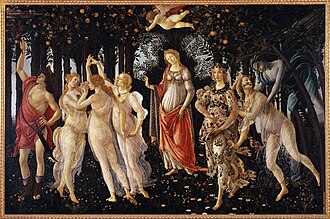 プリマヴェーラ - Sandro Botticelli (1480s)
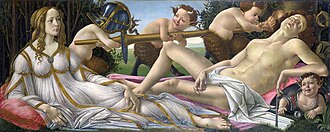 ヴィーナスとマルス - Sandro Botticelli (1485)
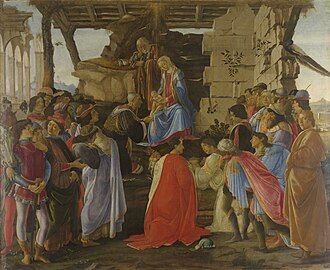 東方三博士の礼拝 - Sandro Botticelli (1470s)
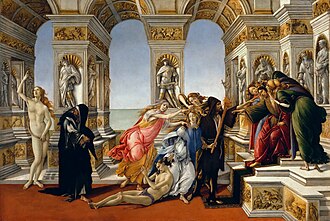 アペレスの誹謗 - Sandro Botticelli (1490s)
.jpg) パラスとケンタウロス - Sandro Botticelli (1482)
パラスとケンタウロス - Sandro Botticelli (1482)%20-%20Google%20Art%20Project.jpg) Idealized Portrait of a Lady - Sandro Botticelli (1480)
Idealized Portrait of a Lady - Sandro Botticelli (1480)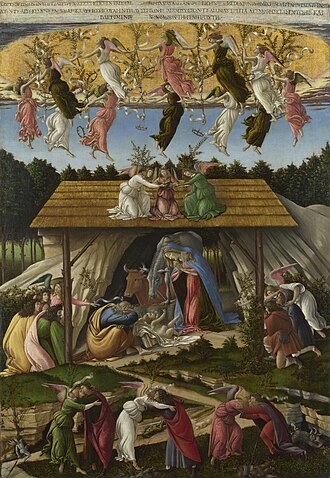 神秘の降誕 - Sandro Botticelli (1500)
 モナ・リザ
モナ・リザ 白貂を抱く貴婦人
.jpg) ウルビーノのヴィーナス
ウルビーノのヴィーナス 聖母被昇天
聖母被昇天 自画像
自画像 東方三博士の礼拝