Portrait of Giulia Varano
ティツィアーノ・ヴェチェッリオ · 1540s
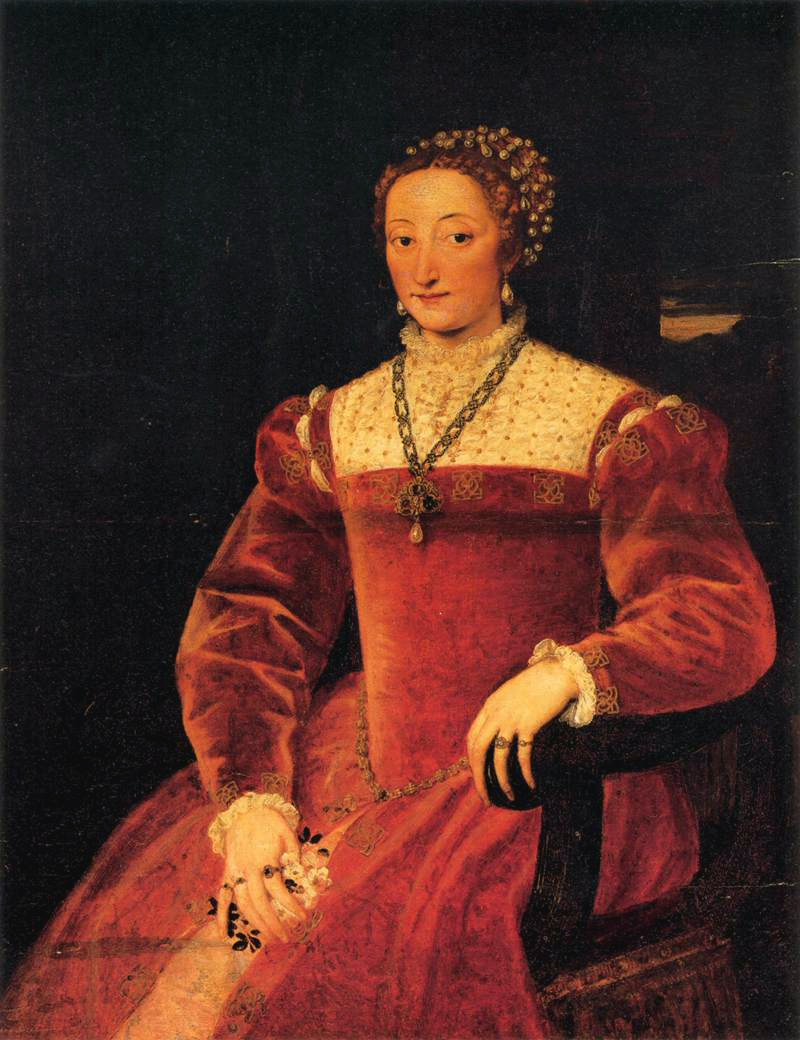
A young duchess in red velvet holds a bouquet of roses, a sunset glowing in a small window behind her. Titian painted Giulia da Varano without ever meeting her, working from a sketch sent from Urbino.
The story behind the painting
The portrait was commissioned by the duchess's husband, Guidobaldo II della Rovere, Duke of Urbino. Titian had already worked for him and his family, painting masterpieces such as the Venus of Urbino and the portraits of his parents, Francesco Maria della Rovere and Eleonora Gonzaga. Titian and his workshop made this one in Venice in 1545 to 1547, and the painter had never seen his subject. A sketch of the woman was sent from Urbino instead. Even so, Pietro Aretino praised the work for the way it expressed her moral qualities.
What to look for
Titian reused the design of his portrait of Eleonora Gonzaga, updating the dress and the face and simplifying the background: dark, with a small window showing a sunset. The duchess sits in a sumptuous red velvet dress with detachable sleeves, silk panels and gold embroidery. Pearls hang from her ears. A gold chain carries a large pendant with a ruby, a sapphire, an emerald and a big teardrop pearl. Another gold chain serves as a belt, rings adorn her hands, and in her right hand she holds a bouquet of roses.
Meaning and intent
Much of the picture is symbol. The jewels allude to the purity of a lady married very young, and the dress covering the shoulders, with no neckline, stood for modesty and morality. The pendant was a kind of jewel that referred to a bride's virtues, also seen in Raphael's Maddalena Doni. The roses refer to the bride's femininity and sensuality, as in Titian's Flora and Venus of Urbino. Aretino was probably praising these symbols rather than any psychological depth, which the painting largely leaves aside, at a time when portraits of women were becoming more and more idealised.
Legacy
The portrait joined the family of della Rovere images that Titian created for the court of Urbino, and it is linked by design to the portrait of Giulia's mother in law, Eleonora Gonzaga. It is now in the Galleria Palatina of the Palazzo Pitti in Florence, where the red of her dress and the small glowing window can still be seen. The French Wikipedia dates the work 1545 to 1547, and Wikidata places it in the 1540s.
豆知識
- Painted by Titian and his workshop, 1545-1547, about 113 by 87 cm.
- Commissioned by Guidobaldo II della Rovere, Duke of Urbino.
- Titian never saw the sitter and worked from a sketch.
- In the Galleria Palatina, Palazzo Pitti, Florence.
画家について
ティツィアーノ・ヴェチェッリオ (1488-1576)
同じ画家の作品: ティツィアーノ・ヴェチェッリオ
 ウルビーノのヴィーナス - Titian (1538)
 聖母被昇天 - Titian (1510s)
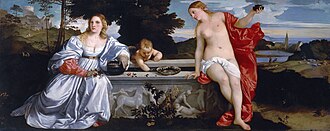 聖愛と俗愛 - Titian (1510s)
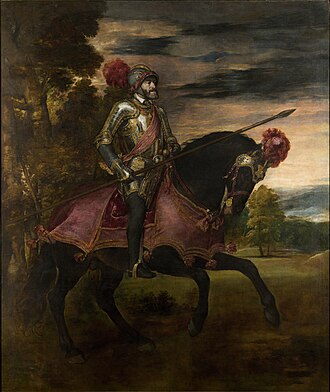 騎乗像 - Titian (1548)
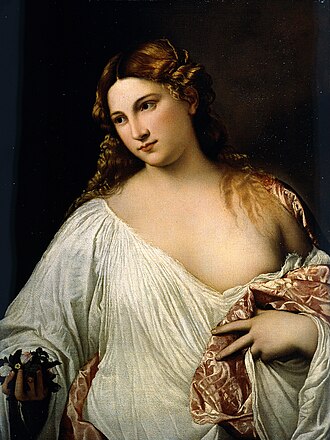 フローラ - Titian (1517)
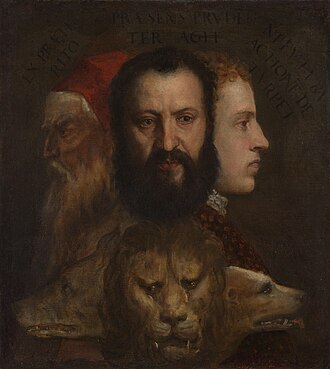 賢明の寓意 - Titian (1550)
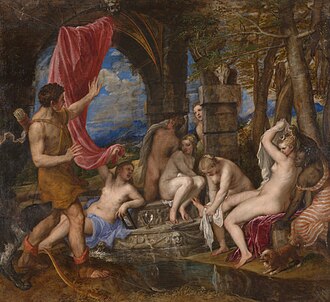 ディアナとアクタイオン - Titian (1550s)
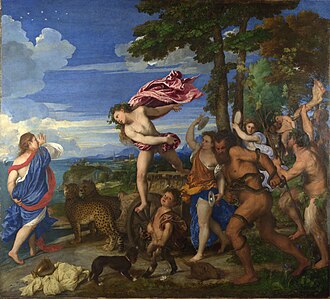 バッカスとアリアドネ - Titian (1520s)
関連する画家の作品
 最後の晩餐 - Jacopo Tintoretto (1563)
 奴隷を解放する聖マルコ - Jacopo Tintoretto (1540s)
 カナの婚礼 - Paolo Veronese (1560s)
 レヴィ家の饗宴 - Paolo Veronese (1573)