カミッロ・マッシミ
Diego Velázquez · 1650
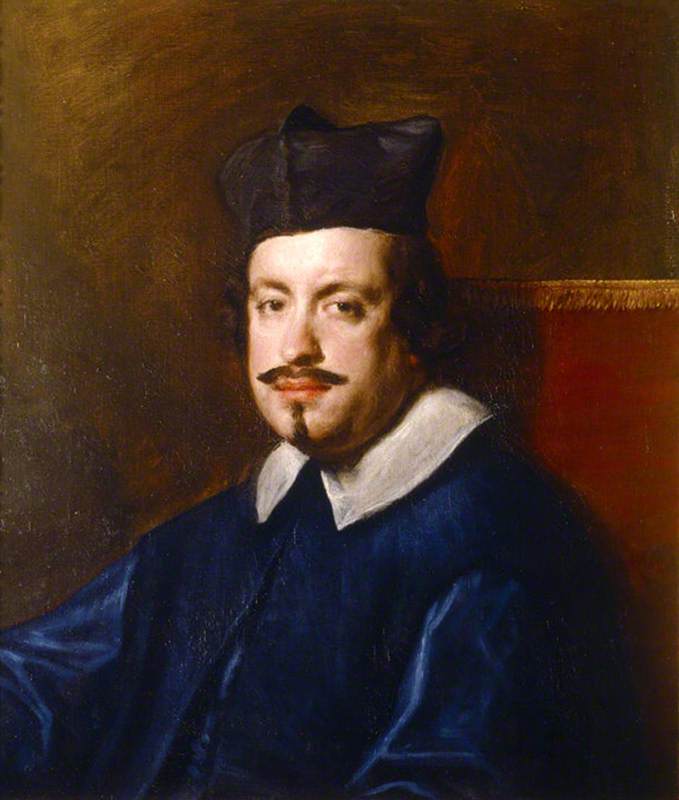
A man in blue looks straight back at us, painted with almost nothing but a few strokes and a sharply lit face. Velazquez made it in Rome in 1650, and then it vanished for nearly three centuries.
The story behind the painting
In 1649 Philip IV of Spain sent Velazquez to Italy to hire painters and fresco specialists and to buy paintings and sculptures for the Alcazar of Madrid. Unlike on his first trip, he was now an established painter seeking recognition in Rome, and he set out to paint Pope Innocent X and members of his court. Among them was Camillo Massimi, chamberlain to the pope, a painter and a patron of the arts. Antonio Palomino listed a portrait of monsignor Camillo Massimo, called a famous painter, among the pictures Velazquez made on this second Roman journey.
What to look for
The canvas, about 76 by 61 cm, shows Massimi seated in blue clothing, looking at the viewer. It is painted with a remarkable economy of means: the rest of the picture is handled lightly so that our attention goes straight to the head. The historian Julian Gallego described that head as rendered with a sharpness that foreshadowed Vermeer, a face prematurely heavy, slightly ironic and apathetic. Look at how little is spelled out in the clothing and how much life sits in the eyes and mouth.
Meaning and intent
Velazquez came to Rome as an envoy of the Spanish king, but this portrait also belongs to his own ambition to be recognised there. Painting the pope's household, including a man who was himself a painter and patron, put his skill before the most demanding eyes in the city. The restraint of the brushwork is a statement too: he did not need to describe everything to make a person present. Gallego's words suggest a sitter seen without flattery, with all the ease and weariness of a courtier.
Legacy
This portrait and that of Cardinal Camillo Astalli-Pamphili, painted at the same time, belonged to the Marquis of Carpio, viceroy of Naples. It appears in the inventory of his goods left in Madrid at his death in 1687, and after that its trail is lost. In 1958 the art historian Enriqueta Harris identified it in the Bankes collection at Kingston Lacy in Dorset, England. The house, its grounds and its works of art have been public property since 1981, and the painting is cared for there by the National Trust.
豆知識
- Painted by Velazquez in Rome in 1650.
- Sitter: Camillo Massimi, papal chamberlain, painter and patron.
- Lost after 1687 and identified in 1958 by Enriqueta Harris.
- Held at Kingston Lacy, Dorset.
画家について
Diego Velázquez (1599-1660)
肖像 · ナショナル・トラスト
同じ画家の作品: Diego Velázquez
 ラス・メニーナス - Diego Velázquez (1656)
 ブレダの開城 - Diego Velázquez (1635)
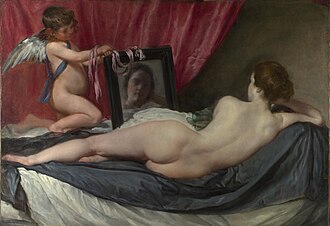 鏡のヴィーナス - Diego Velázquez (1644)
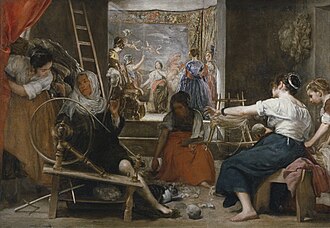 アラクネの寓話 - Diego Velázquez
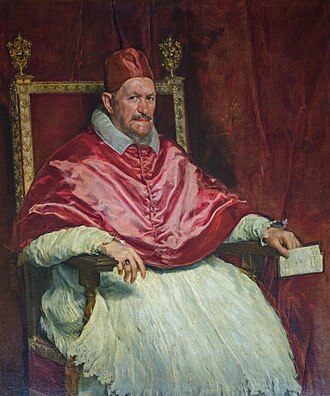 インノケンティウス10世の肖像 - Diego Velázquez
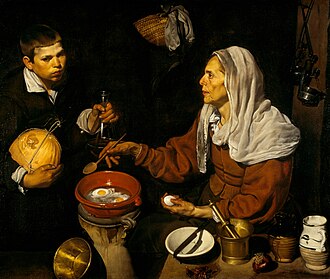 卵を調理する老女 - Diego Velázquez (1618)
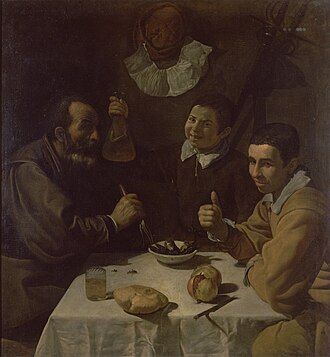 昼食 - Diego Velázquez (1617)
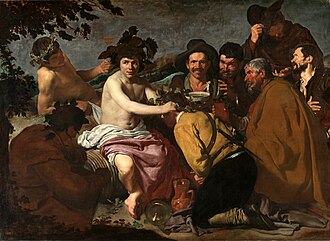 バッカスの勝利 - Diego Velázquez (1628)
関連する画家の作品
 エマオの晩餐 - Caravaggio (1601)
 聖マタイの召命 - Caravaggio (1609)
 Saint Francis in Meditation - Francisco de Zurbarán (1639)
 The Immaculate Conception - Francisco de Zurbarán (1661)
 チャールズ1世の三面肖像画 - Anthony van Dyck (1635)
 馬上のチャールズ1世とサン・アントワーヌの領主の肖像 - Anthony van Dyck (1636)
 キリスト昇架 - Peter Paul Rubens (1609)
 レウキッポスの娘たちの略奪 - Peter Paul Rubens (1618)
 夜警 - Rembrandt van Rijn (1642)
 自画像 - Rembrandt van Rijn (1659)
 陽気な酒飲み - Frans Hals (1620s)
 微笑む騎士 - Frans Hals (1624)