Portrait of a Lady
エル・グレコ · 1570s
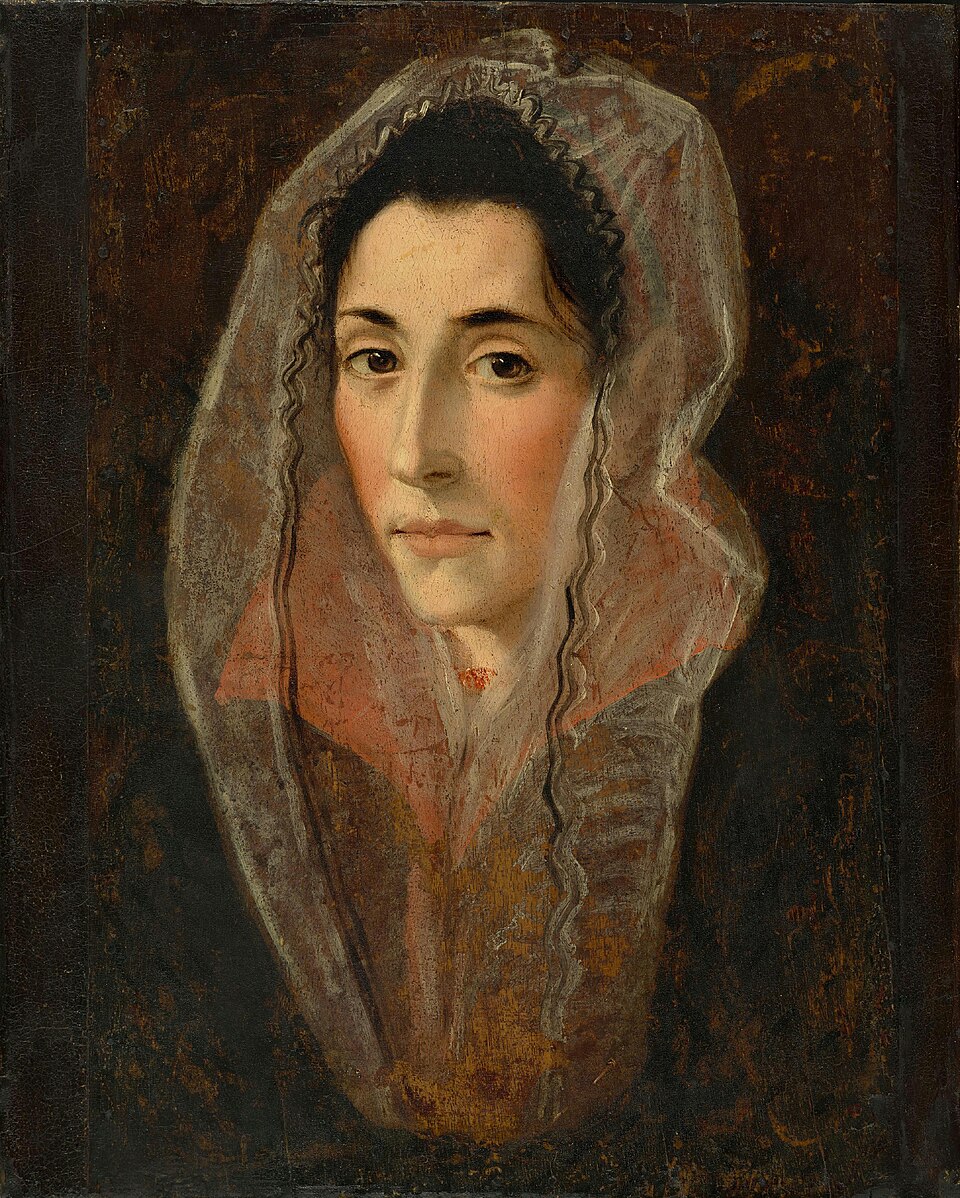
A pale woman in a transparent veil emerges from deep darkness, her cheeks bright red, her gaze intense. This small panel is so unusual in El Greco's work that experts have doubted it is his.
The story behind the painting
This Portrait of a Lady is attributed to El Greco and is in the Philadelphia Museum of Art. It is highly atypical of his output for several reasons. It is one of his very few portraits of women, four or five at most, two of them miniatures. It is one of the rare panel paintings from his Spanish period, and the only portrait by him painted in oil on wood. All this has led several experts to doubt the attribution. José Camón Aznar thought it might be the work of Domingos Vieira.
What to look for
The panel is small, about 40 by 32 cm according to Wethey, or 39.7 by 32.1 cm according to the museum. The lady stands out against a very dark background. She wears a transparent veil edged with a black ribbon and a pale pink scarf at the neck, tucked into a black bodice. The fact that it is painted on wood partly explains the glassy look of the modelling. The vivid red of her cheeks appears in other El Greco portraits, such as a gentleman of the House of Leiva, and the high veil recalls the Mary at left in El Expolio.
Meaning and intent
Other scholars defend El Greco's authorship. Claude Phillips, who called the figure disturbing, attributed it to him, and its authenticity was confirmed in the catalogue of John G. Johnson and in Harold Wethey's catalogue raisonné, where it is number 146; Tiziana Frati lists it as 39. Manuel Bartolomé Cossío drew attention to the elongated forms, the intensity of the gaze, the sense of anguish, the white mantilla and above all the sober, lively brushwork. Those traits link this small panel to the painter's larger works, despite its unusual support and subject.
Legacy
The painting is dated about 1577 to 1580, early in El Greco's years in Spain, while Wikidata places it in the 1570s. Its recorded history passes through the Golfín family in Valladolid and Benigno de la Vega-Inclán in Toledo before reaching the collector John G. Johnson in Philadelphia. It entered the Philadelphia Museum of Art with the John G. Johnson Collection in 1917, catalogue number 808. Whoever painted it, the haunting face in the dark remains one of the rare female portraits linked to El Greco.
豆知識
- One of only four or five female portraits linked to El Greco.
- His only portrait in oil on panel, about 40 x 32 cm.
- Attribution doubted by Camón Aznar, defended by Wethey.
- In the Philadelphia Museum of Art since 1917.
画家について
エル・グレコ (1541-1614)
女性 · 肖像 · マニエリスム · フィラデルフィア美術館
同じ画家の作品: エル・グレコ
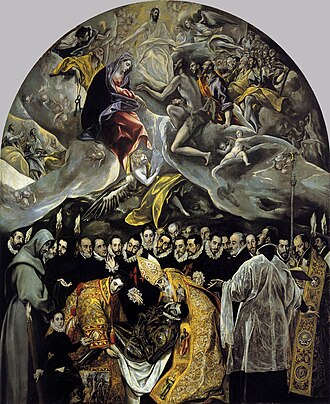 オルガス伯の埋葬 - El Greco (1586)
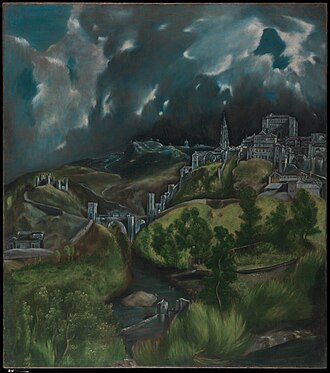 トレドの風景 - El Greco (1596)
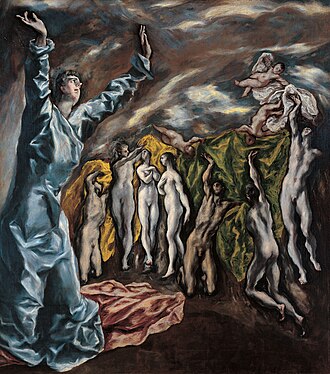 黙示録第5の封印 - El Greco (1610)
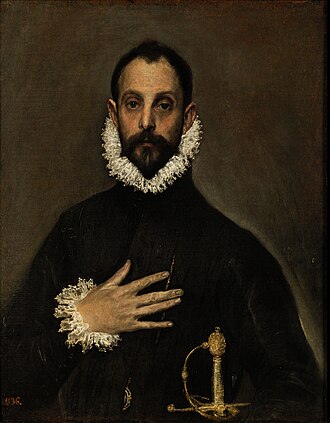 胸に手を置く騎士 - El Greco (1580)
%20-%20Laoco%C3%B6n%20-%20Google%20Art%20Project.jpg) ラオコーン - El Greco (1610s)
ラオコーン - El Greco (1610s)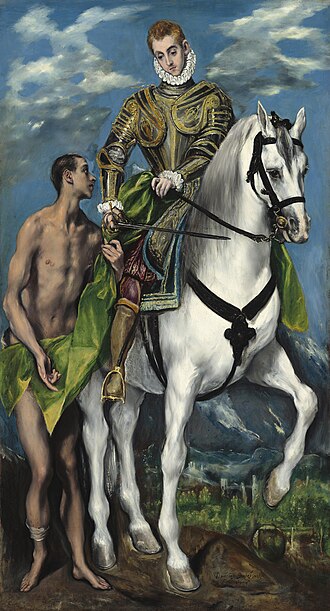 聖マルティヌスと乞食 - El Greco (1597)
.jpg) 羊飼いの礼拝 - El Greco (1612)
羊飼いの礼拝 - El Greco (1612) The Concert of the Angels - El Greco (1600s)
関連する画家の作品
.jpg) ウルビーノのヴィーナス - Titian (1538)
ウルビーノのヴィーナス - Titian (1538)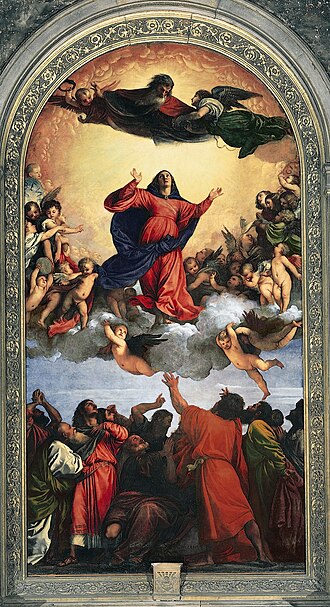 聖母被昇天 - Titian (1510s)
 エマオの晩餐 - Caravaggio (1601)
 聖マタイの召命 - Caravaggio (1609)
 大使たち - Hans Holbein the Younger (1533)
 墓の中のキリストの屍 - Hans Holbein the Younger (1520s)