Ordination of St Laurence
フラ・アンジェリコ · 1447
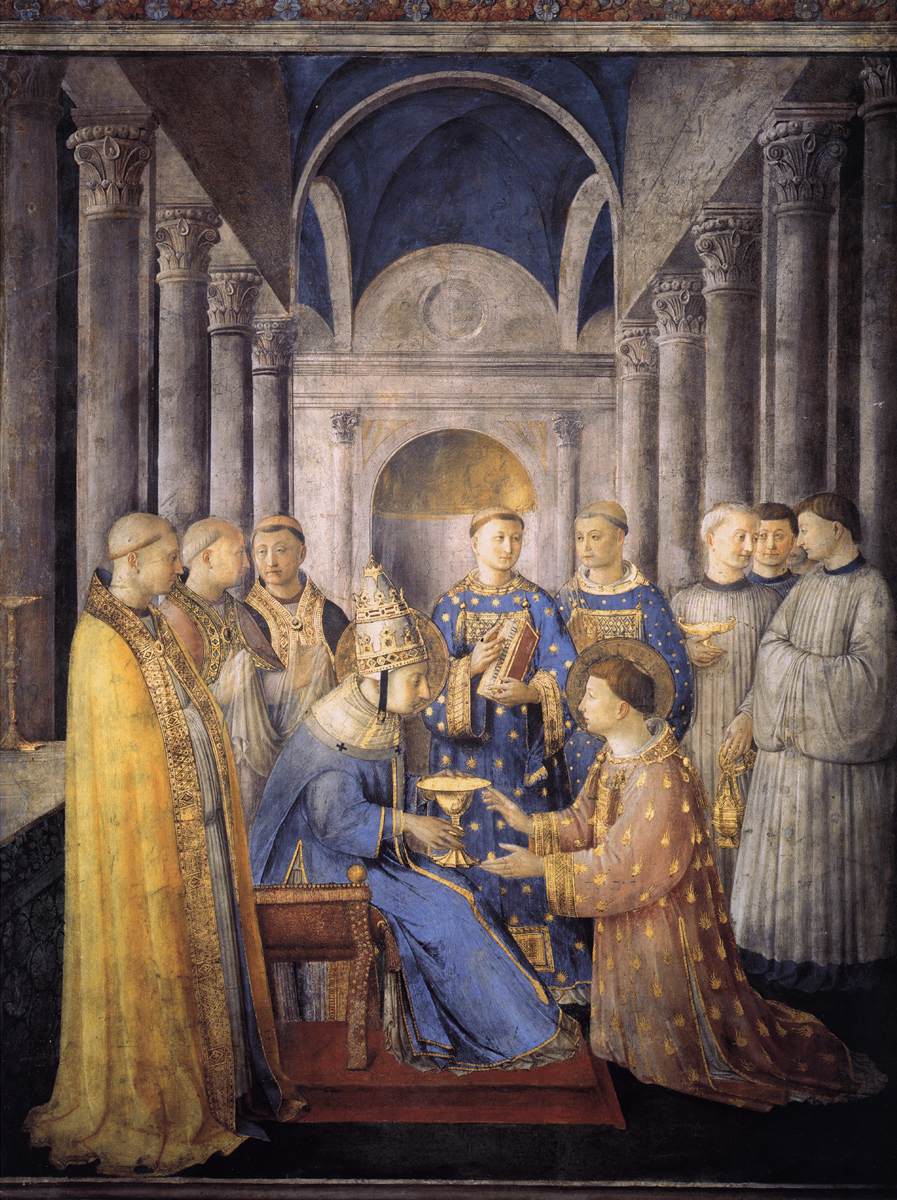
A pope hands a chalice to a kneeling young man at the end of a long colonnaded church. In the face of that pope, Fra Angelico hid a portrait of the man who had commissioned the chapel, Nicholas V.
The story behind the painting
This fresco is the first episode of the Stories of Saint Lawrence in the Niccoline Chapel, once the private chapel of the pope in the Apostolic Palace. Fra Angelico painted it with assistants, among them Benozzo Gozzoli, around 1447 to 1448, during his years in Rome between 1445 and 1450. The earliest documents date from May and June 1447, under Nicholas V, though the work may have started under Eugene IV. After a summer break in Orvieto in 1447, the cycle was likely finished by late 1448; on 1 January 1449 Angelico took on a new commission.
What to look for
Because of the windows, this is the only scene of the cycle that stands alone, in the middle of the left wall between two windows. Pope Sixtus II gives Lawrence the chalice and paten as he makes him a deacon. The nave behind them is drawn in bold perspective, with five columns on each side holding up an architrave and receding to a central apse. The figures are not exactly centred; the one thing on the central vertical is the chalice passing between them. Around them stand priests and deacons in gold-trimmed robes, one holding a finely painted transparent veil.
Meaning and intent
The pope wears full vestments and a tiara set with pearls, enamels and gems, on a studded, engraved throne. His features are thought to be those of Nicholas V, a device used here for the first time and widely repeated later. The scene echoes the lunette above it, where Saint Stephen is made a deacon by Saint Peter, so two ordinations, centuries apart, speak to each other. Angelico had introduced central perspective to Rome, and this columned basilica is its first use on a monumental scale, after small experiments in predella panels at Cortona and for the Louvre.
Legacy
As John Pope-Hennessy and others have pointed out, the richness of these Vatican frescoes does not mean Angelico's style had changed since San Marco in Florence. The purpose had changed: here the walls had to celebrate papal power and learning and the renewal of Rome after the Avignon years. The style may already be glimpsed in the lively predella stories of the San Marco Altarpiece. As always with Angelico, the centre of the painting is a clear, diffuse light. Wikidata records the fresco as about 271 by 197 cm, dated 1447, in the Niccoline Chapel.
豆知識
- First episode of the Stories of Saint Lawrence in the Niccoline Chapel.
- Painted around 1447-1448 by Fra Angelico and assistants.
- The pope's face is thought to be a portrait of Nicholas V.
- First monumental use of a receding colonnade in perspective by Angelico.
画家について
フラ・アンジェリコ (1400-1455)
同じ画家の作品: フラ・アンジェリコ
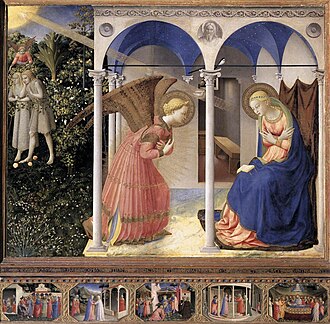 受胎告知 - Fra Angelico (1425)
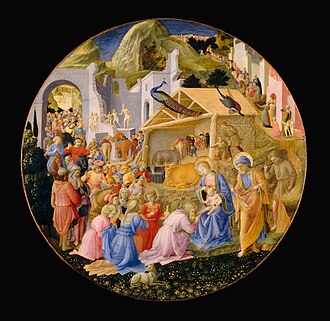 東方三博士の礼拝 - Fra Angelico (1430)
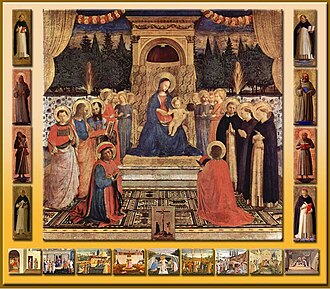 San Marco Altarpiece - Fra Angelico
%2C%20ante%201432%2C%2001.jpg) キリストの十字架降下 - Fra Angelico (1432)
キリストの十字架降下 - Fra Angelico (1432)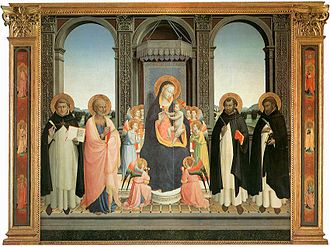 フィエーゾレの祭壇画 - Fra Angelico (1422)
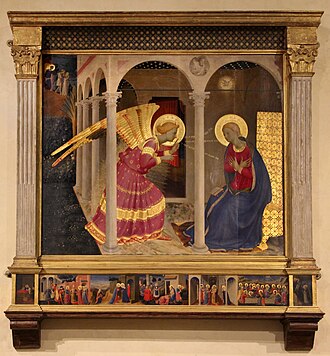 コルトーナの受胎告知 - Fra Angelico (1430s)
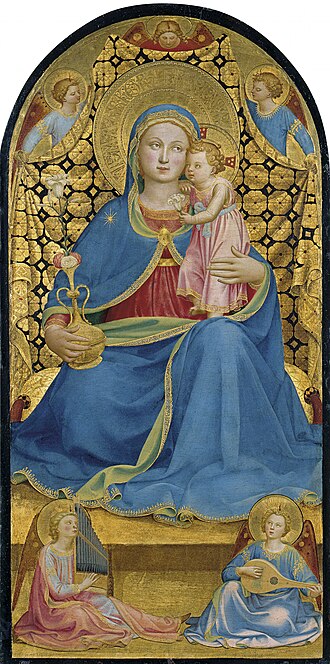 謙譲の聖母 - Fra Angelico (1433)
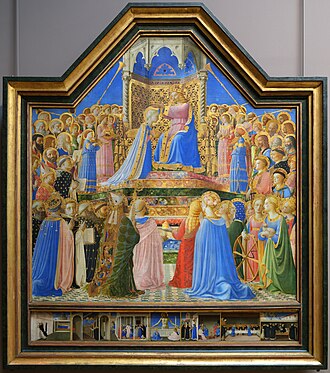 聖母戴冠 - Fra Angelico
 モナ・リザ
モナ・リザ 白貂を抱く貴婦人
 聖家族
聖家族 聖アンソニーの苦悩