横顔の若い男性の頭部
Diego Velázquez · 1618
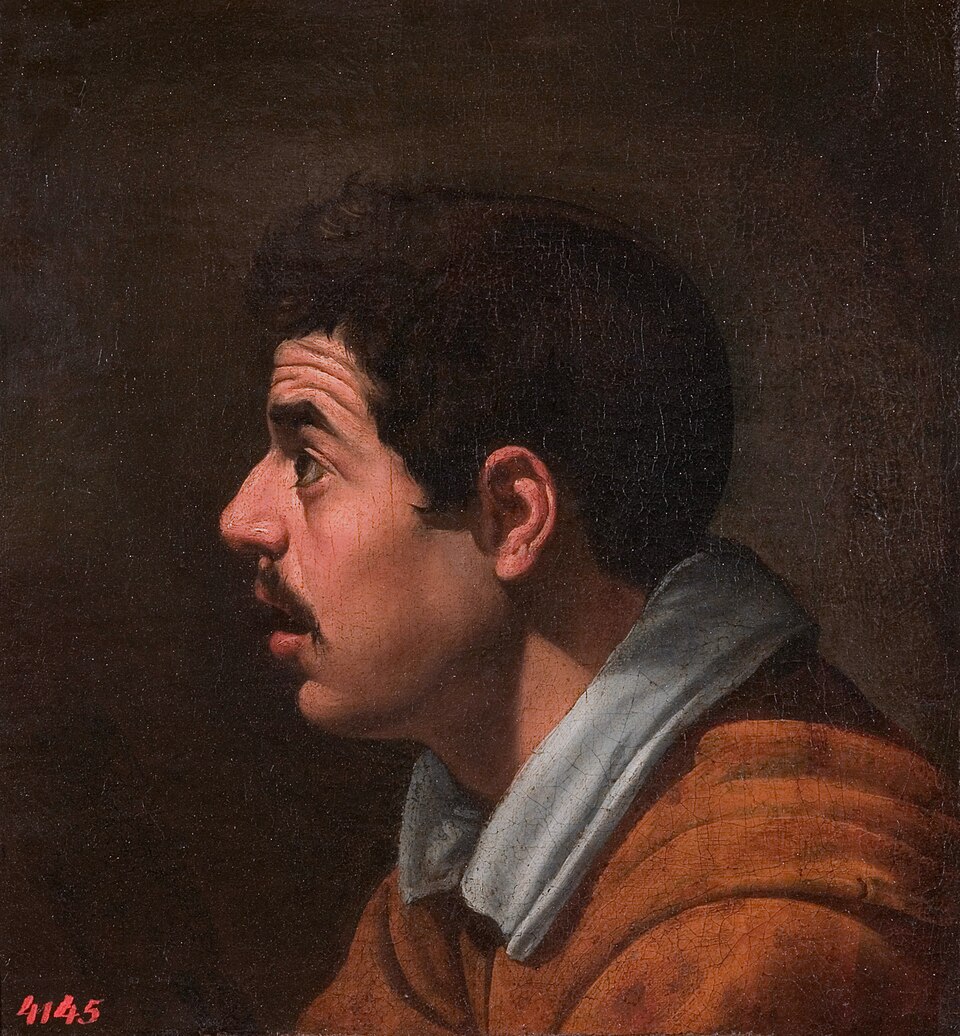
A young man turns his head, listening to someone we cannot see, caught in a moment of surprise. Velázquez painted him in Seville, and for a long time no one was sure the head was his at all.
The story behind the painting
This small oil on canvas was painted by Diego Velázquez in Seville, perhaps as a colour study for a larger composition. Wikidata dates it to 1618. In 1814 it entered the Hermitage after Tsar Alexander I of Russia bought it in Amsterdam, explicitly as a work by Velázquez. Later catalogues gave it to Francisco de Zurbarán instead. In 1959 José López-Rey examined it, confirmed an earlier idea of Allende-Salazar and restored the attribution to Velázquez, calling the head extraordinarily beautiful.
What to look for
Look at the face in profile: the young man is attentive, listening to explanations that come from outside the frame, and his expression reads as surprise or astonishment at what he hears. The finish is careful and complete, so much so that some critics think it is not a study but a fragment of a larger picture. An X-ray made by the museum found another, earlier face beneath this one, seen from the front and closely resembling the central figure of Velázquez's Three Musicians, though turned the other way.
Meaning and intent
López-Rey linked the head to the figure seated on the right of Velázquez's Lunch of peasants in Budapest, and the source judges this study the deeper psychological portrait of the two. The X-ray suggests that a canvas was begun, abandoned and cut, and a fragment reused for this head. Scholars such as McKim-Smith explain the repeated models in Velázquez's early work by the common practice of reusing printed engravings, with creativity found in recomposing and reinterpreting existing elements, and Velázquez adding his own variations each time.
Legacy
Several copies of the Lunch survive, in the L. Garrouste collection in Madrid and Lord Moyne's collection in Andover, and they repeat this seated man on the right, in effect copying this study. Their older figures and the boy with the wine jug match the Hermitage Lunch, probably the first version of the theme. That places this head between the Saint Petersburg and Budapest pictures. It remains in the Hermitage, a small canvas at the heart of a puzzle about how the young Velázquez built his scenes.
豆知識
- Painted in Seville; Wikidata dates it to 1618.
- Bought in Amsterdam by Alexander I and in the Hermitage since 1814.
- Once given to Zurbarán; returned to Velázquez by López-Rey in 1959.
- An X-ray reveals an earlier frontal face beneath.
画家について
Diego Velázquez (1599-1660)
肖像 · 男性 · エルミタージュ美術館
同じ画家の作品: Diego Velázquez
 ラス・メニーナス - Diego Velázquez (1656)
 ブレダの開城 - Diego Velázquez (1635)
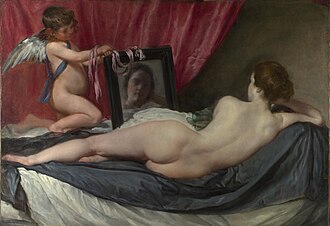 鏡のヴィーナス - Diego Velázquez (1644)
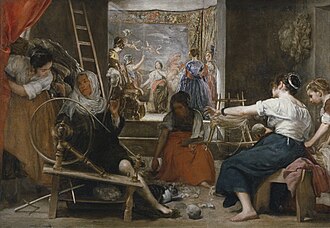 アラクネの寓話 - Diego Velázquez
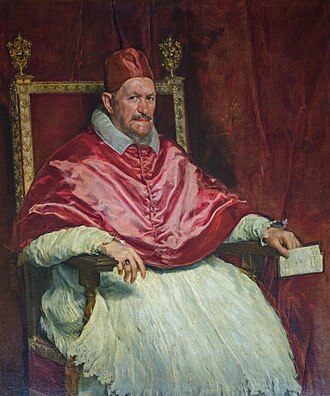 インノケンティウス10世の肖像 - Diego Velázquez
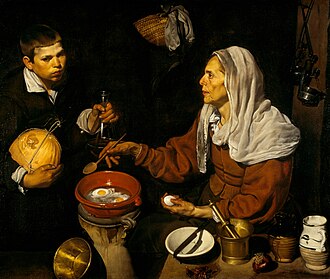 卵を調理する老女 - Diego Velázquez (1618)
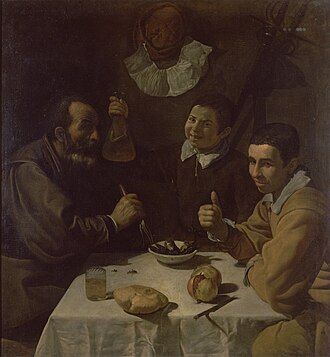 昼食 - Diego Velázquez (1617)
 バッカスの勝利 - Diego Velázquez (1628)
関連する画家の作品
 エマオの晩餐 - Caravaggio (1601)
 聖マタイの召命 - Caravaggio (1609)
 Saint Francis in Meditation - Francisco de Zurbarán (1639)
 The Immaculate Conception - Francisco de Zurbarán (1661)
 チャールズ1世の三面肖像画 - Anthony van Dyck (1635)
 馬上のチャールズ1世とサン・アントワーヌの領主の肖像 - Anthony van Dyck (1636)
 キリスト昇架 - Peter Paul Rubens (1609)
 レウキッポスの娘たちの略奪 - Peter Paul Rubens (1618)
 夜警 - Rembrandt van Rijn (1642)
 自画像 - Rembrandt van Rijn (1659)
 陽気な酒飲み - Frans Hals (1620s)
 微笑む騎士 - Frans Hals (1624)