女性像
Diego Velázquez · 1648
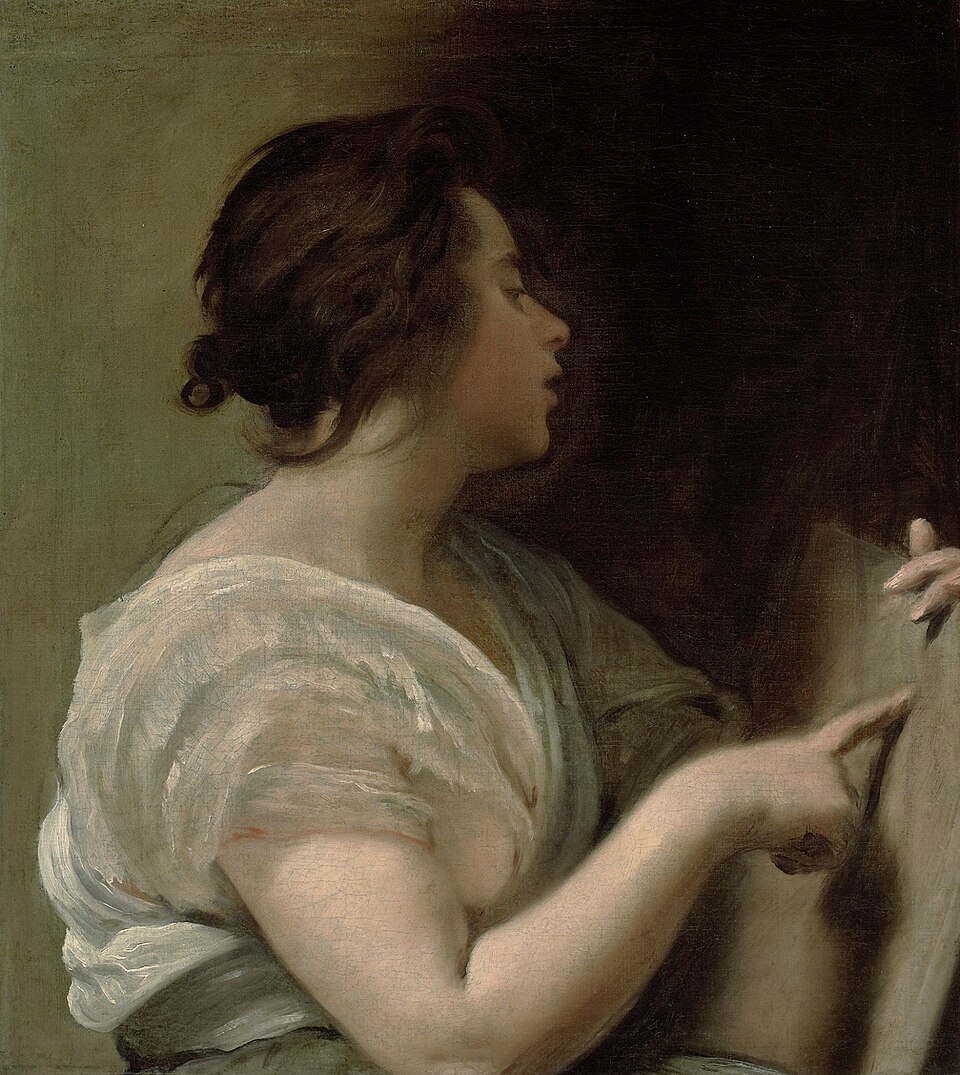
A woman turns away in lost profile, lips parted as if about to speak, one finger resting on a blank tablet. No one knows who she is. Velázquez left this small canvas probably unfinished, and its quiet mystery is part of its charm.
The story behind the painting
Female Figure, also called Sibyl with Tabula Rasa, is a small oil painting by Diego Velázquez, the leading artist of the Spanish Golden Age, and it is probably unfinished. It is dated to about 1648 because of its stylistic resemblance to his Rokeby Venus. Both works share the loose, fluid, evocative brushwork generally thought to reflect Velázquez's exposure to Titian during his visits to Italy in 1629 to 1630 and 1649 to 1651. The identity of the woman is unknown, and the painting is now recorded in the Meadows Museum.
What to look for
The canvas is noted for its restrained elegance and muted colour harmonies. The woman is seen in half length and in a lost profile, turned so that we see only part of her face. Her hair is dishevelled, with loose strands spilling onto her neck and bare upper back, and her clothing is relatively plain. Her skin is painted in pearly white tones. Her lips are parted as if she is about to speak, and her finger rests on a tablet that seems to be blank, the tabula rasa of the title. Notice how freely the brush moves, with little attempt to polish the surface.
Meaning and intent
She is usually believed to be a sibyl, because she resembles Velázquez's earlier Sibyl of 1631 to 1632, perhaps a portrait of Juana Pacheco, which also shows a woman in profile holding a tablet. In Christian tradition sibyls were prophetesses who warned the pagan Romans of the coming of Christ, and they were usually painted in sumptuous robes. Velázquez instead shows a spontaneous moment, as if catching her in the act of prophecy. Some historians see her as a personification of painting, close to his Fable of Arachne; others object that there is no easel or brush. Clio, the muse of history, and the painter Flaminia Triunfi have also been proposed.
Legacy
Art historian Simona Di Nepi, among others, notes Velázquez's habit of using unexceptional looking models for classical subjects and painting their features in a realistic, unidealised way, and this small canvas shows that habit clearly. Whether sibyl, muse or allegory of painting, the debate has never been settled, and the probable lack of finish leaves the question open. What remains certain is the evocative poetry of the parted lips and the turned head, which keep drawing viewers to this modest picture in the Meadows Museum.
豆知識
- Painted around 1648, probably unfinished.
- Dated by its likeness to the Rokeby Venus.
- Identified as a sibyl, an allegory of painting, or a muse.
- Recorded in the Meadows Museum.
画家について
Diego Velázquez (1599-1660)
同じ画家の作品: Diego Velázquez
 ラス・メニーナス - Diego Velázquez (1656)
 ブレダの開城 - Diego Velázquez (1635)
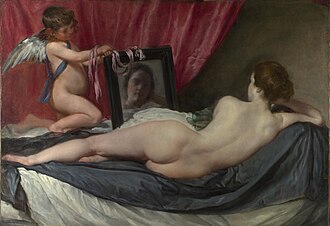 鏡のヴィーナス - Diego Velázquez (1644)
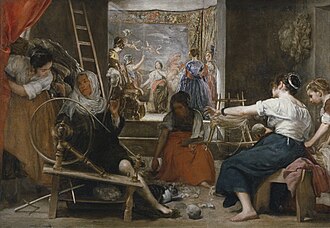 アラクネの寓話 - Diego Velázquez
 インノケンティウス10世の肖像 - Diego Velázquez
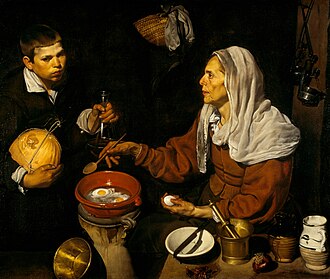 卵を調理する老女 - Diego Velázquez (1618)
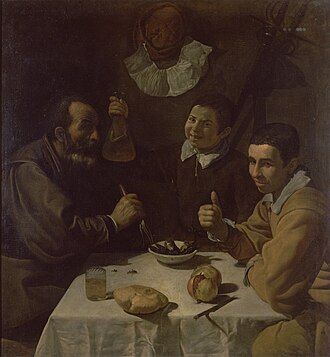 昼食 - Diego Velázquez (1617)
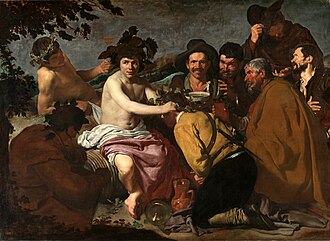 バッカスの勝利 - Diego Velázquez (1628)
関連する画家の作品
 エマオの晩餐 - Caravaggio (1601)
 聖マタイの召命 - Caravaggio (1609)
 Saint Francis in Meditation - Francisco de Zurbarán (1639)
 The Immaculate Conception - Francisco de Zurbarán (1661)
 チャールズ1世の三面肖像画 - Anthony van Dyck (1635)
 馬上のチャールズ1世とサン・アントワーヌの領主の肖像 - Anthony van Dyck (1636)
 キリスト昇架 - Peter Paul Rubens (1609)
 レウキッポスの娘たちの略奪 - Peter Paul Rubens (1618)
 夜警 - Rembrandt van Rijn (1642)
 自画像 - Rembrandt van Rijn (1659)
 陽気な酒飲み - Frans Hals (1620s)
 微笑む騎士 - Frans Hals (1624)