パウロの回心
Pieter Bruegel the Elder · 1567
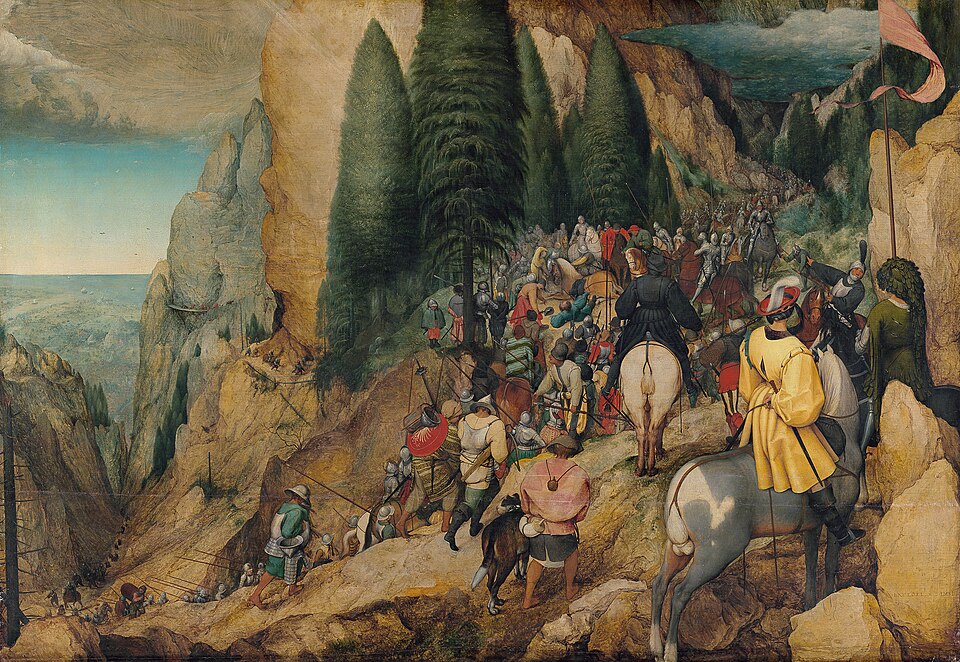
An army climbs a pine-clad mountain pass, armour glinting, horses straining. Somewhere in the middle of the crowd a man has fallen from his horse, struck by a light from heaven. Bruegel makes you search for the miracle.
The story behind the painting
Bruegel painted this oil on panel in 1567. It tells the story from the Acts of the Apostles, chapter 9: on the road to Damascus, Saul is surrounded by a light from heaven, falls to the ground and hears a voice asking why he persecutes Him. Trembling, he asks what he must do, while the men with him stand speechless, hearing a voice but seeing no one. In the years of the Reformation and Counter-Reformation, with persecution on every side, this story of a persecutor who changes had special weight.
What to look for
The soldiers wear the dress, armour and weapons of the 16th century, and Paul himself is in a blue doublet and hose of the painter's own day. Bruegel had lived in Italy and knew classical dress, so this was a choice, not ignorance. Look past the eye-catching soldiers and horsemen in the foreground: the fallen saint is placed in the middle distance, almost lost among many small figures. Bruegel uses the same device in The Procession to Calvary, teasing the eye to travel deep into the picture to find the real subject.
Meaning and intent
Dressing a biblical scene in modern clothes was Bruegel's way of saying that the story belonged to his own time. According to the Wikipedia account, he is not only illustrating the text but stressing the need for faith and condemning the sin of pride, the pride of a man on horseback at the head of an army who is suddenly thrown to the ground. Some critics have linked the scene to the Duke of Alba crossing the Alps in 1567 with an army of 10,000 men to put down the Dutch revolts.
Legacy
Other scholars think the mountain setting more probably came from a 1509 engraving by Lucas van Leyden, so the link to the Duke of Alba remains a suggestion, not a fact. The panel, about 108 by 156 cm, was acquired by Archduke Ernest of Austria in 1594 and then passed into the imperial collections of Emperor Rudolf II. It is now in the Kunsthistorisches Museum in Vienna. Like the other works where Bruegel hides his main figures, it still rewards the slow, searching look it was built for.
豆知識
- Oil on panel, painted by Pieter Bruegel the Elder in 1567.
- Based on Acts 9, 3-7: the conversion of Saul on the road to Damascus.
- Soldiers and saint wear 16th century dress and armour.
- Owned by Archduke Ernest in 1594, later Rudolf II; now in Vienna.
画家について
Pieter Bruegel the Elder (1525-1569)
同じ画家の作品: Pieter Bruegel the Elder
 雪中の狩人 - Pieter Bruegel the Elder (1565)
 ネーデルラントの諺 - Pieter Bruegel the Elder (1551)
 死の勝利 - Pieter Bruegel the Elder (1560s)
 盲人の寓話 - Pieter Bruegel the Elder (1568)
 農民の婚宴 - Pieter Bruegel the Elder (1560s)
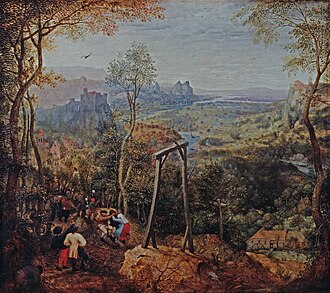 絞首台の上のかささぎ - Pieter Bruegel the Elder (1568)
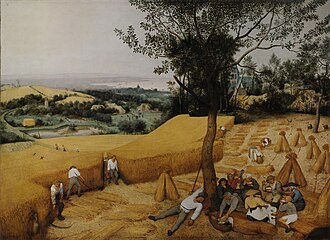 穀物の収穫 - Pieter Bruegel the Elder (1565)
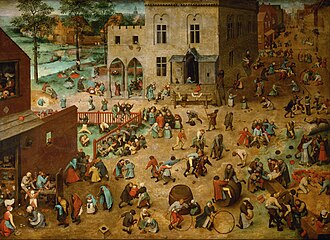 子供の遊戯 - Pieter Bruegel the Elder (1560)
関連する画家の作品
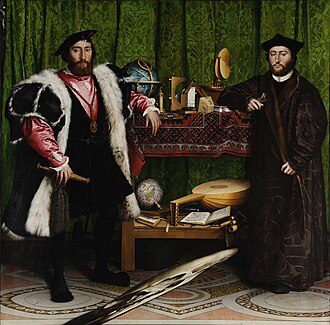 大使たち - Hans Holbein the Younger (1533)
 墓の中のキリストの屍 - Hans Holbein the Younger (1520s)
 快楽の園 - Hieronymus Bosch
 愚者の船 - Hieronymus Bosch (1500s)
 アルノルフィーニ夫妻像 - Jan van Eyck (1434)
 ヘントの祭壇画 - Jan van Eyck (1432)