雪中の東方三博士の礼拝
Pieter Bruegel the Elder · 1563
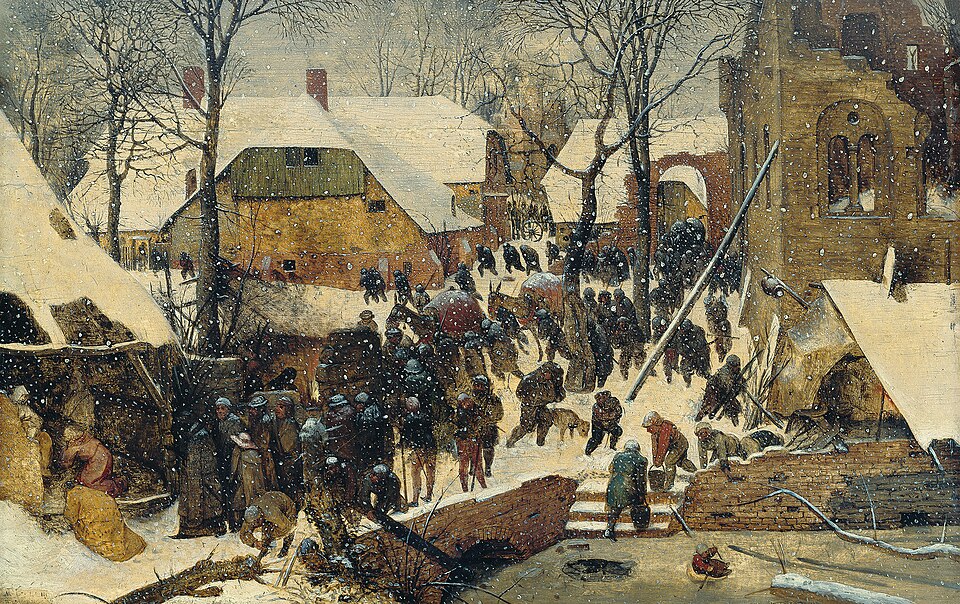
Snow falls over a Flemish village, a child slides toward a hole in the ice, and the three kings almost vanish in a corner. Bruegel hid the holiest scene of Christmas inside an ordinary winter day.
The story behind the painting
Pieter Bruegel the Elder painted this small oil on oak panel, his second version of the Adoration of the Magi, and set the visit of the three kings to the infant Jesus in a contemporary Netherlandish village. With two Italian exceptions, it is thought to be the first painting in the West to show snow actually falling, the flakes added as white dots across the whole scene once the picture was otherwise finished. The date in Roman numerals at the lower left is hard to read. It was long read as 1567, but technical study before the 2019 Vienna exhibition led to 1563, which would make it Bruegel's earliest snow scene rather than perhaps his last.
What to look for
At 35 by 55 cm the panel is far smaller than Bruegel's other crowded village scenes. Look to the bottom left: the stable with the Holy Family can just be made out in the gloom. Everyone is wrapped up against the cold, so visitors, villagers and perhaps soldiers are hard to tell apart. On the frozen water across the road, two men on a bridge work with a log beside a hole cut for water, and two more carry buckets up the steps. A toddler pushes himself across the ice on a makeshift sledge, heading for the hole, while his mother on the bank above springs into action. To the right a ruined Romanesque palace is propped up by a beam, and the sky is a featureless veil of cloud.
Meaning and intent
Moving the main event away from the centre is typical of Bruegel, as in Landscape with the Fall of Icarus and The Census at Bethlehem. Here the diagonal crowd tends to lead the eye away from the stable. The heavy wrapping stresses the anonymity of everyone present, absorbed into the divine scheme. The holy story happens, but daily life goes on: water must be fetched, children play, and weather presses on all alike. The earlier dating also places the work before the hard winter of 1564 to 1565 and the iconoclasm of 1566, events some historians had linked to it.
Legacy
The picture, or a drawing of it, was clearly available in the Brueghel family workshop. The RKD records 36 early copies, about 25 by Pieter Brueghel the Younger, and most show snow on the ground but not falling. The original is first recorded in 1696 in the collection of the banker Everhard Jabach in Paris. By the early 20th century it belonged to Count Johann Moritz Saurma, then passed through the dealer Paul Cassirer to Oskar Reinhart in 1930. It now hangs in the Oskar Reinhart Collection Am Romerholz in Winterthur, and was shown in Vienna in 2018 to 2019 for the 450th anniversary of Bruegel's death.
豆知識
- Oil on oak panel, about 35 by 55 cm.
- Probably the first Western painting of falling snow, apart from two Italian examples.
- Date reread as 1563 instead of 1567 after study for the 2019 Vienna exhibition.
- About 25 copies by Pieter Brueghel the Younger survive.
画家について
Pieter Bruegel the Elder (1525-1569)
女性 · 宗教美術 · 聖母マリア · 少年 · イエスの幼少時代 · 東方三博士の礼拝 · 崇拝 · 東方の三博士
同じ画家の作品: Pieter Bruegel the Elder
%20-%20Google%20Art%20Project.jpg) 雪中の狩人 - Pieter Bruegel the Elder (1565)
雪中の狩人 - Pieter Bruegel the Elder (1565)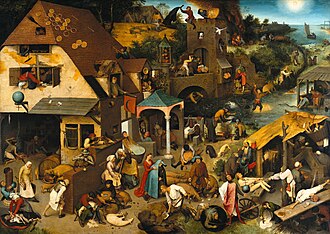 ネーデルラントの諺 - Pieter Bruegel the Elder (1551)
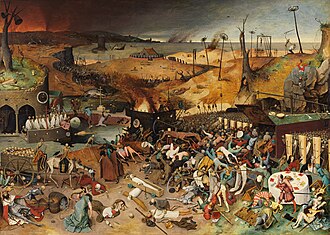 死の勝利 - Pieter Bruegel the Elder (1560s)
%20-%20Blind%20leading%20the%20blind%20Google%20Art%20Project.jpeg) 盲人の寓話 - Pieter Bruegel the Elder (1568)
盲人の寓話 - Pieter Bruegel the Elder (1568)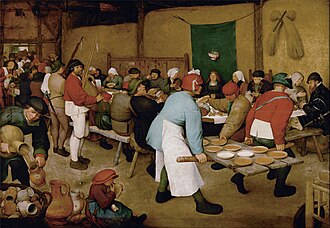 農民の婚宴 - Pieter Bruegel the Elder (1560s)
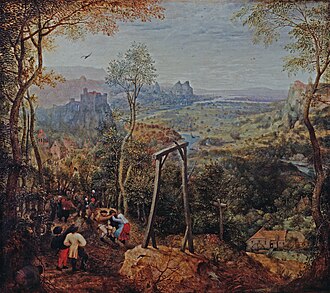 絞首台の上のかささぎ - Pieter Bruegel the Elder (1568)
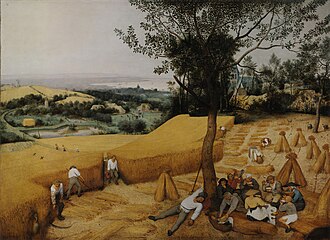 穀物の収穫 - Pieter Bruegel the Elder (1565)
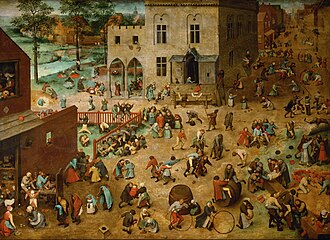 子供の遊戯 - Pieter Bruegel the Elder (1560)
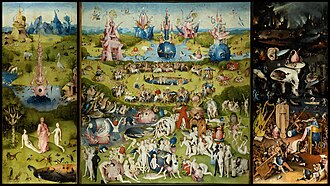 快楽の園
快楽の園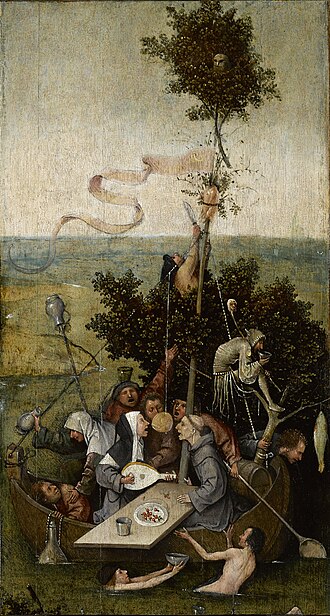 愚者の船
愚者の船