The Tower of Babel
Pieter Bruegel the Elder · 1563
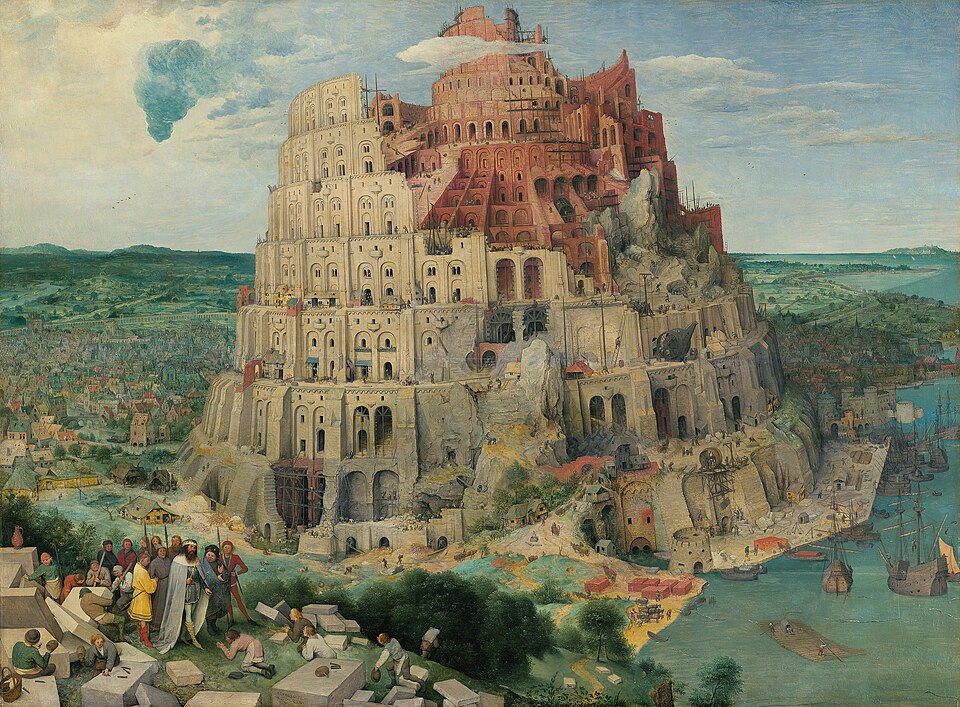
A tower spirals up past the clouds, its arches already crumbling, while a king inspects the stonemasons at his feet. Bruegel painted human ambition at its grandest and most fragile, and filled it with tiny, busy lives.
The story behind the painting
Bruegel painted the Tower of Babel at least three times. The earliest, a miniature on ivory made in Rome in 1552 to 1553, is lost. Two oil panels survive: this large one in Vienna, signed and dated 1563 on a stone block in front of the king, and a smaller one in Rotterdam, half the width and height, probably painted afterwards. The Vienna picture was made for the Antwerp banker Nicolaes Jonghelinck, one of Bruegel's best patrons, who owned no fewer than sixteen of his paintings. Back in Antwerp, Bruegel may have refreshed his memories of Rome with engravings of its landmarks published by Hieronymus Cock.
What to look for
The tower, with its many arches, deliberately recalls the Roman Colosseum, and is built of stone facings over a massive brick core, as Roman buildings were. At first it looks like stacked rings, but no layer is truly horizontal: it rises as a spiral. The arches stand perpendicular to the sloping ground, so they are unstable, and some are already falling, while the lower levels were never finished before the upper ones began. A steep small mountain pokes through the masonry at the centre and right. In the foreground, a group surrounds a king, presumably Nimrod, who in some Christian traditions ordered the tower built. Cranes, ships and a city fill the edges.
Meaning and intent
In Genesis, a single-language humanity builds a tower to reach the heavens and make a name for itself, and God confuses their speech. Bruegel focuses on the construction rather than the whole story. Like his Suicide of Saul, his only other Old Testament subject, it was read as pride punished. The frantic work of engineers and masons adds a second lesson, the futility of much human effort. For his contemporaries Rome, the Eternal City now in ruins, mirrored Babylon as a symbol of vanity, and the Colosseum stood for hubris and persecution. The tower may also echo the religious tension between Latin Catholicism and the many-tongued Protestant movement.
Legacy
The Vienna composition is considered the most famous and widely imitated image of the Tower of Babel, and both surviving versions count among Bruegel's best works, showing his painstaking, encyclopedic attention to detail. His contemporary Lucas van Valckenborch painted the tower in the 1560s, possibly after seeing Bruegel's version, within a wider tradition of tower paintings in the 16th and 17th centuries. Bruegel's knowledge of building methods is accurate, and fittingly, his last commission, unfinished at his death, was a series recording the digging of a canal between Brussels and Antwerp. The panel is today in the Kunsthistorisches Museum in Vienna.
Lo sapevi?
- Signed and dated 1563 on a stone in front of the king.
- Painted for the Antwerp banker Nicolaes Jonghelinck.
- A smaller version is in Rotterdam; an ivory miniature is lost.
- The tower recalls the Roman Colosseum.
L'artista
Pieter Bruegel the Elder (1525-1569)
religious art · Kunsthistorisches Museum · ship · port
Altre opere di Pieter Bruegel the Elder
%20-%20Google%20Art%20Project.jpg) The Hunters in the Snow - Pieter Bruegel the Elder (1565)
The Hunters in the Snow - Pieter Bruegel the Elder (1565) Netherlandish Proverbs - Pieter Bruegel the Elder (1551)
 Il trionfo della morte - Pieter Bruegel the Elder (1560s)
%20-%20Blind%20leading%20the%20blind%20Google%20Art%20Project.jpeg) The Blind Leading the Blind - Pieter Bruegel the Elder (1568)
The Blind Leading the Blind - Pieter Bruegel the Elder (1568) Matrimonio contadino - Pieter Bruegel the Elder (1560s)
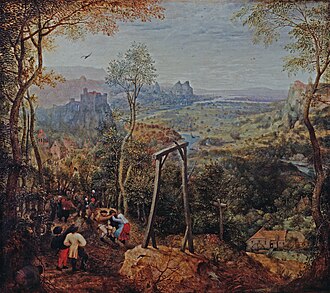 La gazza sulla forca - Pieter Bruegel the Elder (1568)
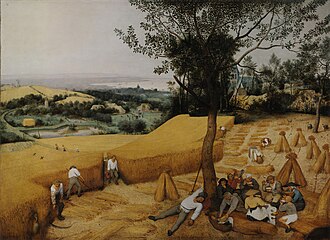 The Harvesters - Pieter Bruegel the Elder (1565)
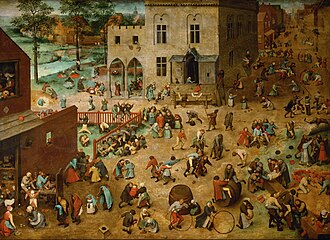 Children's Games - Pieter Bruegel the Elder (1560)
Dipinti di artisti collegati
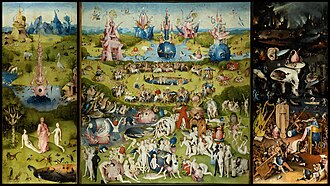 The Garden of Earthly Delights - Hieronymus Bosch
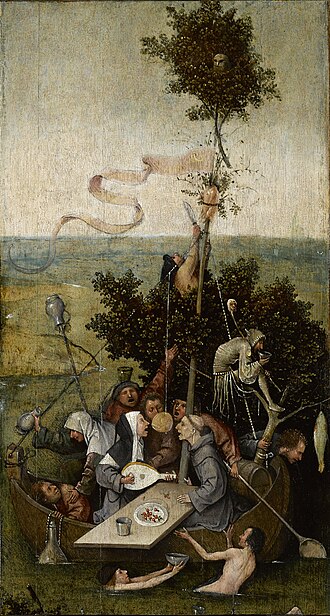 Ship of Fools - Hieronymus Bosch (1500s)