The Standard Bearer
Rembrandt van Rijn · 1636
.jpeg)
A young man in a plumed cap turns to look at us, one hand on his hip, the other holding a great banner on his shoulder. Rembrandt painted this standard bearer with his own features around the time he moved to Amsterdam, and in 2022 the Netherlands bought it from its French owners.
The story behind the painting
The Standard Bearer was painted when Rembrandt moved from Leiden to Amsterdam, and it is seen as an important early work that shows his ambition to paint a group portrait for the Amsterdam militia, at the time the most valued commission a painter could receive. It is signed at lower right Rembrandt 163-, and the last figure, now illegible, was probably a 5 according to Hofstede de Groot in 1914; Wikidata gives 1636. Several copies in oil exist, one in Kassel since 1749, but this canvas has a provenance reaching back into the eighteenth century.
What to look for
Hofstede de Groot described the figure standing in profile to the right, turning his face to look at the viewer. His left hand holds a large white banner on his shoulder, his right rests on his hip. Over brown curls he wears a slashed cap with a brown plume, and his face is shaved except for a long moustache. A yellowish-brown coat trimmed with lace, an iron gorget, a broad sash with a sword, loose sleeves and a white collar complete the costume. Strong light from the left touches his back and face and falls fully on the banner. The canvas is about 119 by 97 cm.
Meaning and intent
Is it a self-portrait? John Smith called it one in 1836, describing Rembrandt in the character of a standard bearer, though he read the face as that of a man of about fifty. Hofstede de Groot in 1914 stopped short of calling it a self-portrait, but noted that the man has Rembrandt's features. Wikipedia describes it as a three-quarter-length self-portrait. Either way, the young painter presents himself in the proud role of a militia officer, a statement of what he hoped to achieve in his new city.
Legacy
The painting passed through collectors in Brussels and Paris, was owned by George IV of England, who exchanged it for other pictures, and at an 1840 sale went to Baron James de Rothschild in Paris; Wikipedia elsewhere says the family owned it from 1844, and they kept it for generations. In 2019 France classified it as a national treasure, but the Louvre could not raise the funds and waived its right to buy. In December 2021 the Dutch state announced it would acquire the work, together with the Rembrandt Association and the Rijksmuseum. It toured every Dutch province in 2022 and 2023 before going on display in the Rijksmuseum's Gallery of Honour.
Lo sapevi?
- Painted around Rembrandt's move to Amsterdam; Wikidata dates it 1636.
- Signed Rembrandt 163-, the last digit illegible.
- Owned by the Rothschild family for generations.
- Acquired by the Netherlands in 2022 for the Rijksmuseum.
L'artista
Rembrandt van Rijn (1606-1669)
self-portrait · Rembrandt · flag
Altre opere di Rembrandt van Rijn
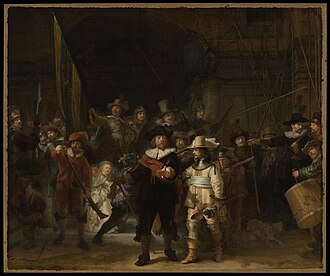 The Night Watch - Rembrandt van Rijn (1642)
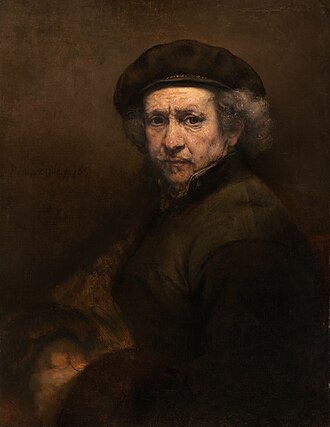 Self-Portrait - Rembrandt van Rijn (1659)
 La lezione di anatomia del dottor Nicolaes Tulp - Rembrandt van Rijn (1632)
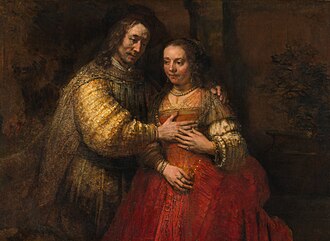 La sposa ebrea - Rembrandt van Rijn (1660s)
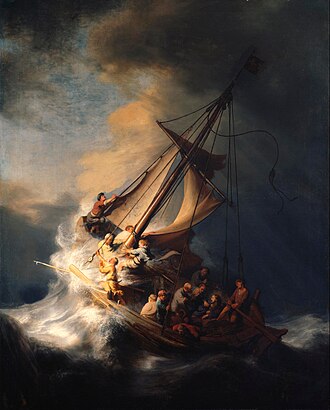 The Storm on the Sea of Galilee - Rembrandt van Rijn (1633)
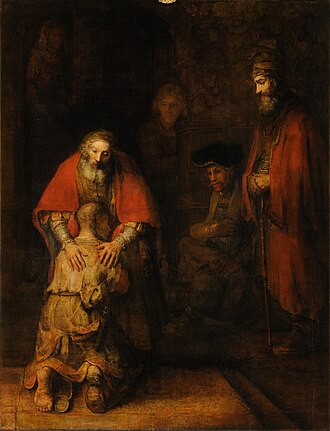 Il ritorno del figliol prodigo - Rembrandt van Rijn (1668)
 Danae - Rembrandt van Rijn (1636)
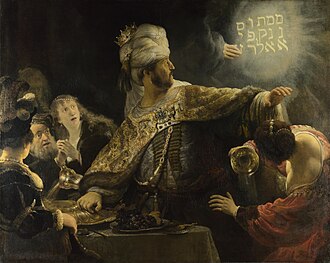 Banchetto di Baldassarre - Rembrandt van Rijn (1636)
Dipinti di artisti collegati
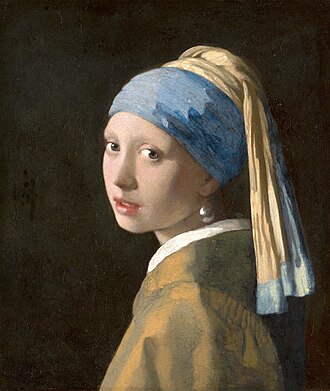 Girl with a Pearl Earring - Johannes Vermeer (1665)
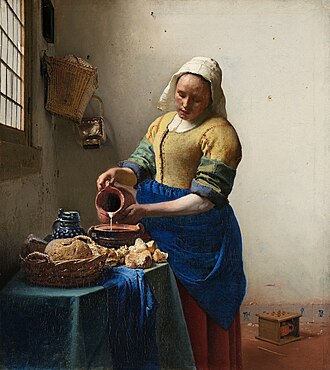 The Milkmaid - Johannes Vermeer (c. 1658)