A Lady with a Squirrel and a Starling
Hans Holbein the Younger · 1520s
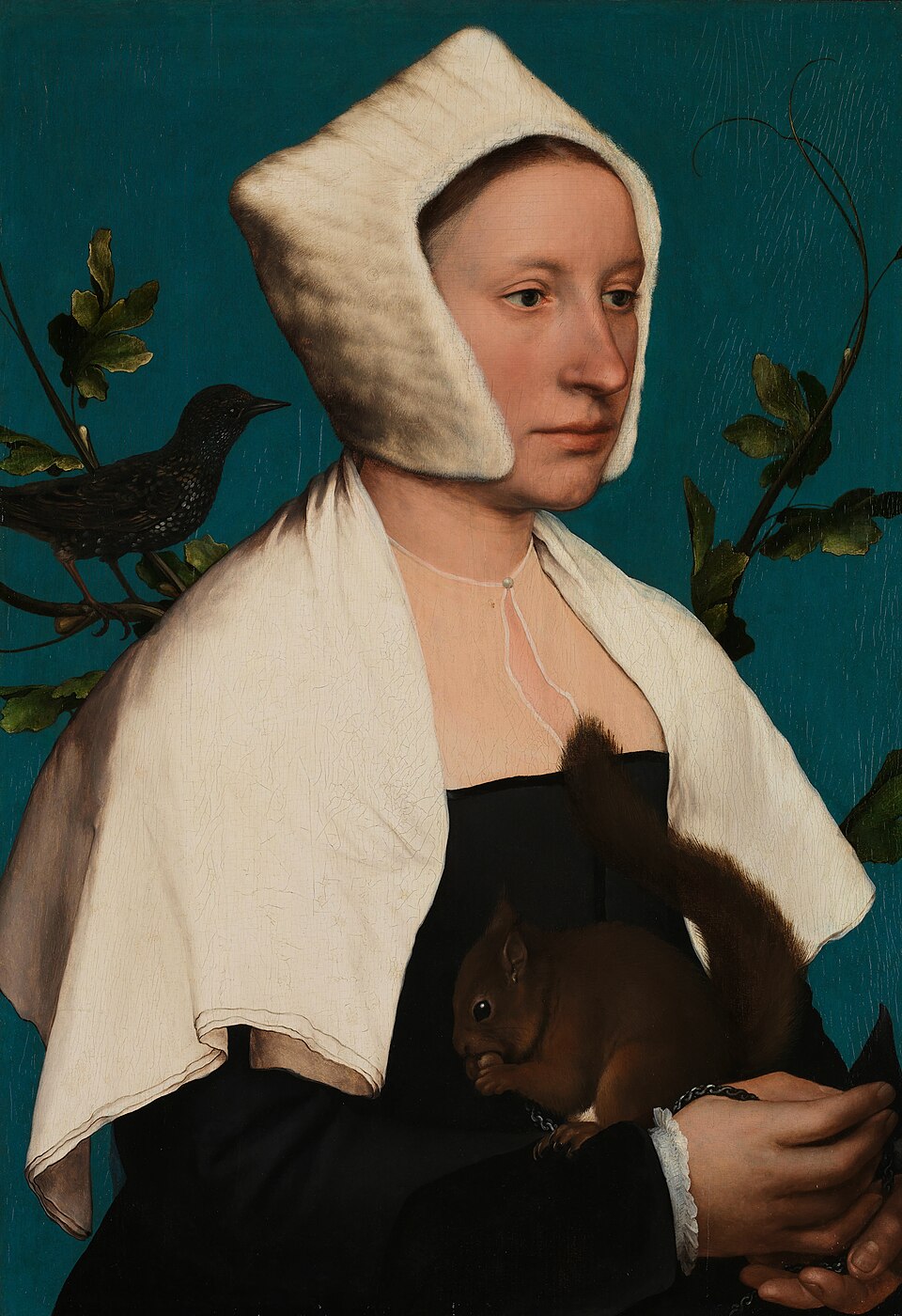
A quiet young woman in a fur hat holds a squirrel on a chain, nibbling a nut, while a starling leans towards her ear. Holbein hid her name in the animals, and it took a stained-glass historian to read it.
The story behind the painting
Hans Holbein the Younger painted this portrait in oil on oak around 1526 to 1528, during his first stay in England, which lasted from summer 1526 to summer 1528. In those years he worked mostly for the circle of Thomas More and his connections. His drawing of More's ward Margaret Giggs shows her in the same kind of hat. David J. King has suggested the portrait may have been done in winter, since the sitter wears a warm fur hat. Holbein also painted Sir Henry Guildford and Mary, Lady Guildford, at this time, with similar decorative foliage behind them.
What to look for
The young woman is demurely dressed and sits against a plain blue background. In her lap a squirrel on a chain is eating a nut. Behind her a starling perches on a grape vine, its beak pointing at her right ear. For Holbein the grape, a Biblical motif, was a symbol of abundance and wealth. At this stage of his career he often adapted such leafy designs from pattern books, while in his last decade he set sitters against plain backgrounds in a more iconic style. The panel measures about 56 by 38.8 cm.
Meaning and intent
The animals are not just decoration. While studying the windows of the parish church in East Harling, Norfolk, seat of the Lovell family, the stained-glass historian David J. King noticed that the Lovell coat of arms included squirrels. The starling seems to be a pun on the place where the sitter lived, then often spelled Estharlyng. This is why she is believed to be Anne Lovell, born Ashby, wife of the Norfolk landowner Sir Francis Lovell, an Esquire of the Body to Henry VIII and nephew and heir of Sir Thomas Lovell.
Legacy
Art historian John Rowlands judged this painting the most charming of the portraits from Holbein's first stay in England. It hung at Houghton Hall from 1761. In 1992 it was bought by the National Gallery in London, with contributions from the National Heritage Memorial Fund, the Art Fund and J. Paul Getty Jnr through the American Friends of the National Gallery. There it still shows a woman whose identity was recovered not from documents but from a squirrel, a bird and a church window.
Lo sapevi?
- Painted around 1526 to 1528, during Holbein's first stay in England.
- The sitter is believed to be Anne Lovell, identified through the family arms.
- The starling may be a pun on East Harling, then spelled Estharlyng.
- In the National Gallery, London, since 1992.
L'artista
Hans Holbein the Younger (1497-1543)
woman · portrait · National Gallery
Altre opere di Hans Holbein the Younger
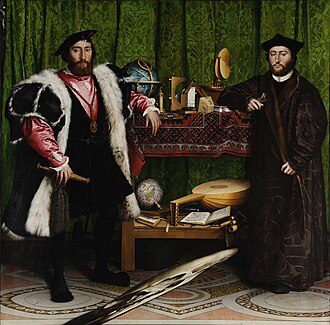 The Ambassadors - Hans Holbein the Younger (1533)
 The Body of the Dead Christ in the Tomb - Hans Holbein the Younger (1520s)
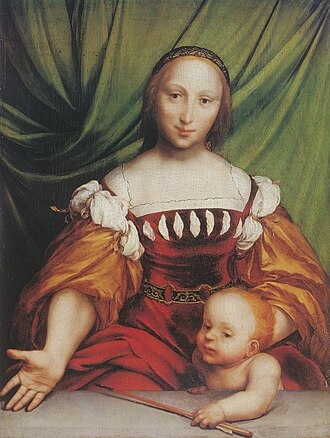 Venus and Cupid - Hans Holbein the Younger (1526)
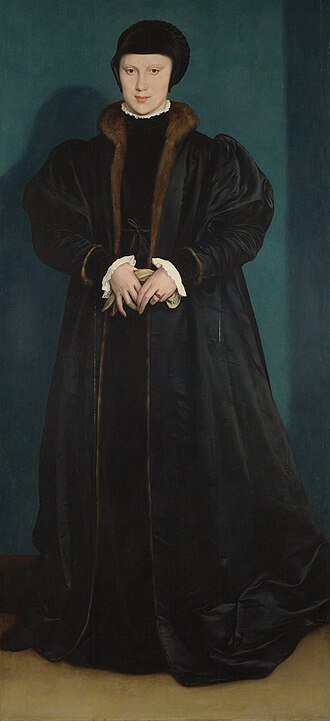 Christina of Denmark, Duchess of Milan - Hans Holbein the Younger (1538)
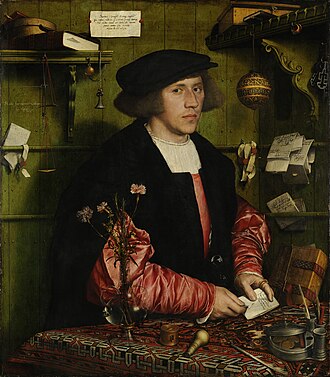 The Merchant Georg Gisze - Hans Holbein the Younger (1532)
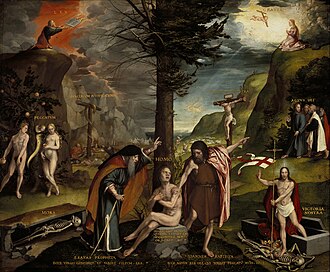 An Allegory of the Old and New Testaments - Hans Holbein the Younger (1530)
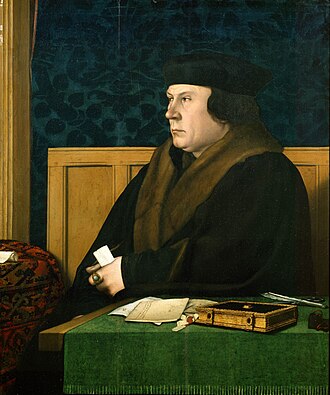 Thomas Cromwell - Hans Holbein the Younger (1530s)
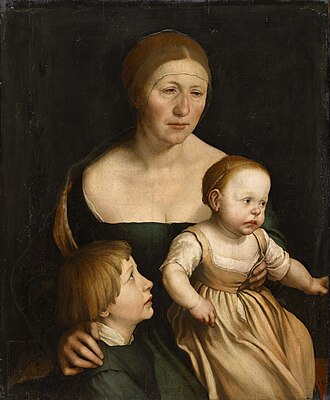 Portrait of the Artist's Family - Hans Holbein the Younger (1528)
Dipinti di artisti collegati
 The Hunters in the Snow - Pieter Bruegel the Elder (1565)
 Netherlandish Proverbs - Pieter Bruegel the Elder (1551)
 The Garden of Earthly Delights - Hieronymus Bosch
 Ship of Fools - Hieronymus Bosch (1500s)
 Arnolfini Portrait - Jan van Eyck (1434)
 Ghent Altarpiece - Jan van Eyck (1432)