Musical Company
Rembrandt van Rijn · 1626
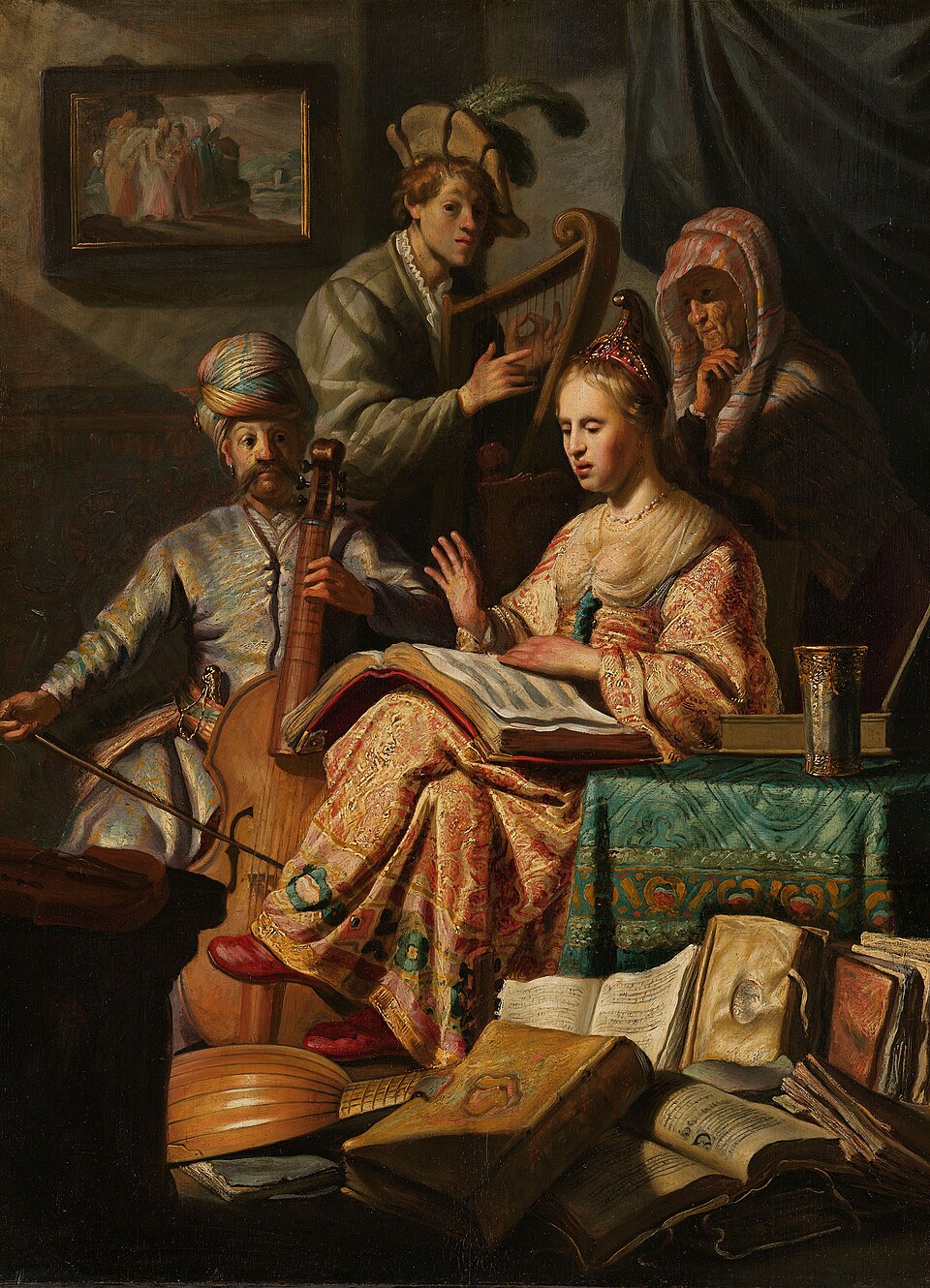
A young woman in a bright yellow gown sings from a red book, an old man in a turban bows a viola da gamba, a youth plays the harp, and an old woman simply listens. Rembrandt was about twenty when he painted this little concert.
The story behind the painting
Rembrandt painted Musical Company in Leiden in 1626, shortly after training with Jacob van Swanenburgh and Pieter Lastman and setting up a workshop with Jan Lievens. The oak panel matches in size and build his Baptism of the Eunuch and Balaam and the Ass of the same year. The work only became known in 1936 and has since been accepted by almost all art historians as his own. It bears the monogram RH and the date 1626, whose second digit is hard to read. Dendrochronology shows the two boards came from different trees felled no earlier than 1608.
What to look for
Four figures are staggered around the centre. In front, the singer sits with crossed legs, her blond hair pinned up under a diadem, a large book of music on her lap, her raised hand perhaps keeping the beat. At left an old man in a silk caftan plays the viola da gamba, his fingers just behind the frets. Behind them a young man in a feathered beret plays the harp, and an old woman leans on a chair, chin in hand. Music books lie scattered on the floor, with a cracked lute and a violin. On the wall hangs a picture of Lot fleeing Sodom.
Meaning and intent
The museum that shows it, De Lakenhal, has presented the scene as a family portrait with Rembrandt, his older sister and his parents. Wikipedia notes that this reading is now considered outdated, but no satisfying interpretation has replaced it, so the painting keeps its mystery. The hands look oddly out of proportion, a weakness also found in other early works, which contrasts with the skilful handling of the rest. What remains is a bold display by a young painter: rich costumes, spotlit faces and a crowded still life of instruments and books.
Legacy
The Rijksmuseum in Amsterdam acquired the painting in 1976. Since 2021 it has been on long-term loan to Museum De Lakenhal in Leiden, the city where Rembrandt painted it. Technical study shows the paint layer is in good overall condition, with only small losses along the join of the two boards and some later retouching. Like other early works, it was painted from back to front. Its style links it closely with Rembrandt's other pictures of 1626, and it shows the young Leiden painter growing steadily more confident in composition and colour.
Lo sapevi?
- Painted in Leiden in 1626, signed RH.
- Unknown until 1936, now accepted as by Rembrandt.
- Bought by the Rijksmuseum in 1976.
- On loan to Museum De Lakenhal in Leiden since 2021.
L'artista
Rembrandt van Rijn (1606-1669)
woman · man · genre art · Dutch Golden Age painting · Rijksmuseum · musician · book · harp · singer
Altre opere di Rembrandt van Rijn
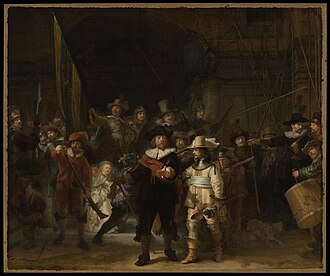 The Night Watch - Rembrandt van Rijn (1642)
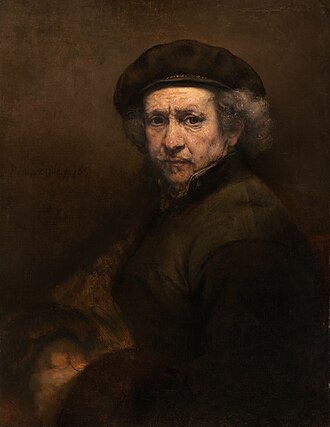 Self-Portrait - Rembrandt van Rijn (1659)
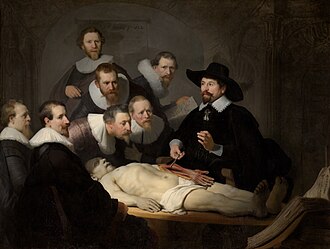 La lezione di anatomia del dottor Nicolaes Tulp - Rembrandt van Rijn (1632)
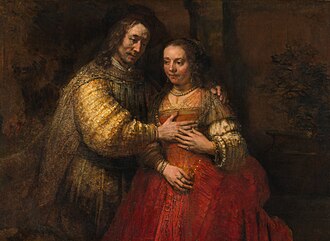 La sposa ebrea - Rembrandt van Rijn (1660s)
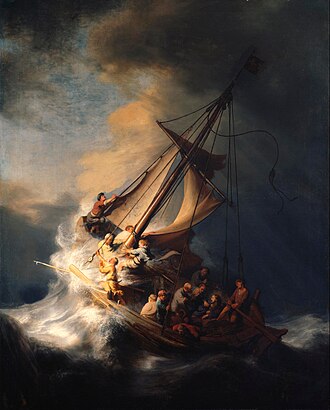 The Storm on the Sea of Galilee - Rembrandt van Rijn (1633)
 Il ritorno del figliol prodigo - Rembrandt van Rijn (1668)
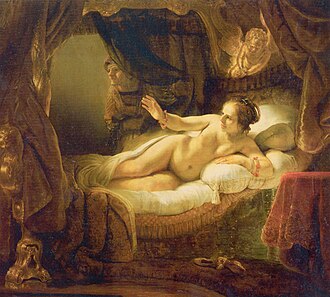 Danae - Rembrandt van Rijn (1636)
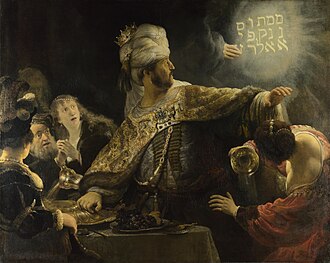 Banchetto di Baldassarre - Rembrandt van Rijn (1636)
Dipinti di artisti collegati
 Girl with a Pearl Earring - Johannes Vermeer (1665)
 The Milkmaid - Johannes Vermeer (c. 1658)